
The government of Pakistan has issued new regulations for foreign media organizations operating within the country. These guidelines formalize the reporting requirements for journalists working for international news outlets beyond the nation’s three largest cities: Islamabad, Lahore, and Karachi.
The document, titled Guidelines for the Facilitation of the Foreign Media and Their Associates Working in Pakistan, was shared with local and foreign media organizations this week. Press freedom advocates and journalist groups have criticized the measures, claiming they introduce bureaucratic challenges that could discourage independent reporting.
The Ministry of Information has countered these criticisms, stating the guidelines aim to provide a structured, transparent, and accountable framework for the registration, accreditation, and facilitation of foreign media. They emphasized that the rules aim to differentiate between registration and obtaining government clearance for reporting trips outside the three major cities.
Under the new rules, Pakistani journalists, freelancers, contributors, stringers, fixers, and others associated professionally with foreign media must register with the ministry’s External Publicity Wing and secure accreditation before carrying out reporting assignments beyond these cities. The ministry has clarified that this does not impose a blanket restriction on the movement of individuals.
This is not a blanket restriction on the movement of individuals.
Controversy erupted earlier when a WhatsApp message was sent to foreign journalists based in Islamabad. The message reminded journalists that obtaining a No-Objection Certificate (NOC) is essential before reporting, filming, or producing content outside the major cities. Journalists working in Pakistan-administered Kashmir were instructed to return and apply for the necessary clearance.
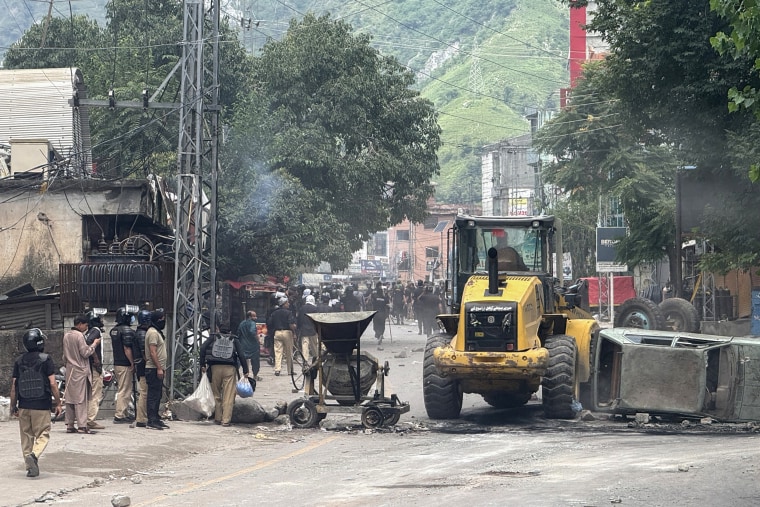
The requirement for travel clearance has been in place for years, but recent guidelines arrived amid disputes over foreign media coverage in Pakistan-administered Kashmir. Authorities argued that some reports inaccurately presented the number of deaths during clashes and distorted voter turnout information following legislative assembly election boycotts by the outlawed Joint Awami Action Committee.
The guidelines emerged before the last phase of elections in Pakistan-administered Kashmir, with the Pakistan Muslim League-Nawaz expected to return to power. Raja Shakeel, a regional election spokesman, reported a voter turnout of over 56% in the capital, Muzaffarabad.
Media rights groups, including the independent Human Rights Commission of Pakistan, criticized the guidelines. They argued that rather than supporting journalism, they would enforce bureaucratic control over news gathering, hindering independent reporting.
In a recent post, the commission described the measures as part of a broader trend of restrictions on media freedom in Pakistan, pointing to arbitrary report restrictions and greater censorship.
The requirement that journalists obtain state approval to report from large parts of the country sends a chilling message: that critical reporting is unwelcome.
The commission has called on the government to repeal the measures and honor its constitutional and international obligations to protect freedom of expression.
Waliullah Rahmani, representing the Committee to Protect Journalists for Afghanistan and Pakistan, highlighted concerns that the 2026 guidelines could lead to increased restrictions on foreign journalists. The Pakistan Federal Union of Journalists also condemned the guidelines, describing them as a blow to freedom of expression. They argued that the policy would hinder the work of correspondents and affect Pakistan’s international standing on press freedom.
In recent years, media in Pakistan has contended with increasing censorship challenges.