
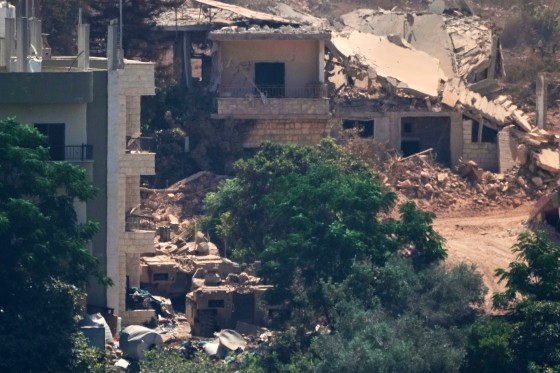
The Israeli army carried out strikes in southern Lebanon on Wednesday. This response followed what Israel claimed was a breach of the ceasefire by Hezbollah. Israeli military vehicles were observed stationed among homes in the village of Zawtar al-Sharqiyah, an area under Israeli control.
On Thursday, the Israeli military confirmed that two of its soldiers died due to an explosion in southern Lebanon. This tragedy marked the first Israeli casualties since a fragile truce took hold between Israel and Hezbollah in June. Four additional soldiers suffered serious injuries. The incident occurred when the soldiers entered a site in Majdal Zoun. The nature of the explosive is still under investigation.
In reaction, Israel conducted strikes in southern Lebanon and advised residents of Mansouri to evacuate. This announcement was the first of its kind from Israel in several weeks. Hezbollah has not issued a response to these developments.
The escalation coincided with talks between Lebanese and Israeli negotiators in Rome. These discussions focused on a June 26 agreement calling for Israeli withdrawal from occupied areas in southern Lebanon. In return, the Lebanese army would assume control, and Hezbollah would disarm. The talks ended prematurely due to the escalating violence but were scheduled to resume the next day.
Lebanon’s Health Ministry reported one fatality and 12 injuries from an Israeli strike in Tebnine on Wednesday. The state-run news agency noted additional injuries in Burj al-Shemali, though specifics were not available. Artillery also targeted Mansouri and Majdal Zoun.
The most recent conflict between Israel and Hezbollah began on March 2. It started when Hezbollah launched rockets across the border following U.S. and Israeli strikes on Iran. Since then, Israeli strikes have resulted in over 4,000 deaths in Lebanon, affecting both combatants and civilians. On the Israeli side, 40 soldiers and three civilians have been killed.
A fragile truce has mostly held since June 20, but Israeli forces continue to occupy parts of southern Lebanon, with ongoing airstrikes and shelling.
Discussions in Rome addressed the establishment of “pilot zones” where Israeli forces would withdraw, and the Lebanese army would take charge. Implementation started last month with a zone not previously occupied but subject to prior Israeli fire. The Lebanese army has since entered Zawtar al-Gharbieh, where some civilians have returned, though many found their homes destroyed and left again.
A diplomat aware of these negotiations indicated Lebanon’s interest in the town of Khiam or Bint Jbeil. These areas were sites of intense fighting in the recent conflict and remain under Israeli occupation. However, U.S. Ambassador to Lebanon Michel Issa advised against hasty implementation of new pilot zones, citing risks to civilian safety.