
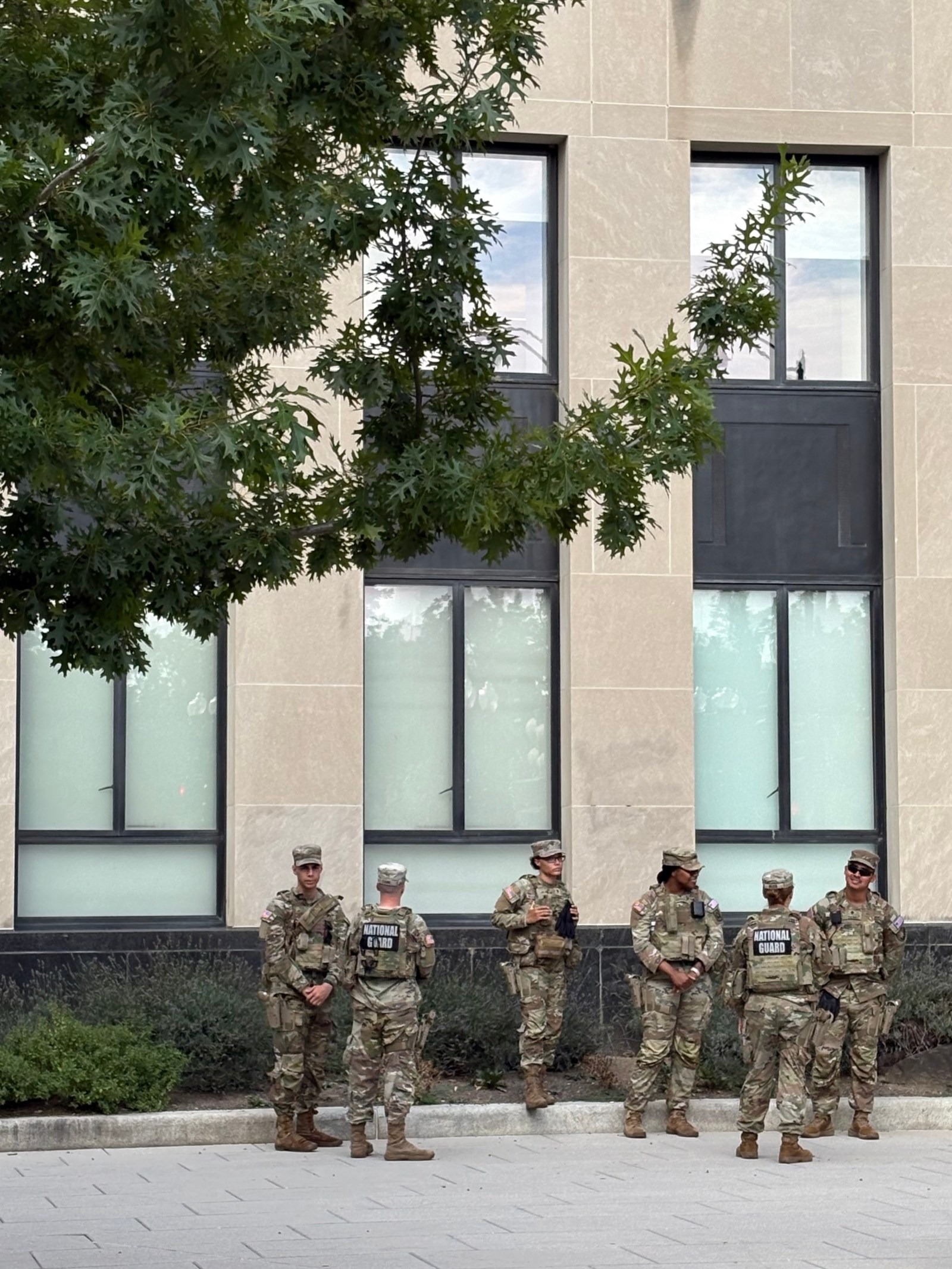
President Donald Trump’s decision to maintain the deployment of National Guard troops in Washington, D.C. through the end of his second term is expected to cost taxpayers an additional $1.4 billion. The Washington Post reviewed information provided to Congress, covering the period from October 2026 to January 2029. This estimate highlights the unprecedented use of military personnel in the nation’s capital by the administration.
Trump defends this deployment as vital for reducing crime in Washington. In his State of the Union address on February 24, he claimed that crime in the capital is now at its lowest recorded level. The administration cites declining homicide rates as evidence that their strategy is effective, yet critics argue this operation is unnecessary and question the impact of the National Guard on crime reduction.
The cost estimate was given to Senator Elizabeth Warren, a Massachusetts Democrat, by Jules Hurst III, Trump’s nominee for Pentagon comptroller, during his confirmation process. Newsweek has requested comments from D.C.’s Metropolitan Police Department and Mayor Muriel Bowser on the matter.
The deployment began in August 2025 after a carjacking and assault incident involving Edward Coristine, a former staffer with Elon Musk’s U.S. DOGE Service initiative. Brigadier General Leland Blanchard II, interim commanding general of the D.C. National Guard, indicates the mission may extend until January 2029 or as deemed unnecessary by Trump.
The Congressional Budget Office estimated a cost of approximately $223 million for the deployment through 2025, with a monthly cost of $55 million thereafter. The $1.4 billion estimate assumes an average of 2,500 deployed personnel; this number currently stands at 4,600 due to national events in Washington, including celebrations for the 250th anniversary of the Declaration of Independence.
This deployment has sparked political debates. Critics, including Democrats and civil liberties advocates, argue that using military personnel domestically expands federal power unnecessarily and misuses taxpayer money.
Defense officials defend the deployment, claiming it provides valuable support beyond what law enforcement typically offers. Blanchard has stated that Guard members have responded to about 800 medical emergencies, performed CPR, treated gunshot victims, and administered Narcan to those experiencing opioid overdoses. Troops are also involved in public support duties like security and city cleanup efforts.
The primary question is whether the deployment is responsible for the crime decline, as opposed to coinciding with it. Crime statistics show a decline in Washington since the pandemic, with a significant reduction in homicides, which fell from 226 in 2021 to 127 in 2025.
Violent crime generally fell by 1,000 cases from 2024 to 2025, from 3,475 to 2,475. Experts say that various factors, such as police staffing, economic conditions, and national crime trends, influence crime rates.
The Trump administration credits increased federal presence with reducing crime, citing it as crucial for keeping Washington safe. However, critics, like Warren, question the need for high spending on the Guard when crime has already decreased and argue against using taxpayer dollars for political purposes.
The debate centers around causation: whether a visible security presence from the National Guard deters crime, or if the decline would have happened regardless. Data from the Niskanen Center suggests the deployment affected some property crimes but did not significantly impact violent crime.
Mayor Bowser of Washington expressed doubts about the federal response matching the actual crime situation, stating that “It doesn’t make sense.” The tension remains over whether the Guard’s deployment directly caused the crime decline.