
Concerns Over Big Bend National Park Project
Over 140 Texas outfitters, recreation groups, and local businesses have expressed concerns regarding the Trump administration’s plans to build vehicle barriers and roads in Big Bend National Park. They believe the project could harm the region’s tourism economy. A coalition of local officials, law enforcement leaders, and outdoor businesses is pushing back against the proposal.
Appeal to Texas Leaders
In a letter to Republican Senators John Cornyn and Ted Cruz, as well as Governor Greg Abbott, the groups urged them to halt the border barrier construction along the Rio Grande. They argue that this project would irreparably damage a crucial recreation area in Texas, while offering limited security benefits. Billy Bartko, owner of Far Flung Outdoor Center, stated, “To Washington D.C., this is just another construction project. But to all of us in West Texas, it’s a matter of our survival. Our economy depends on access to the Rio Grande.”
Federal Advancements in Construction
Despite opposition, Customs and Border Protection (CBP) is progressing with plans to install vehicle barriers at river access points in the Big Bend region. This follows a Department of Homeland Security (DHS) decision to bypass several environmental and cultural protections to expedite construction.
“Rugged, isolated areas like Big Bend are great opportunities to deploy technology,” said Andrew Mahaleris, Abbott’s press secretary.
Impact on Tourism
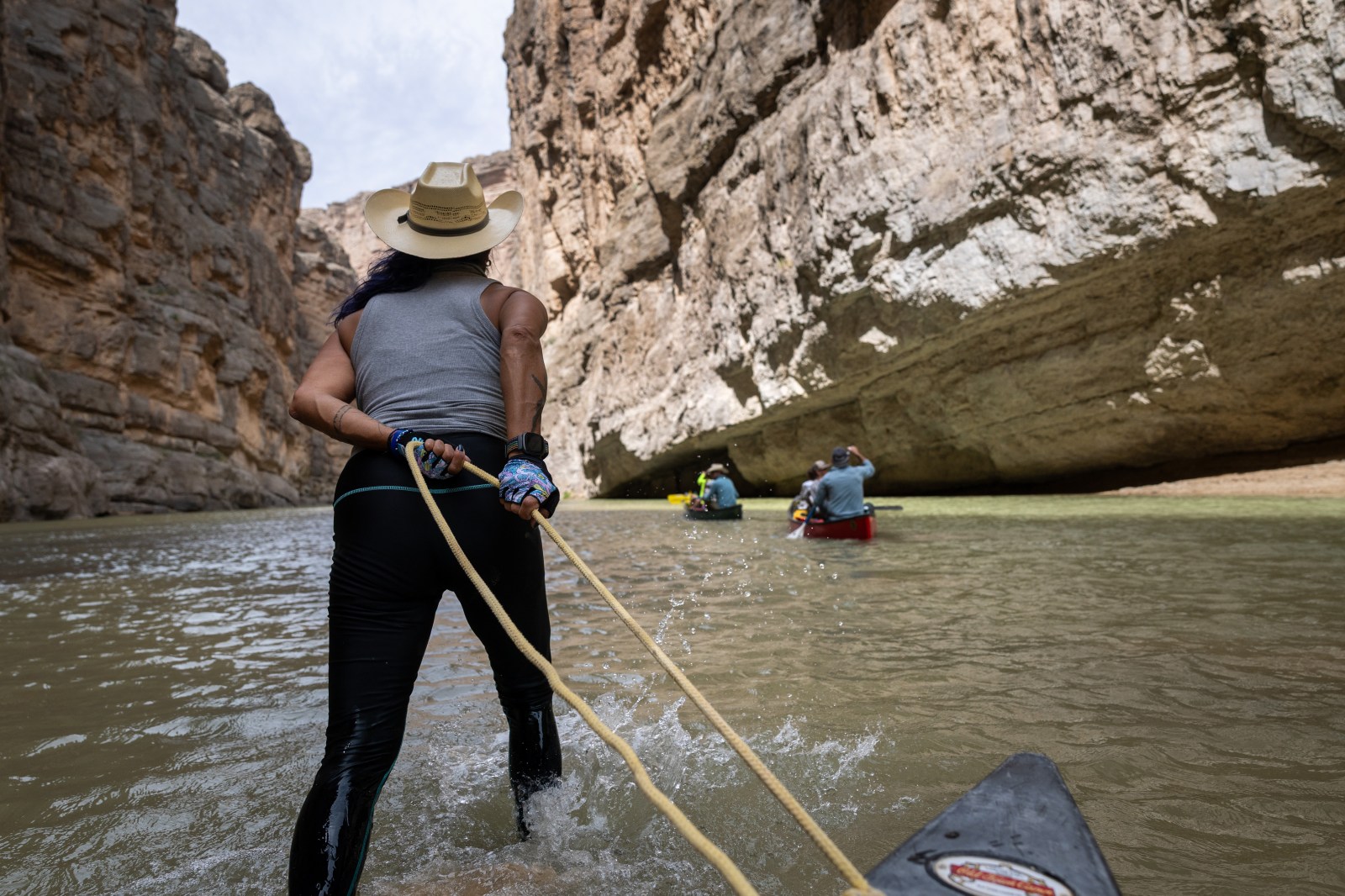
The letter claims that access to the Rio Grande is the backbone of a regional outdoor recreation economy. This includes outfitters, guides, lodging providers, restaurants, and retailers across rural West Texas. Signatories noted CBP’s plans could block areas vital for commercial and recreational river-running activities in Big Bend National Park, thus affecting tourism significantly.
Big Bend National Park hosted 561,459 visitors in 2024, with these visitors spending around $56.8 million, generating approximately $63.7 million in economic output for the region. Businesses emphasized the importance of the river for their local economy.
Widespread Opposition
This opposition is not limited to environmental groups. All five sheriffs of the Big Bend border region oppose the barrier construction, citing the area’s geography, which already serves as a natural deterrent to illegal crossings. Moreover, all 14 Texas border county judges have requested more transparency and security tailored to the area’s specific needs.
A petition against the construction has garnered more than 150,000 signatures. Critics argue federal planners are applying a generic border strategy not suited to this unique area.
Low Border Crossings in Big Bend
Opponents highlight the relatively low number of migrant encounters in the Big Bend Sector compared to other parts of the southern border. In fiscal year 2025, the sector recorded 3,096 apprehensions, just 1.3% of all apprehensions along the southern border. Inside Big Bend National Park itself, encounters accounted for a mere 0.045% of total southwest border apprehensions.
Security Concerns Cited by Supporters
Supporters argue that the area has security concerns. In a June waiver, DHS reported encounters with over 89,000 migrants in the sector between 2021 and 2025 and cited multiple drug seizures as reasons for improved infrastructure.
Requests from Businesses
- Prevent vehicle barriers from blocking public access to the Rio Grande.
- Amend border construction contracts to focus on technology rather than physical barriers.
- Urge DHS to cancel waivers of federal, state, and local laws issued for the project.
The businesses emphasize the existing extensive border security network in Big Bend, which includes technology operated by CBP, the National Park Service, and local law enforcement. They suggest expanding remote monitoring systems and aerial surveillance for enhanced security without hindering river access.
“Big Bend National Park and the Rio Grande Wild and Scenic River are our shared natural heritage,” the letter concludes. “We are asking you, our elected representatives, to protect our livelihoods, our river, and one of our state’s most treasured landscapes from needless and permanent destruction.”