
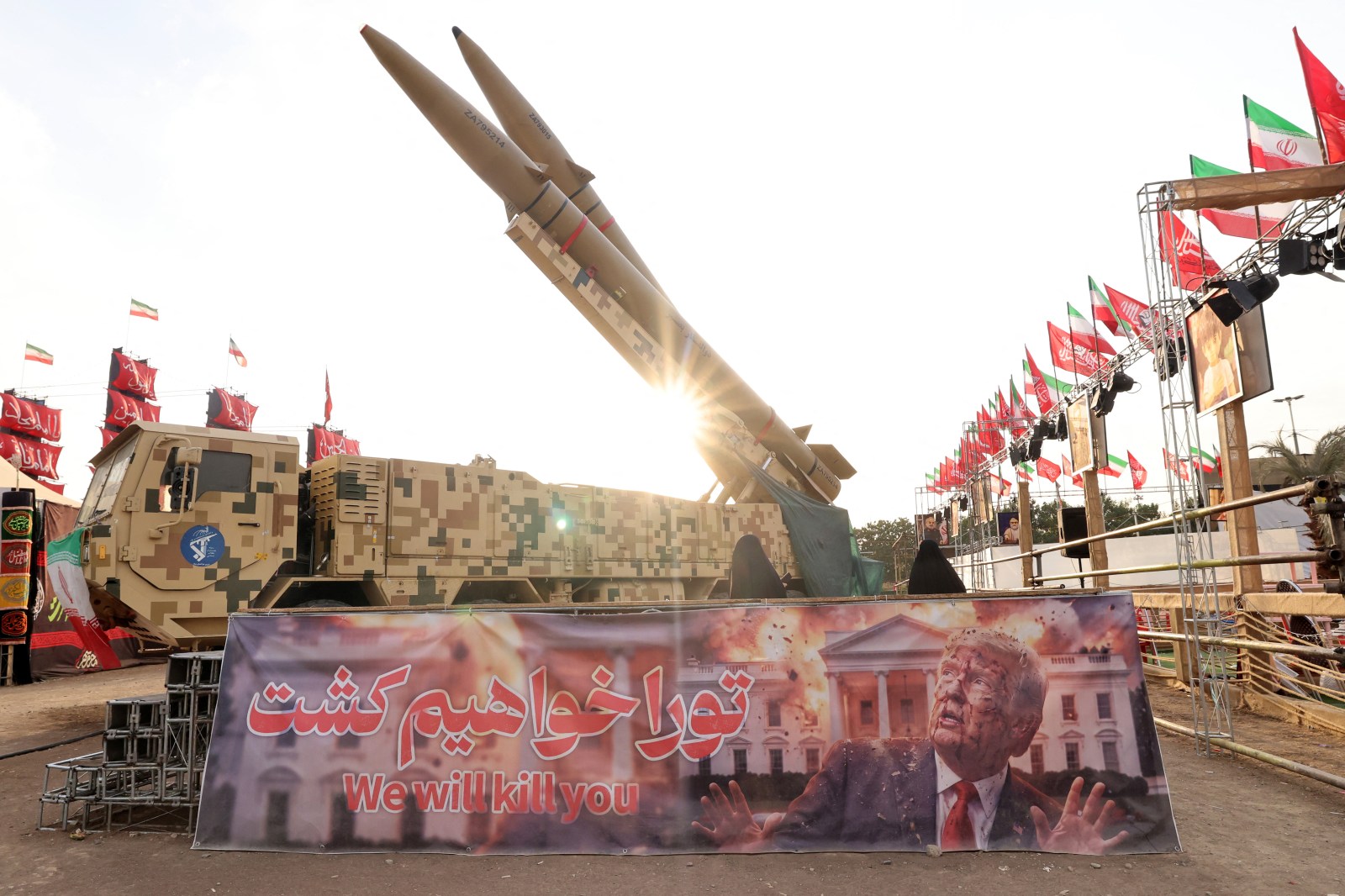
Amid demands from the U.S. for surrender, Iran is leveraging a six-month conflict to enforce its own goals in the Middle East. Despite the focus on nuclear issues by the U.S. and Israel, Iran’s core aims lie elsewhere. The nation denies intentions to create weapons of mass destruction and instead, uses influence over the Strait of Hormuz as a strategic tool. A potential deal with Oman regarding service fees in this vital oil and gas corridor could soon formalize this leverage, crucial for peace settlement efforts.
Javad Heirannia, the director of Persian Gulf Studies at Tehran’s Center for Scientific Research and Middle East Strategic Studies, indicated Iran aims to solidify its military successes into a recognized upper hand, particularly over the Strait of Hormuz. This step is intended to demonstrate control and influence over the waterway, especially to the U.S., making such control an irreversible fact.
The arrangement regarding the Strait could support a cost-benefit approach to the nuclear issue. It may serve as a safeguard against U.S. intervention if Iran agrees to reduce its enriched uranium, particularly if the U.S. fails to fulfill its commitments.
Heirannia remarked that recognizing Iran as a regional power is crucial, as it facilitates control over the Strait and secures guarantees. Iran aims to establish itself as a decisive power in the evolving regional order.
The Evolving Middle East Order
When Hamas attacked Israel in October 2023, Iran seemed unprepared. However, Tehran’s Resistance coalition, including Hezbollah, swiftly joined the conflict. Yemen’s Ansar Allah and Iraq’s Popular Mobilization Forces also engaged. These groups faced significant setbacks from U.S. and Israeli strikes, challenging Iran’s coalition efforts.
The war initiated by the U.S. and Israel changed outcomes. Heirannia noted Iran’s intention to revive its weakened coalition through investment and tactics. Strategic actions, like those by the Houthis and al-Ḥashd ash-Shaʿbī against Saudi Arabia, are meant to boost pressure on adversaries.
Heirannia stated attacks on coalition members are considered attacks on Iran, warranting responses. Many nations in the region are also fostering alliances. Years of crisis and ongoing war have altered geopolitical dynamics. Saudi Arabia has formed a defense alliance with Egypt, Turkey, and Pakistan. Simultaneously, the UAE has strengthened ties with Israel, India, Greece, and others.
Conflicting interests have caused tensions within cooperative relationships, such as the Saudi-UAE alliance, amidst disagreements over Libya, Sudan, and Yemen conflicts. While the U.S. promotes Turkey’s role and pressures Saudi Arabia to establish ties with Israel, Iran adjusts the power dynamics in its favor using the Strait of Hormuz and proxy networks.
Implications for the U.S.
The conflict significantly impacts the U.S. presence in the Middle East. Allies question U.S. security commitments due to critical munitions depletion and defense reliability. Aya Ibrahim of Columbia University’s Center on Global Energy Policy noted Gulf partners’ altered views on U.S. security assurances and oil strategy.
Randy Manner, a retired Air Force Major General, expressed concerns about U.S. interests being adversely affected beyond the Middle East. Asset repositioning from vital areas like Taiwan and Ukraine has potential global implications.
Former Pentagon spokesperson Chris Meagher highlighted U.S. global relationships strained by the war and Venezuelan intervention. China and Russia perceive U.S. focus elsewhere as an opportunity to advance their interests.
As the conflict develops, the U.S. finds itself distracted from crucial security matters. Meanwhile, China’s influence in the region grows, capitalizing on this strategic shift. Beijing promotes itself as a stable partner, a trend accelerated by the ongoing crisis. Gulf states are diversifying ties, reducing U.S. dependency by engaging more deeply with China.
According to Giorgio Cafiero, CEO of Gulf State Analytics, the shift towards a Beijing-centered order in the Middle East aligns with Iran’s interests, reducing reliance on U.S. military presence. Tehran arguments that U.S. bases cause insecurity gain traction among Gulf nations.
Beyond this, Iran’s advantageous position by the Strait of Hormuz strengthens its influence over Gulf Arab states, potentially reshaping regional power dynamics long after the current crisis subsides.