
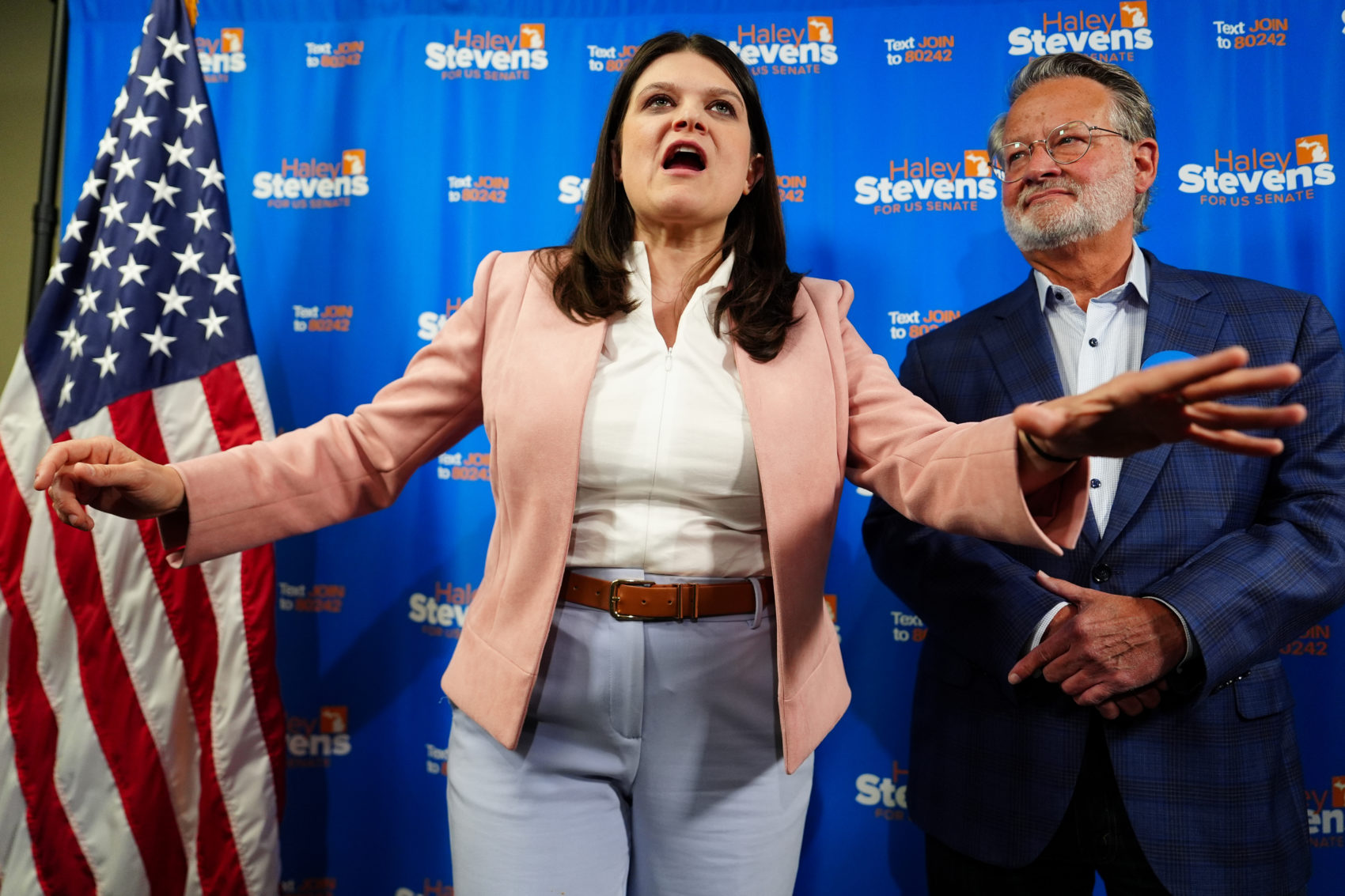
Abdul El-Sayed and U.S. Rep. Haley Stevens campaigned vigorously in Detroit as Michigan’s Democratic Senate primary reached its final hours. Both candidates visited Black churches, aiming to secure votes in areas critical to the primary’s outcome.
El-Sayed, a progressive backed by figures like Sen. Bernie Sanders, attended services at three churches. He emphasized his vision for economic opportunity and equal rights, regardless of race or background. Joining him were Democratic Reps. Summer Lee and Ayanna Pressley, and Yusef Jackson of the Rainbow PUSH Coalition. Pastor David A. Johnson II noted the importance of welcoming political candidates in this season of change.
Robin Robertson, a Detroit resident, ultimately decided to support El-Sayed. His presence in her local church confirmed her choice to vote for him, as she felt his agenda aligned with current community needs.
In contrast, Stevens highlighted her longstanding ties to Detroit churches. After a service in Pontiac, she personally engaged with the congregation. Stevens, supported by Senate Democratic leader Chuck Schumer, has appealed to Black voters through ads that emphasize her connections to former President Obama and her role in the 2009-2011 auto rescue effort.
Reggie Williams, a supporter at an Oakland County event, praised Stevens for her consistent community presence and advocacy.
As the primary’s final day approached, El-Sayed and Stevens outlined different strategies. El-Sayed focused on Detroit, seeking to convert local enthusiasm into votes through a robust volunteer network. Stevens, however, planned to campaign in West Michigan cities like Grand Rapids and Kalamazoo in hopes of leveraging support from regional Democratic strongholds and endorsements from notable Democratic officials.
Both candidates have invested significant time and resources, including heavy advertising, to reach voters across Michigan. As the campaign wrapped up, Stevens succinctly described the process as the “last word phenomenon,” where the focus shifts to ensuring supporters cast their ballots.
Both El-Sayed and Stevens aim to consolidate Michigan’s Democratic coalition to eventually challenge Republican Mike Rogers in November. The stakes involve maintaining an open Senate seat crucial for the Democratic Party’s future in Congress.