
Unexpected Lunar Collision
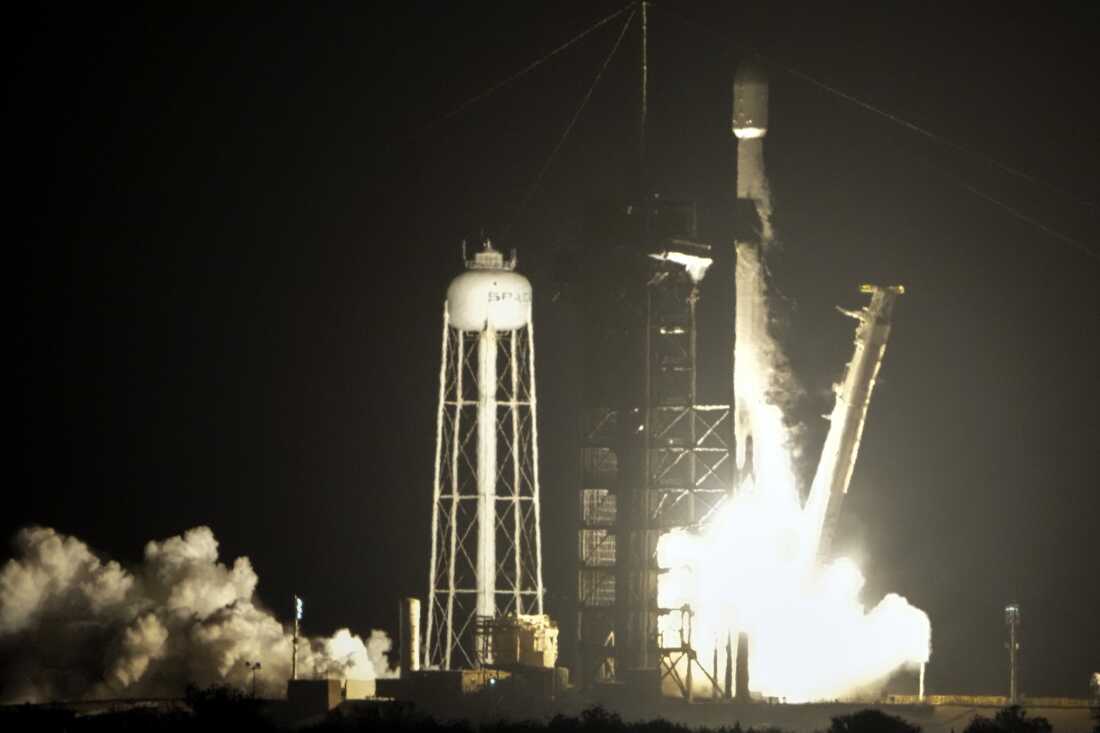
A portion of a SpaceX Falcon 9 rocket is predicted to strike the Moon, as reported by scientists. The collision is anticipated early Wednesday at approximately 2:35 a.m. ET, with the debris traveling over 5,000 miles per hour. This piece is a segment of the rocket’s upper stage, similar in size to a five-story building. Originally, it transported two lunar landers and scientific equipment to the Moon in January 2025.
Impact Details
The expected impact site is on the Moon’s sunlit side visible from Earth, near the northwestern Einstein Crater. The collision could result in a crater at least 17 meters in diameter. Bill Gray, a developer of space-tracking software, provided these details.
SpaceX Response
SpaceX had no plans for this defunct piece to collide with the Moon, stated the Associated Press. NPR’s inquiries to SpaceX for comments remain unanswered.
Orbiter’s Observations
Brent Garry, project scientist at NASA Goddard Space Flight Center, noted that the Lunar Reconnaissance Orbiter (LRO) will survey the area pre- and post-impact. This will enable assessment of surface alterations.
“After the impact, we might identify its location more precisely. We can conduct additional targeting around a week later over the area,” Garry explained during a session by NASA’s SSERVI.
Visibility Challenges
The impact may be difficult to observe, even with advanced telescopes, according to researchers. Bill Gray mentioned that rocks ejected might create a “plume” visible against the dark background once they leave the Moon.
Though detecting the plume is challenging, sensitive telescopes might capture it. Ben Fernando, a postdoctoral fellow from Los Alamos National Laboratory, emphasized the rarity of such events as valuable observational opportunities.
“While ordinary binoculars won’t suffice, those equipped to handle the risk could indeed try observing,” Fernando advised.