
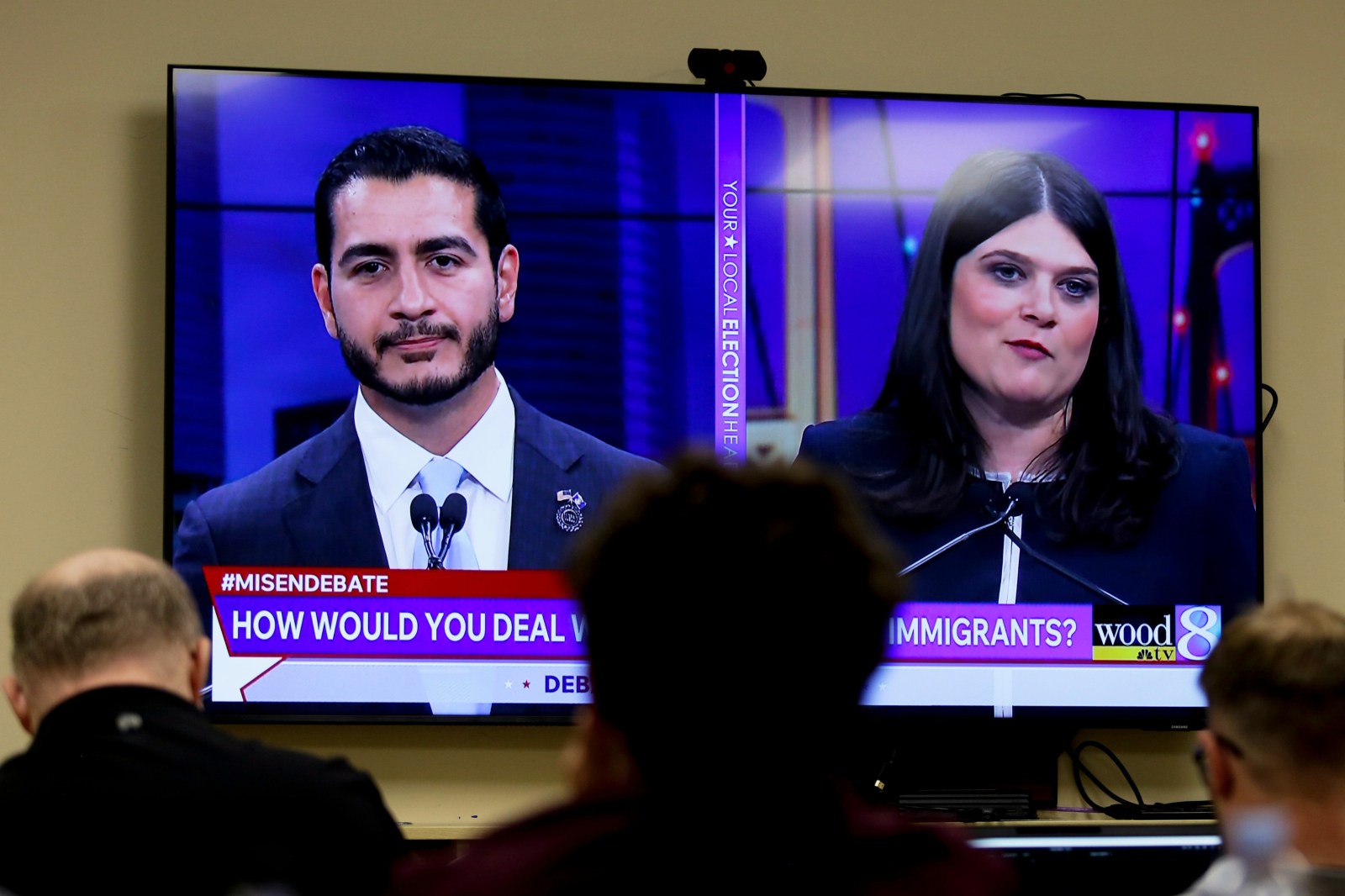
On Tuesday, Democrats in Michigan are heading to the polls for one of the party’s most closely watched primaries. This election will determine who will replace retiring Senator Gary Peters and is seen as a crucial reflection on the Democrats’ future. Former public health official Abdul El-Sayed and Representative Haley Stevens are vying for the nomination. The race has become a national proxy battle concerning ideology, campaign spending, and influence within the party.
Stevens is the establishment favorite, backed by Governor Gretchen Whitmer with significant financial support from the American Israel Public Affairs Committee’s affiliated super PAC. El-Sayed, representing the progressive wing, has the endorsement of figures like Senator Bernie Sanders and Representative Alexandria Ocasio-Cortez. He aims to show that grassroots organizing can surpass institutional forces.
If El-Sayed wins both the primary and the general election against Republican Mike Rogers, it could signify that the progressive agenda resonates in battleground states. If he wins the nomination but loses in November, moderates may argue that progressive candidates are less viable in swing states. Stevens is also tested similarly, with her supporters believing she is the Democrats’ best hope to maintain the seat.
Money, Influence, and the AIPAC Debate
The race has attracted attention due to the unprecedented level of outside spending. United Democracy Project, AIPAC’s super PAC, has reportedly invested approximately $30 million in supporting Stevens and opposing El-Sayed. This is their largest single campaign expenditure, according to the Associated Press.
Progressives argue that Michigan represents a broader struggle over the influence of outside money in Democratic primaries. Joseph Geevarghese, executive director of Our Revolution, stated that a Stevens defeat would demonstrate the limits of what financial power can achieve. Voters are prioritizing issues such as affordability, housing, and healthcare.
Stevens’ campaign dismisses the focus on outside spending, with her spokesperson noting she remains the strongest candidate against Rogers. Doug Gordon, a Democratic strategist, believes an El-Sayed victory would be seen as a setback for AIPAC. The late primary schedule leaves the nominee with less than 100 days to unify Democrats before facing Rogers, presenting a challenge for either candidate.
Jim Kessler of Third Way points out Michigan’s demographic specifics, highlighting its significant Arab American population. He suggests that discussions around Israel will continue to divide Democratic politics, irrespective of the primary outcome.
The Fight for Black Voters
Winning over Black voters is critical, as they form about one-fifth of Michigan’s Democratic primary base. Historically, Black voters have leaned towards moderate candidates. Polls suggest Stevens has more support among older Black voters, while El-Sayed appeals to younger, college-educated individuals.
Both campaigns are focusing efforts on Black communities. Stevens has been active in Detroit and Flint, while El-Sayed has campaigned in Pontiac and attended community events.
El-Sayed faces scrutiny due to his role in the 2024 “uncommitted” movement, which protested against the Biden administration’s policies. Critics see this as a radical stance, while Stevens’ camp views her as a better contender against Rogers.
National Ambitions Under the Microscope
As the contest tightens, Stevens and allies question El-Sayed’s focus. Leaked audio suggests he sees a victory as part of a broader strategy to reshape the Democratic Party. Stevens seized on these comments, portraying him as eyeing national prominence over state representation.
Her campaign emphasizes her focus on Michigan-specific issues, such as manufacturing jobs and utility rates. El-Sayed, however, aims to expand his influence beyond state lines.
Momentum Appears to Shift
Recent polling indicates shifts in the race dynamics. El-Sayed appears to have gained an edge in recent surveys, leading Stevens in various polls.
Prediction markets show a growing confidence in El-Sayed’s chances, reflecting changing voter sentiments across demographics.
The Road to November
The ultimate winner will face a challenging general election in a state known for tight outcomes. Michigan remains a significant battleground, as demonstrated in previous elections. Regardless of primary success, the nominee will need to appeal to a broader electorate in November.
The contest remains a vital opportunity for Republicans. The primary outcome will clarify who Democrats believe is best positioned for the general election fight, intertwining with the larger debate over the party’s future direction.