
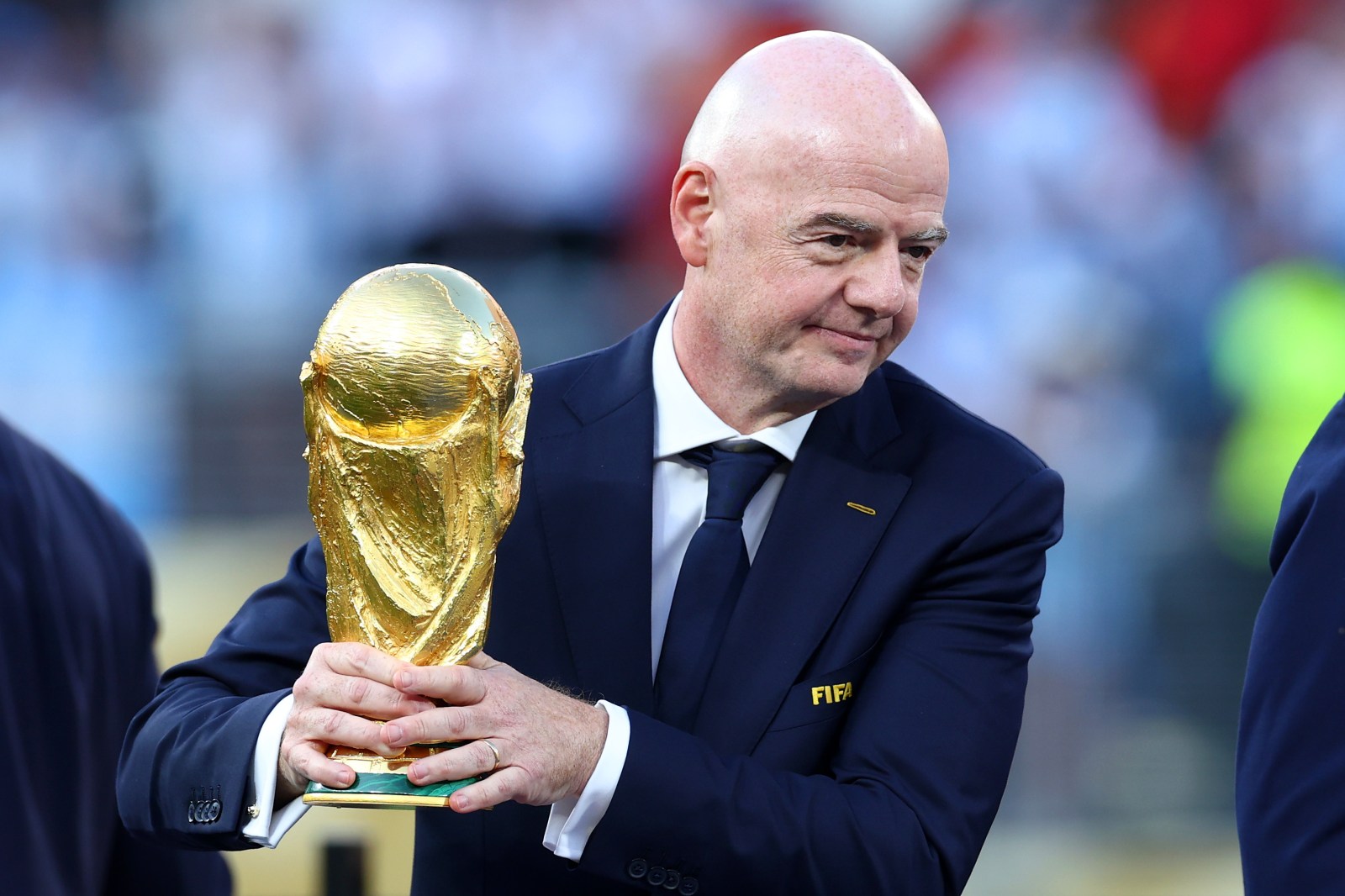
FIFA President Gianni Infantino recently proposed selling a stake in the World Cup to private investors, causing a significant upheaval in the soccer world. Initially leaked and formally presented on July 28, the plan was abandoned within three days due to widespread opposition.
The proposal involved creating a new subsidiary called FIFA Forward Enterprise, with the help of JPMorgan, valued at about $20 billion. This subsidiary would handle FIFA’s commercial operations related to the men’s and women’s World Cups, as well as the Club World Cup. FIFA planned to sell a minority stake worth up to $4.2 billion to investors, chiefly Thrive Eternal, while keeping majority control.
Infantino claimed this plan would boost investment across global soccer. He allowed FIFA’s 211 member associations until September 19 to approve it, promising payments that might have risen to $24 million per association during the 2035-39 cycle. Critics, however, saw these incentives as a cover for a strategic shift—a more frequent World Cup possibly disrupting the traditional four-year cycle.
The plan sparked Infantino’s most significant challenge since becoming FIFA President in 2016. UEFA’s 55 member associations moved to boycott all FIFA tournaments while the proposal was active. CONCACAF followed suit, while the Asian Football Confederation, traditionally supportive of Infantino, called for a review of FIFA’s governance and decision-making.
UEFA condemned FIFA for promoting the proposal through a secretive process and asserted that Infantino had lost crucial support from Europe and globally. It demanded comprehensive governance reforms within FIFA.
Dissent Within FIFA Structures
Inside FIFA, discontent spread over the plan. Carlos Cordeiro, Infantino’s senior adviser, resigned, terming the proposal a poor deal for soccer. Kevin Lamour, FIFA’s Chief Operating Officer, criticized the secrecy around the project, calling it “the project of one person.”
UEFA intensified opposition with its 55 member associations voting against FIFA competitions over the proposal. Mark Pieth, former chair of FIFA’s Independent Governance Committee, viewed this as a potential turning point, suggesting that Europe might eventually break away from FIFA to host its own tournaments.
European Clubs’ Influence
Another crucial opposition source involves prominent clubs. Teams such as Real Madrid, Barcelona, and Bayern Munich, along with Premier League giants, could refuse player release for excess tournaments. European Leagues and FIFPRO Europe condemned the proposal, warning it could lead to more frequent tournaments and compromise player welfare.
Nasser al-Khelaifi, European Club Association Chair, maintains a complex dynamic with FIFA. He has collaborated with Infantino on expanding the Club World Cup but has reservations about organizing it.
Despite criticism, Infantino’s current electoral strategy revolves around financial incentives for federations heavily reliant on FIFA funding, especially in Africa.
Infantino’s Position Under Scrutiny
The investment plan had its roots in a strategic partnership with Thrive Capital, founded by Joshua Kushner, Donald Trump’s son-in-law Jared’s brother. These connections have raised questions concerning potential nepotism and conflicts of interest.
FIFA’s 211 member associations each have a vote, irrespective of their size or wealth, meaning smaller federations hold equal weight to larger ones, influencing leadership decisions. Infantino aims to secure their support by bolstering their financial prospects.
Amid varied criticisms during the World Cup, FIFA still reports substantial financial growth. Approximately $13 billion in revenue is anticipated for the cycle including the 2026 World Cup.