
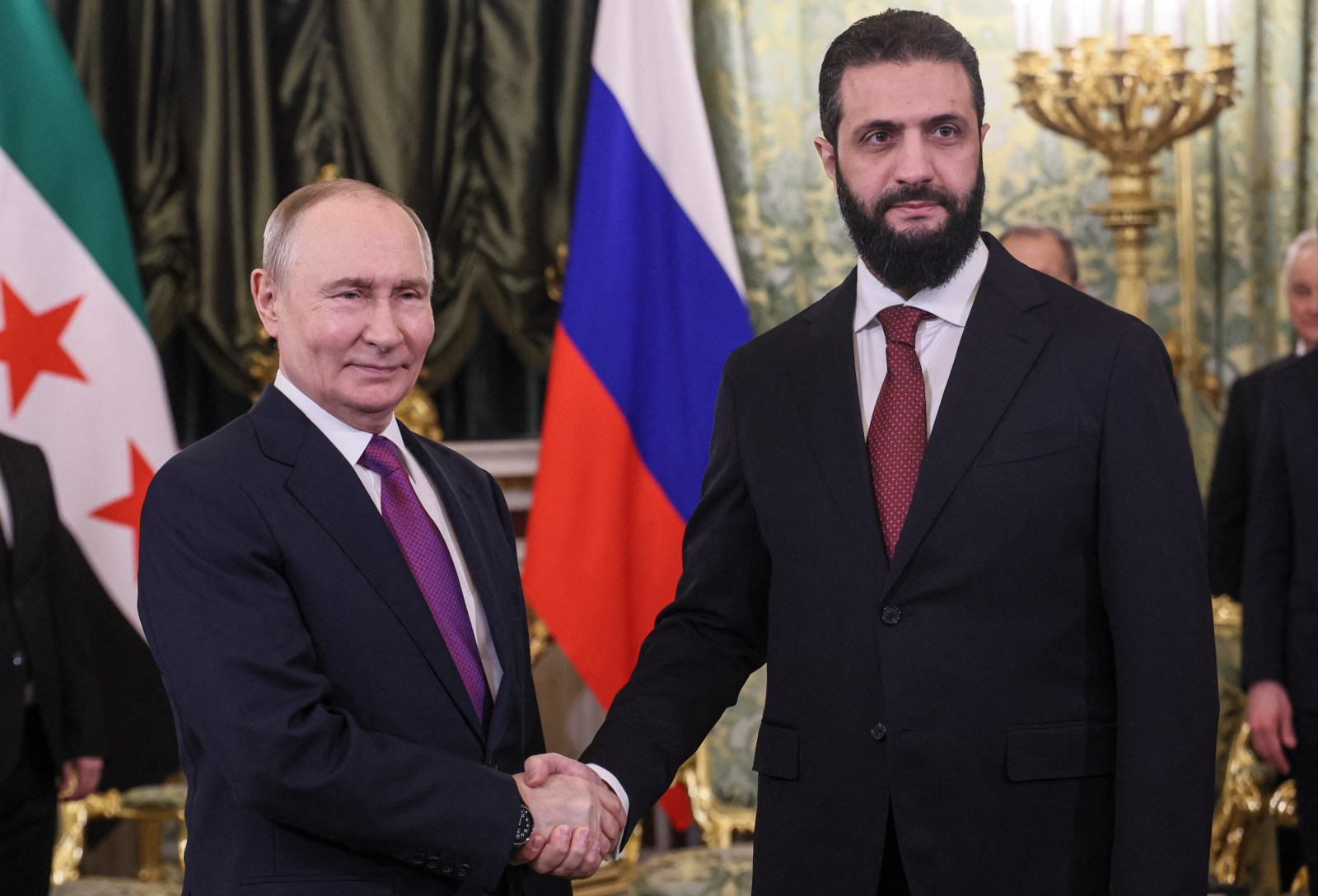
Over the past two years, many believed Russia would lose significant influence with the potential collapse of Bashar al-Assad’s regime in Syria. Russia had a long history of investment in Syria’s political, economic, and military arenas to maintain Assad’s power. When Hayat Tahrir al-Sham, previously affiliated with Al-Qaeda, took control in Damascus in December 2024, it seemed Russia’s strategic foothold in the region was at risk. However, this assumption appears to be inaccurate.
A recent study by Israel’s Institute for National Security Studies outlines increased collaboration between Moscow and Damascus. Russia’s diplomatic success is due to its strategic and consistent efforts. Early in Ahmed al-Sharaa’s leadership, Russia extended gestures like wheat and fuel shipments and engaged in high-level dialogues with Syrian officials. Proposals were made for humanitarian and economic partnerships, including the Syrian energy infrastructure restoration and increased material assistance. Russia also aimed to transform sites like Khmeimim and Tartus into humanitarian aid hubs.
Significantly, Russia proposed solutions to Syria’s military challenges. These included army support services, training, arms procurement, and limited military deployments, similar to the earlier role of providing military aid to Assad’s regime.
Moscow’s ambitions are expanding. It plans to develop a commercial logistics hub at Tartus, previously a military facility, into a central unit for broader economic operations. The strategy involves routing approximately 250,000 tons of Russian goods monthly through Tartus, starting with large grain shipments, and connecting to Russia’s Novorossiysk port. This plan seeks to tighten the economic ties between Russia and Syria.
Russia’s strategy in Syria is evolving from merely military backing to becoming integral to Syria’s economic recovery. Historically, Russia’s influence centered around vital military support, such as assisting the Assad regime in 2015 and maintaining military facilities in the Mediterranean. However, this influence was precarious, reliant on Assad’s regime’s continuity.
The current approach involves establishing enduring economic relationships that transcend any single leadership in Damascus. This strategy bears fruit with Syria now sourcing around 85 percent of its wheat from Russia, granting Moscow a degree of control over essential supplies. Additionally, Russia has become Syria’s main crude oil supplier, filling Iran’s former role, delivering 60,000 barrels daily as of May.
The proposed logistics hub would reinforce these dependencies, making Russian goods essential to Syria’s recovery and economic activities.
For the US and its allies, these developments present significant challenges. The Trump administration has sought to diplomatically engage Syria’s new leader, Ahmed al-Sharaa, to foster a Western-aligned orientation through lifting sanctions like the 2019 Caesar Act, aiding in Sharaa’s consolidation of power.
Russia’s deeper involvement in Syria’s reconstruction, food supply, energy, and commerce positions it to influence the country’s future in ways not aligned with US interests. Historically, Russia’s influence often conflicts with Washington’s strategic objectives, indicating potential discord in shaping Syria’s future.
Ilan Berman, senior vice president of the American Foreign Policy Council in Washington, DC, provides these insights. The opinions presented are his own.