
The concept of the national vaccine court is unfamiliar to many, yet it plays a critical role in balancing public health benefits with individual cases of injury from vaccines. Situated near the White House, this court represents a model of public policy aiming to support widespread vaccination while addressing rare cases of individual harm. Established in the 1980s, it has quietly compensated Americans who experienced vaccine-related injuries, amounting to billions in payouts.
The Case of Jacob Thompson
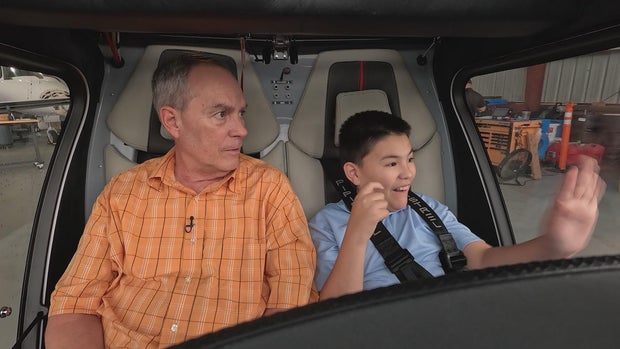
Jacob Thompson, a 13-year-old from St. Louis, symbolizes the rare but impactful cases handled by the vaccine court. Despite his love for airplanes, swimming, and Chick-fil-A, Jacob speaks only a few words and requires assistance walking short distances. His life changed after a six-month checkup where he received a combination vaccination for diphtheria, tetanus, and pertussis (DTaP).
Shortly after, Jacob experienced severe seizures. Within six months, severe cognitive impairments developed, and by age two, he faced up to 700 seizures a day. Diagnosed with a rare form of epilepsy, his parents, John and Huali Thompson, suspected the vaccine. They pursued legal action with attorney Renée Gentry, a leading figure in vaccine injury litigation.
Jon Wertheim: Is there any doubt that the vaccine caused Jacob’s injury?
Renée Gentry: We can’t ever prove scientific certainty on it.
The court eventually awarded the Thompsons $2.1 million, supporting the idea that the vaccine aggravated an underlying genetic mutation. Jacob also received a lifetime annuity for future care.
The Structure of Vaccine Court
The vaccine court is part of the National Vaccine Injury Compensation Program, created in response to 1980s public health scares over the DTP vaccine. Legal actions against manufacturers led to shortages, prompting Congress to establish a system that protects vaccine development while compensating affected individuals.
Unique in structure, the court doesn’t operate like typical legal systems. It features no juries, relying on special masters to assess cases based on whether vaccines likely caused the injuries. Since its inception, nearly 12,000 individuals have received close to $5 billion in compensation, sourced from a tax on vaccines.
Common claims involve shoulder injuries due to injection errors, though accommodations for injuries caused by newer vaccines, like COVID-19, are not yet included.
The Autism Controversy
Allegations linking vaccinations to autism once flooded the vaccine court. After a rigorous evaluation involving experts and scientific literature, no evidence supported such claims. Special masters, like Denise Vowell and George Hastings, ruled out a connection, a decision upheld by federal judges despite ongoing public debate.
Current Challenges
Today, the court faces challenges such as processing over 3,000 pending cases. This backlog has raised concerns, highlighted by high-profile figures like Robert F. Kennedy, Jr., who has called for expanded definitions to facilitate easier compensation for conditions such as seizures linked to autism.
Ryan Farrell, another case, underscores the need for prompt resolutions. After a tetanus shot led to ongoing pain from an autoimmune condition, his case took years to resolve, and compensation remains undecided.
Renée Gentry: If what you care about are vaccine-injured people, and them being compensated, then you want this court to work.
Despite its limitations, the court remains a bipartisan effort to balance public health objectives with the needs of those adversely affected by vaccines, ensuring ongoing support for those like Jacob Thompson.
Produced by Denise Schrier Cetta, with contributions from Elizabeth Germino, Arman Badrei, and Mimi Lamarre.