
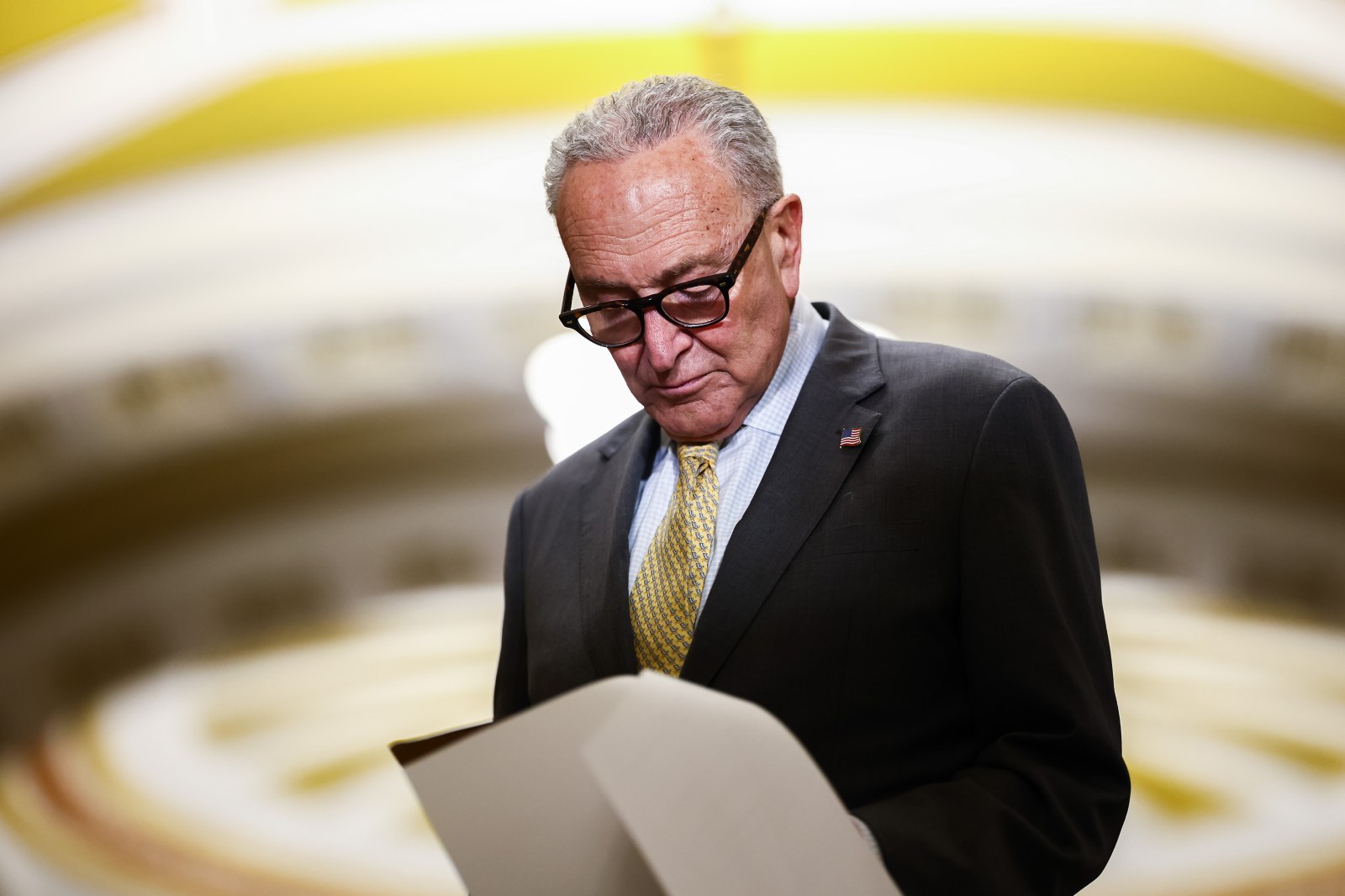
Last week, Senate Democrats engaged in a closed-door session lasting two hours to prepare for potential interference in the upcoming November midterm elections. Senate Minority Leader Chuck Schumer led the meeting, involving nearly a dozen senators in tabletop exercises designed to anticipate disruptions to the voting process.
These exercises included simulated scenarios like the use of AI-generated videos to spread disinformation around Election Day. Another scenario considered the potential stationing of National Guard troops or immigration agents near polling places.
In an interview with MS NOW, Schumer emphasized the importance of preparation. “Being prepared can prevent a lot of bad things from happening,” Schumer stated, emphasizing the need to be ready for any attempts at election interference.
Trump has never conceded his loss to Biden in the 2020 election, which led to the January 6 Capitol attack by his supporters. Schumer’s office highlighted Trump’s recent address on election integrity as a catalyst for the latest exercise.
“We are preparing for the possibility of threats similar to what happened in 2020,”said Marc Elias, a Democratic election lawyer involved in the session.
One specific scenario considered was the potential reaction of local authorities if federal agents were seen near polling places in states like Texas. Schumer noted collaboration plans with local law enforcement, such as the Houston and Dallas police departments, to manage any such deployments in advance.
In response to Trump’s address, 24 Democratic governors, including Kentucky Governor Andy Beshear and Michigan Governor Gretchen Whitmer, issued a statement condemning any attempts to undermine elections. “No amount of lies can change the fact that our elections are proven safe and secure,” their statement declared.
U.S. law places the authority of federal elections’ timing, place, and manner in the hands of the states. Legal scholars, such as Rick Hasen from UCLA, affirm that the president lacks legal authority to cancel a federal election. Instead, Democratic officials are concerned about pressure on state officials to alter results or presence of federal agents at polling locations.
Ari Mittleman, director of Keep Our Republic, highlighted realistic threats include confusion and litigation that can delay certification and undermine confidence in elections. Changing a certified outcome would be difficult due to multiple safeguards, such as local election officials, paper records, and audits.
Barbara McQuade, a law professor at the University of Michigan, sees voter suppression as a significant risk, potentially affecting key groups such as students and people of color. Her concerns focus on rhetoric and actions making voting harder for those likely to support the Democratic Party.
A recent Yahoo News and YouGov poll indicates only 23% of Americans have confidence that midterms won’t be rigged, while 33% believe they will be, and 44% remain unsure. A separate poll reported confidence in fair elections had dropped among Democrats from previous highs.
Americans tend to oppose more federal involvement in elections, with a YouGov and CBS News poll showing 71% prefer states to have control over how elections are managed. States United Action’s analysis found over 50 candidates challenging the legitimacy of the 2020 election are running for statewide office this year, including governors and incumbents.
The election denial movement is stronger than ever,said Joanna Lydgate, emphasizing the continued efforts to undermine the midterm elections.