
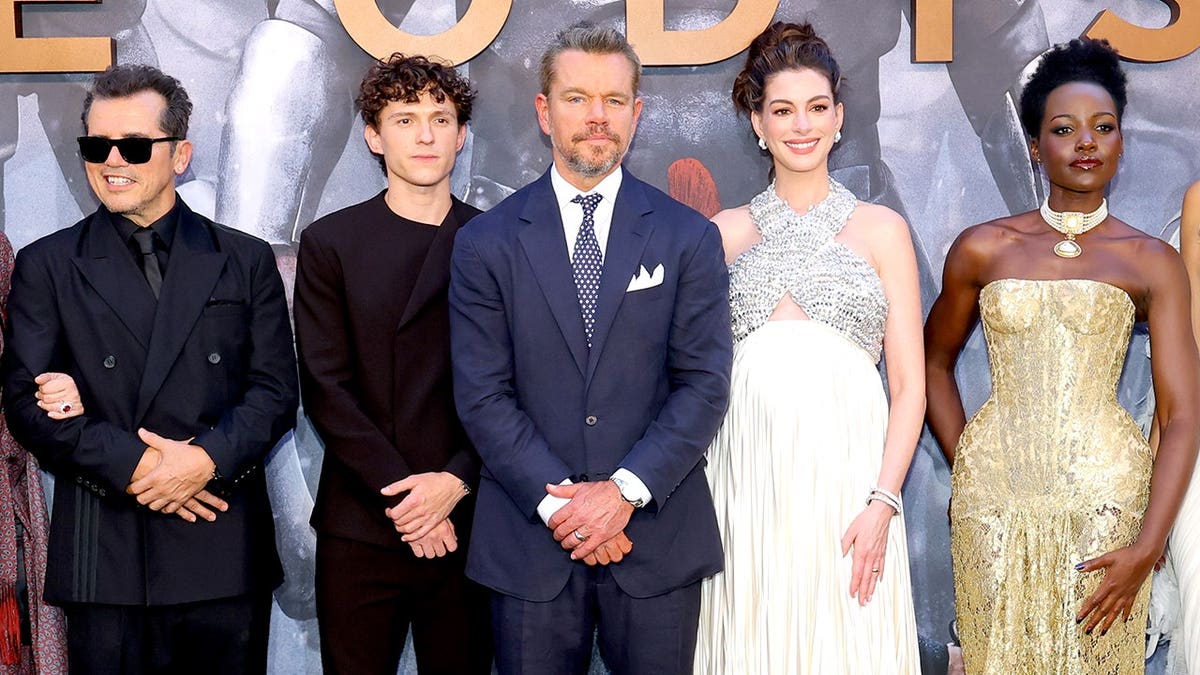
Christopher Nolan’s film adaptation of “The Odyssey” surprises viewers with its rich portrayal of mythological creatures from Homer’s epic. Packed with A-list stars, the film takes audiences from one mythical encounter to another as Odysseus battles his way home.
Joel P. Christensen, provost and senior vice president for academic affairs at the CUNY Graduate Center, and a professor of classics, emphasizes the visual impact of the movie. “The movie is visually stunning. It needs to be seen in the theater,” he shares.
Christensen, a Homer scholar, mentions that the film provides adequate context for those unfamiliar with “The Odyssey.” Unlike many blockbusters with a single villain, Nolan’s adaptation introduces a series of supernatural threats that Odysseus faces.
Polyphemus
One of the most famous Cyclops, Polyphemus traps Odysseus and his crew, devouring several. Odysseus blinds him with a wooden stake, allowing escape, but this act angers Polyphemus’ father, Poseidon, who curses their journey. In the film, Bill Irwin portrays this character.
Laestrygonians
These giant cannibals destroy almost all of Odysseus’ fleet when he docks at their harbor. Odysseus narrowly escapes with his lone ship, continuing to the island of the sorceress Circe.
Circe
On the island of Aeaea, the powerful sorceress Circe turns Odysseus’ men into pigs but falls in love with him and aids in his journey home. Samantha Morton plays Circe in Nolan’s movie.
Sirens
These half-bird, half-woman creatures lure sailors to their deaths with their songs. Odysseus orders his crew to block their ears with beeswax and gets himself tied to hear the song safely.
Scylla and Charybdis
The two monsters create a perilous passage for Odysseus. Following Circe’s advice, Odysseus chooses to sail past Scylla, sacrificing some men to ensure the survival of the rest.
Calypso
On the island of Ogygia, Calypso keeps Odysseus captive for years. Charlize Theron portrays Calypso, who eventually helps Odysseus construct a raft to leave the island.
A Scholar’s Perspective
Nolan’s adaptation condenses the epic for the screen. Christensen notes that the film changes some portrayals, like Polyphemus and Circe, which differ from Homer’s original narrative. These changes reflect the necessity to adapt the story into a shorter, visual medium.
Christensen highlights the differences between film and epic poetry. He notes that, despite alterations, many mythological figures remain central to Nolan’s version. He concludes, “This is Nolan’s ‘Odyssey,’ not Homer’s.”