
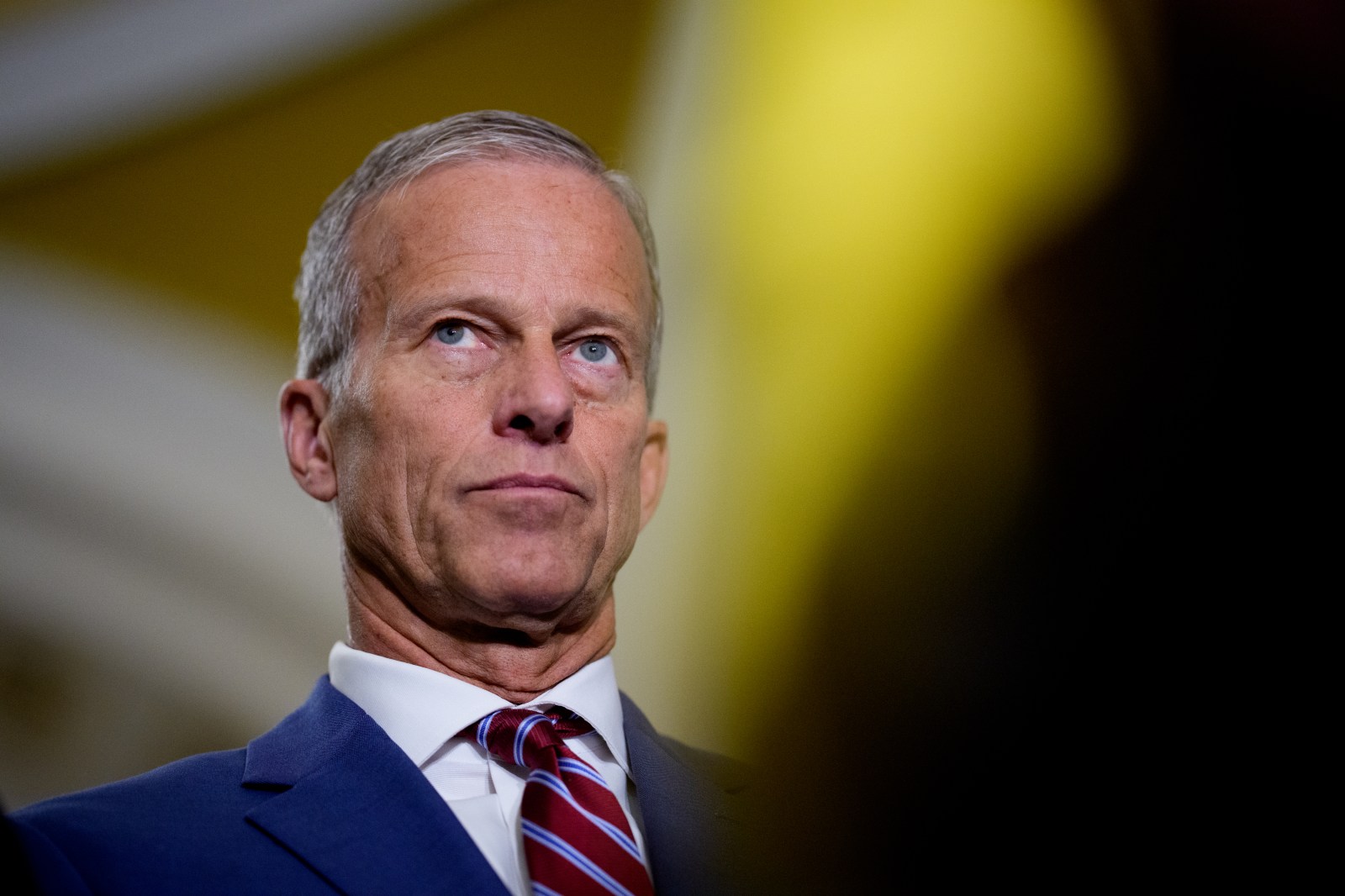
Senate Majority Leader John Thune expressed frustration after White House press secretary Karoline Leavitt stated that President Donald Trump’s patience was “running out” with Senate Republicans over the stalled SAVE Act. “Maybe she or somebody else ought to get on the phone and get the votes. Right? It’s 50 around here,” Thune, a Republican from South Dakota, told reporters.
Growing Frictions Over Legislative Delays
The tension between Senate Republican leadership and the White House has been increasing. Trump is urging Senate Republicans to advance the SAVE Act, one of his key election priorities, before Congress breaks for the August recess. A White House official referred Newsweek to Leavitt’s briefing remarks, along with Trump’s criticisms during a speech in Georgia.
Trump’s Increasing Pressure
Leavitt noted that Trump expressed growing frustration with the slow progress on the legislation during a White House briefing. “The president spoke about this directly yesterday,” she informed reporters. “His patience is running out.” Leavitt said Trump wants the SAVE Act enacted as soon as possible, emphasizing its support among voters.
“The president spoke on this and got loud applause,” Leavitt added. “People want proof of citizenship in elections, and the president strongly supports this.” She urged the Senate to act after the House advanced the proposal.
Thune’s Response: Reach Out for Support
Thune rebutted the criticism, arguing Democrats, not Senate Republicans, are blocking the legislation’s progress. “They might consider contacting those who oppose it, which includes the Democrats,” he suggested. Thune’s comments highlighted his struggle to balance Trump’s demands with Senate realities.
Trump Intensifies Advocacy for the SAVE Act
For months, Trump has pressured Congress to pass the SAVE Act, renewing his efforts recently as lawmakers discuss broader election-related reforms. Trump argued in a primetime address that the measure would bolster election integrity by requiring citizenship proof for voter registration.
The SAVE Act’s Legislative Hurdles
The SAVE Act would mandate U.S. citizenship proof for federal election registration and establish voter ID requirements nationwide. Despite broad Republican support, Senate rules present a significant obstacle.
Legislation typically needs 60 votes to overcome a filibuster in the Senate. The Democrats have consistently opposed the SAVE Act. This opposition has stalled the legislation, requiring either Democratic support or Senate rule changes to proceed.
Challenges in Senate Approval
The SAVE Act faces resistance from Democrats and some key Republican senators. Earlier this year, Republican Senators such as Lisa Murkowski sided with Democrats to block the legislation’s progress.
Murkowski voiced her opposition, stating in a Wall Street Journal opinion piece that the bill poses unique challenges for states like Alaska, where travel is costly and difficult. She cited potential costs for new voters in remote areas, arguing the law would unfairly burden them.
Proposed Changes with the SAVE Act
The SAVE Act aims to overhaul voter registration by requiring documentary proof of citizenship, like a passport or birth certificate for federal elections. It also includes voter ID requirements and mail voting restrictions. Supporters believe these measures are vital for election integrity.
Opposition and Criticism
Critics argue the legislation creates barriers for eligible voters. The debate centers not on allowing noncitizen voting, which is illegal, but whether citizenship proof requirements would prevent sufficient unlawful voting to justify voter obstacles.
A 2024 study by the Brennan Center for Justice estimated that over 21 million Americans lack immediate access to citizenship documents, complicating registration. Critics also highlight issues for specific groups like married women, military families, and those in remote areas.
Pressure Continues from MAGA Allies
Conservative activists, commentators, and some House Republicans have been pushing for Senate action on the bill for months, criticizing Senate leadership for delays. Allies of Trump have publicly criticized Thune, pressing for the bill’s progress.
The pressure has increased after the House passage of related provisions, framing the Senate as the main obstacle. Senator John Cornyn of Texas remarked that without sufficient votes, Thune’s influence is limited.
The SAVE Act’s Uncertain Future
Currently, the SAVE Act is a priority for Trump. However, it lacks a clear path to passage. The White House will likely continue pressuring the Senate as Republican leaders assess possible ways forward. Without the necessary votes, Trump’s efforts and frustration will likely persist.