
Imagine the roar of enthusiasm as fans chant “Ole! Ole! Ole!” while witnessing a sporting spectacle reminiscent of a famous battle in Madrid’s Las Ventas bullring. This excitement unfolded during the nail-biting climax of the 23rd edition of the men’s World Cup. Spain, after 104 matches spread across three countries over five and a half weeks, emerged victorious in the final showdown.
Spain’s breakthrough moment in the final was a testament to their possession-based strategy. For a brief period, they kept control like a training-ground exercise, infuriating Argentina’s players. It was a scene of strategic dominance. Spanish football, historically underperforming on the international stage, has transformed since adopting a focus on possession. Over the last 18 years, Spain has clinched the European Championship three times and now the World Cup twice.
“Forget fury and decide if it wants to be the bullfighter or the bull.” — Cesar Luis Menotti, on Spanish football
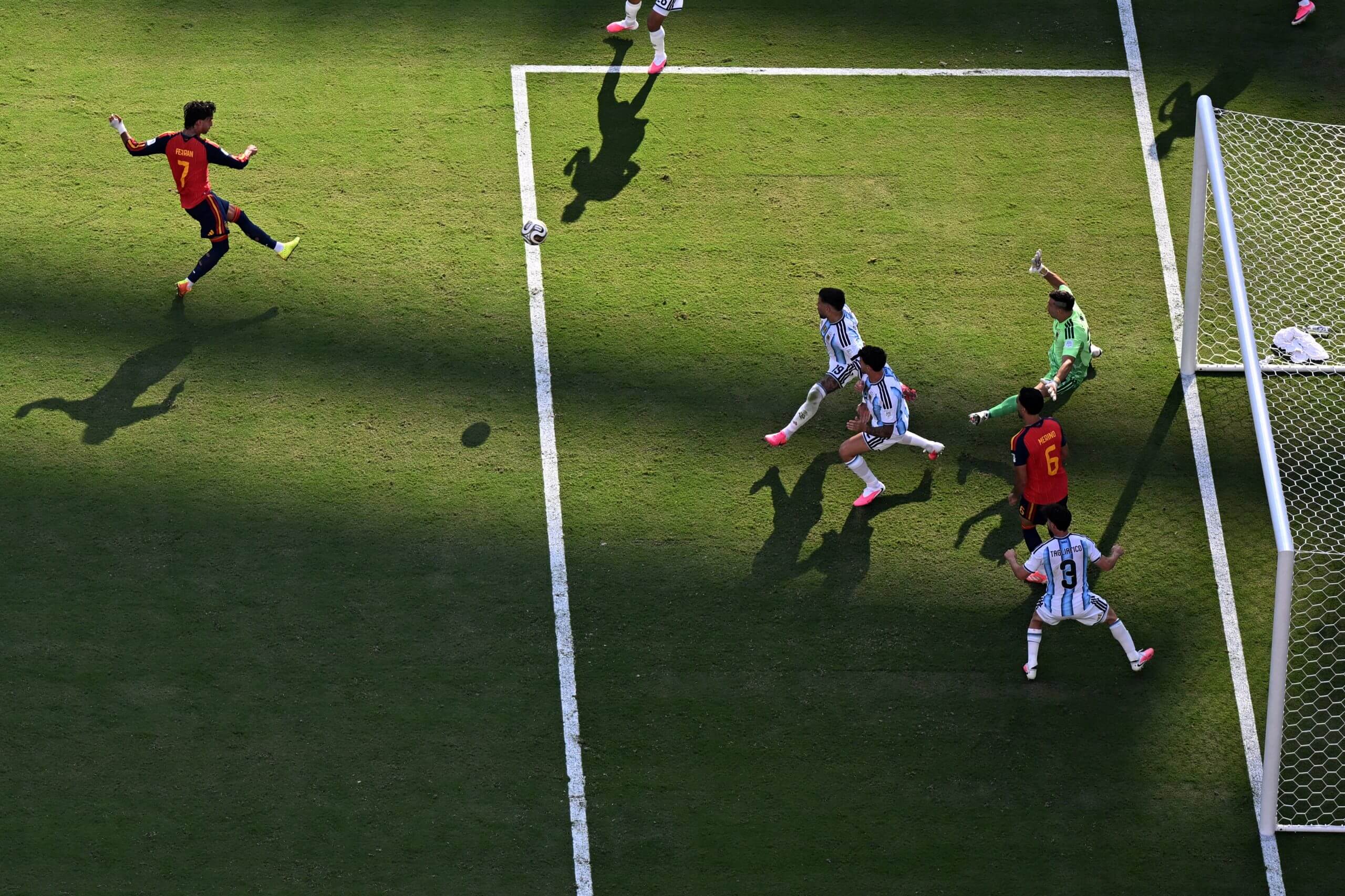
Spain ascended to the tournament’s business end, displaying outstanding teamwork that surpassed individual stars like Kylian Mbappé and Lionel Messi. Spain defeated France 2-0 in the semi-finals and ended a stalemate with Argentina with Ferran Torres’s decisive goal late in extra time.
The final was a showcase of Spain’s intelligent, controlled play versus Argentina’s aggressive approach. Argentina failed to make a single shot until the dying minutes of extra time. The game prompted memories of two previous World Cup finals. The first was in 1990, when Argentina’s unsporting tactics were punished by West Germany. The other was in 2010, when Spain overcame fierce aggression from the Netherlands.
The contrast between the teams was stark; Argentina relied on the brilliance of their captain’s individual effort. Spain, however, demonstrated calm composure and discipline, embodying sound football principles. Their victory emphasized method over madness.
Despite an initial group-stage draw with Cape Verde, Spain found their rhythm, conceding just one goal in the entire tournament. Rodri, Spain’s captain, received the Golden Ball award for outstanding performance, showcasing his resilience following a significant injury recovery. Young talents like Pau Cubarsi and established players across the pitch made immense contributions leading to Spain’s victory.
The secret lies in the cohesive development process within Spanish football. Pep Guardiola and Luis Enrique, among others, have shaped this era as successful club coaches. Spanish influence extends to the Premier League, with prominent positions occupied by coaches such as Mikel Arteta and Unai Emery.
Spain’s rise is underpinned by a methodical approach to developing national talent. Luis de la Fuente, who led Spain to World Cup victory, has spent years cultivating players and nurturing talent. Key players were part of his squads in previous under-19 and under-21 championships.
Spain’s victory was not an unobstructed path; they experienced setbacks since Euro 2012. The current team differs from the legendary generation featuring Busquets, Hernandez, and Iniesta. Yet, its effectiveness remains intact, particularly in the confident approach of wingers Williams and Yamal.
Spain maintained control, with 66.2% possession and 15 shots, against Argentina’s none during regulation time. In extra time, they succeeded, demonstrating patience and trust in their playing style.
Spain now holds both the men’s and women’s World Cups simultaneously. They have achieved dominance in the European Under-19 championships, with Yamal epitomizing their future aspirations. Yamal’s rise to the senior squad highlights Spain’s collective strength.
Luis de la Fuente instilled pride in his team, encouraging them to make history. They did, finishing the tournament with flourish and celebration, epitomized by the chants of “Ole! Ole! Ole!”