
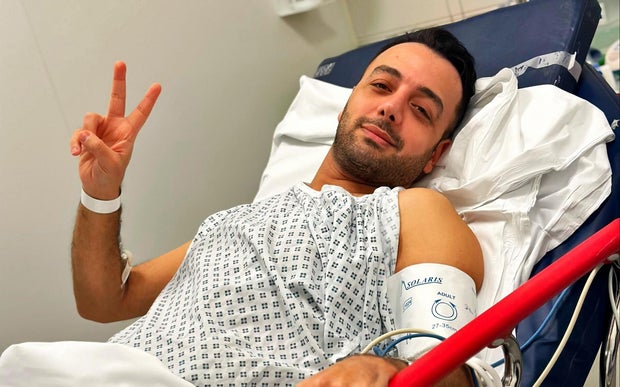
British Iranian journalist Pouria Zeraati expressed relief upon hearing the UK’s formal decision to ban support for Iran’s Islamic Revolutionary Guard Corps (IRGC) earlier this week. He described it as “the happiest day of my life since I was stabbed.” Zeraati’s focus was never on those convicted in the 2024 attack against him, but rather on countering the threat from the Iranian regime, specifically the IRGC. By designating the IRGC and fast-tracking the process, the UK government empowers law enforcement to effectively track and mitigate threats emanating from Tehran.
After gaining approval from both houses of the UK Parliament, the IRGC became one of three groups designated as threats to national security. The newly imposed criminal offenses under this law mean support for the IRGC is punishable by up to 14 years in prison, equating it with other terrorist organizations in the UK. Acts of sabotage linked to the IRGC could lead to life imprisonment.
The Challenges Facing Iranian Journalists
Persian-speaking journalists in the West, along with their families in Iran, have long faced threats and intimidation from the Iranian regime. Zeraati, a TV anchor at Iran International, experienced these threats firsthand. The network, critical of the Islamic Republic and aligned with the pro-monarchy opposition, broadcasts content that antagonizes the regime. Billboards in Iran have labeled Zeraati and his colleagues as enemies worthy of punishment.
Due to ongoing threats in 2022, London authorities installed barriers and maintained armed presence at Iran International’s studios. One year later, the channel moved its operations temporarily to Washington, D.C. Zeraati himself survived a violent attack in March 2024 as he was stabbed in London by assailants. Despite the attack, he remains committed to his work, now anchoring programs remotely for safety reasons.
Justice and Prevention
Prosecutors described Zeraati’s attack as a meticulously planned operation. Mobile data revealed coordination between the attackers and others, while financial records linked them to third-party funding. In recent developments, Romanians Nandito Badea and George Stana received prison sentences for their involvement, highlighting it as a state-sponsored action aligned with Iranian interests.
MI5 identified over 20 Iran-linked plots in the UK up to October 2025. These threats influence the UK’s decision to designate the IRGC. Iranian organizations, such as the Quds Force, have a history of targeting dissidents and perceived enemies abroad, an effort evident in the attacks on Zeraati.
Global Impact of IRGC Designation
The designation of the IRGC as a terrorist organization has been a contentious issue in the UK due to diplomatic ties. The US had taken similar steps in 2019, Canada in 2024, and the European Union earlier this year. Concerns centered on how such actions might affect UK-Iran diplomatic relations. Government officials, like Neil Basu, view the designation as both politically significant and practically beneficial, aiding in policing and intelligence efforts against recruitment by the Iranian regime’s proxies.
Zeraati believes that while the IRGC’s activities may not change, the decision could deter criminal collaboration with the regime. He expressed cautious optimism about the impact of these developments on his safety in the UK and looks forward to returning when the threat diminishes.