
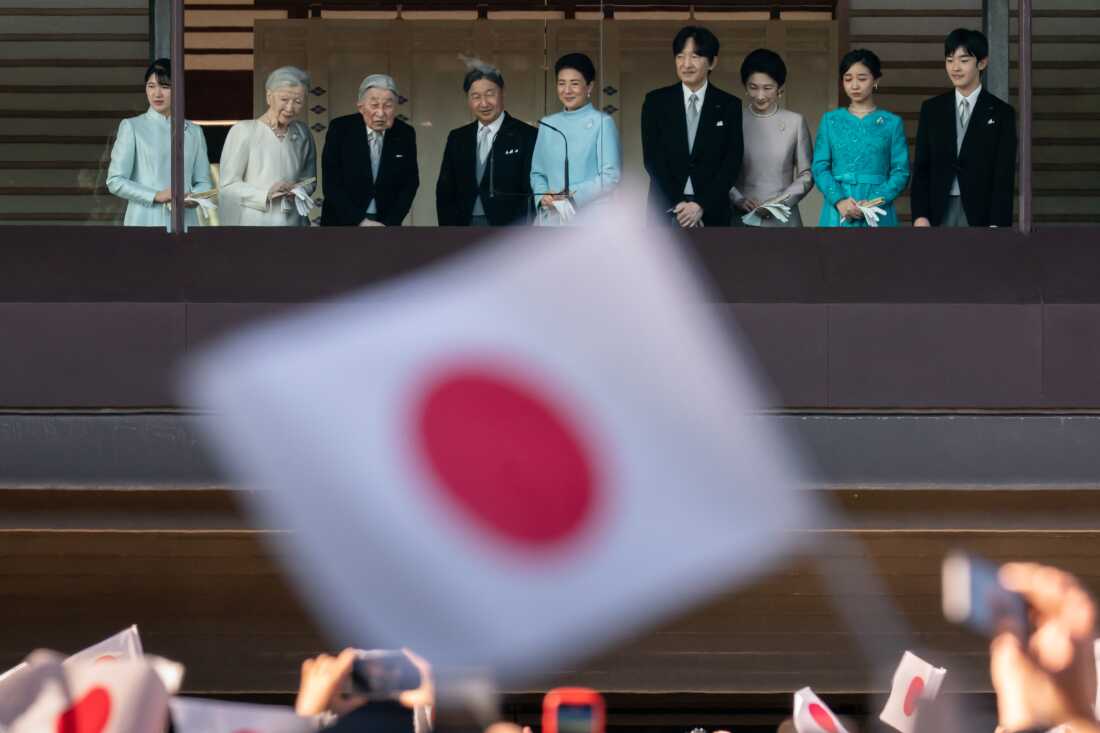
Japan’s upper house of parliament has approved changes to a law that governs who can inherit the throne in the world’s oldest hereditary monarchy. The revisions passed shortly after the lower house approved them, aiming to bolster the number of imperial family members as their ranks thin and age. However, critics argue the real objective is to prevent a future female emperor.
Critics, like Seiichiro Noboru, a former Japanese diplomat, claim the changes aim to keep women from ascending to the throne. Public support for Japan’s constitutional monarchy remains crucial as the nation lifts post-war military restrictions while showcasing itself as a defender of international order.
The revisions allow princesses to stay in the imperial family after marrying commoners. They also permit adopting male-line descendants from former imperial branches. However, these adopted men, born as commoners, cannot inherit the throne, although their male children may become eligible.
The imperial family faces uncertainty with only one young heir, Prince Hisahito, aged 19, nephew of Emperor Naruhito. Noboru suggests recognizing a female emperor could simplify succession.
Popularity of Princess Drives Reform Support
Princess Aiko, Emperor Naruhito’s only child, emerges as a favored candidate for a potential female emperor. At 24, she holds a degree in Japanese literature and works with the Japanese Red Cross Society. Large crowds welcome her public appearances. Noboru emphasizes her role in gaining support for female emperors, with polls reflecting 60% to 90% approval.
Yet, Japan’s first female prime minister, Sanae Takaichi, disagrees. She emphasizes the importance of the male line in maintaining imperial authority over 126 generations. Historically, Japan has had eight female emperors, descending from male lines like Princess Aiko.
History of Male-Only Succession
The male-only succession practice began in 1889 with the Imperial Household Law by the Meiji government. Emperors were seen as military commanders and divine descendants, while married women lacked legal rights. The law included concubines due to high infertility and mortality rates. Nearly half of Japan’s emperors were born to concubines.
Noboru argues that barring women from the throne contradicts constitutional rights against gender discrimination. He stresses the emperor’s authority comes from the people’s will, as stated in Japan’s Constitution.
The emperor, a figurehead in politics, cautiously addressed this issue. “I hope discussions about securing an adequate number of imperial family members can gain the people’s understanding,” he said recently.
Chie Kobayashi contributed to this report in Tokyo.