
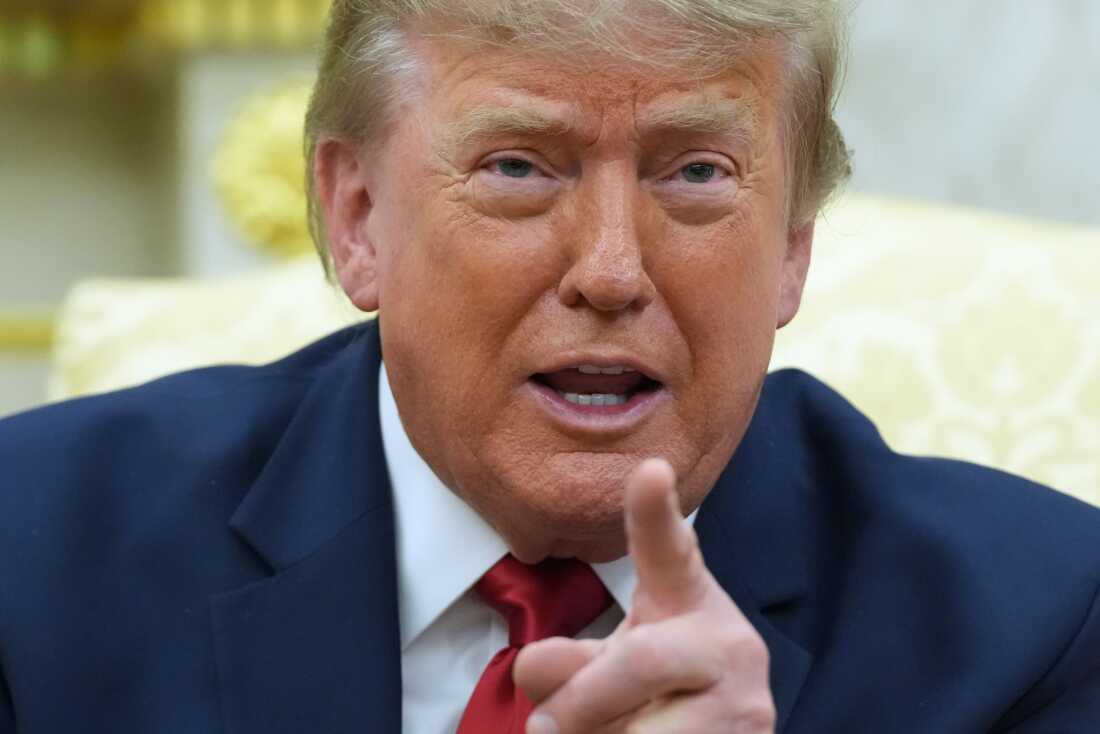
In the Oval Office at the White House on Tuesday, President Donald Trump met with Iraq’s Prime Minister Ali al-Zaidi. He announced plans to deliver a primetime address this week, highlighting election-related topics. The address is expected to revisit long-debunked conspiracy theories about his 2020 loss to Joe Biden. Trump’s push for stricter federal voting rules for November’s midterm elections is a central theme.
The scheduled speech at 9 p.m. on Thursday comes amidst challenges, including a stalled deal to end the war with Iran and deadly incidents involving Immigration and Customs Enforcement officers. Trump provided few details but teased “really big news,” emphasizing the importance of “free and fair elections” to the nation.
Previously, Trump has utilized primetime presidential addresses, typically reserved for important milestones, to deliver politically charged messages. This speech aims to amplify claims of election fraud to bolster Republican prospects before the midterms, which could impact Trump’s influence for the rest of his term.
On Monday, Trump reiterated baseless claims of voter fraud in Los Angeles’ mayoral primary race. Speaking to Newsmax, he attributed Republican Spencer Pratt’s loss to electoral fraud and highlighted California’s slow vote count. Following Trump’s statements, federal authorities announced fraud investigations last month.
Trump’s focus on voting fraud and security traces back to 2016. After winning the presidency, he established a voting integrity commission, which disbanded without finding widespread voter fraud. After losing the 2020 election to Biden, he claimed fraud and focused on Biden’s narrow victory in Georgia. Trump reportedly pressured Georgia’s secretary of state to “find 11,780 votes” to overturn the results, leading to indictments which were later dropped.
Multiple audits and reviews, including those by his own then-attorney general, found no significant fraud in 2020. Prior to his 2024 victory, Trump had been preparing to claim electoral cheating if defeated. He filled his administration with officials supporting his false allegations of 2020 fraud. Voting regulation became a priority, with demands for voter ID and restrictions on mail-in voting.
As midterm elections approach, Trump raises new fraud claims to question election results potentially challenging his authority. Earlier this year, FBI agents executed search warrants in Fulton County, Georgia, seizing 2020 election materials. Tulsi Gabbard, then director of national intelligence, oversaw the operation in Atlanta.
Maryland Governor Wes Moore, campaigning for Democratic candidates in Georgia, dismissed Trump’s strategy as one for “losers,” suggesting the public is tired of rehashing settled elections from six years ago. Trump also criticized states allowing mail-in ballots, demanding scrutiny of California’s primary election process. Recently, he dismissed members of the federal Election Assistance Commission, targeting their resistance to imposing citizenship documentation requirements for voter registration.