
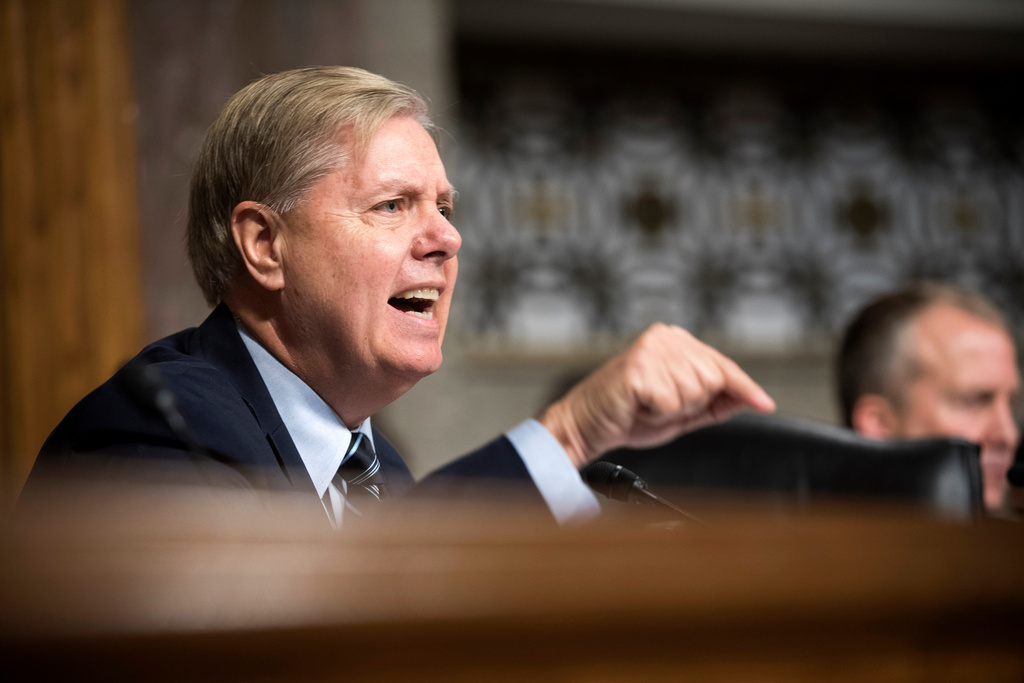
Senator Lindsey Graham of South Carolina, known for his hawkish interventionism, has passed away, leaving a gap in the Senate. His death affects more than policy; it impacts a unique political role he fulfilled over many years. Graham was a crucial link between traditional Republican foreign policy and the current administration’s “America First” posture.
Graham consistently argued for the notion of permanent conflict as a moral necessity and a pragmatic requirement of alliance management. He viewed Moscow and Tehran not as separate issues but as two fronts of a symbiotic struggle. His institutional influence saw him collaborating with Secretary of State Marco Rubio to align President Trump’s approach towards Iran and Russia.
Through hearings, floor statements, and interviews spanning two decades, Graham treated threats from the Kremlin and the Iranian regime as pillars of an anti-Western axis. He simplified complex geopolitical realities into a narrative of ‘good vs. evil,’ equating diplomatic restraint with appeasement.
Graham once advised Israeli leaders to “do what you have to do” regarding Iran’s nuclear program, suggesting war serves a preferred regional order.
The ongoing U.S.-Iran conflict in 2026 has tested the ‘Graham Doctrine.’ An announcement by Trump recently ended the ceasefire, proving diplomatic stabilization efforts obsolete. Graham’s role as a mediator of hardline positions through responsible language is now absent.
His political death triggers a scramble for succession. Graham’s multilingual political role as a broker and interlocutor for President Trump influenced his legislative actions. Potential successors like Nancy Mace and Ralph Norman are considering bids, yet these figures lack Graham’s institutional memory and unique ‘translator’ status.
The Trump administration faces a messaging crisis. Previously, Graham framed Trump’s instincts in bipartisan terms of ‘American values’ and ‘global security.’ Without him, the administration lacks tempering rhetoric, exposing its decisions for what they are: power moves without coherent doctrine.
While Trump’s alliance with Netanyahu survives Graham’s passing, the sustainability of such transactional relations is fragile in Washington. Graham gave a gloss to their cooperation, transforming raw decisions into narratives of statesmanship.
The absence of Graham, a key translator of hawkish foreign policy, leaves the U.S. administration struggling to defend its Middle Eastern strategy. Without Graham’s traditional diplomatic presentation, these decisions now face a wary public.
The core question remains: Can intervention machinery function prudently without its chief messenger?