
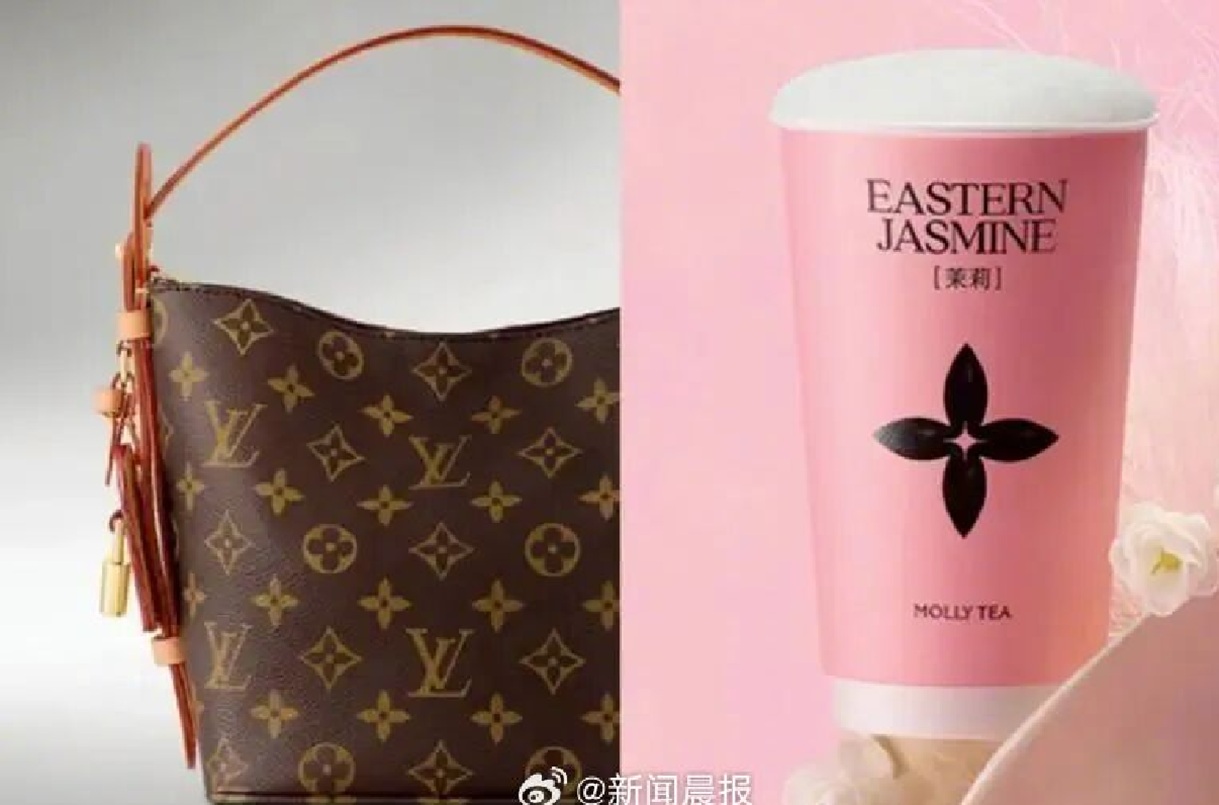
A recent court decision in China favoring Louis Vuitton in a trademark dispute has stirred significant backlash. Chinese netizens have expressed anger over what they perceive as the French luxury brand’s appropriation of traditional Chinese culture. Many accuse Louis Vuitton of misusing trademark laws to secure exclusive rights.
Luxury Giant vs. Tea Chain
On June 29, the Intermediate People’s Court in Jiangsu found the local company Molly Tea guilty of infringing on seven of Louis Vuitton’s registered trademarks. This includes the brand’s notable Monogram Canvas, recognized for its stylized floral designs. The court deemed the floral pattern on Molly Tea’s logo similar to Louis Vuitton’s and ordered the tea chain to pay 10 million renminbi (approximately $1.4 million) in damages and 300,000 RMB in legal fees. The Nanfang Metropolis Daily, a Guangzhou-based publication, reported these details. Yet, the ruling is not final, and Molly Tea’s intent to appeal remains unconfirmed.
Located in Shenzhen, Molly Tea has gained popularity among young consumers with its blend of traditional Chinese tea flavors and sleek branding, perfect for social media. Discussions on Weibo about the case have reached over 33 million views under the hashtag “LV cannot sue for trademark infringement over its use of Chinese patterns.”
Trademark Law and Cultural Heritage
Online users are sharing images comparing Louis Vuitton’s floral monogram with ancient decorative motifs in China that predate the brand by over a millennium. One Weibo user commented, “International brands like LV should not exploit Chinese culture and then accuse others.” Another criticized the brand’s actions, saying, “They claim to protect intellectual property while benefiting from Chinese businesses.”
Some users questioned the court’s understanding of the cultural origins of the designs. “Do the judges have no sense of national sovereignty?” asked one commenter. The debate extends beyond Louis Vuitton’s legal ownership of trademarks to concerns over trademark laws’ handling of traditional cultural imagery.
Legal experts explain that while centuries-old motifs are usually seen as too generic for trademark protection, a company can earn exclusive rights if its use over time makes consumers associate it with the brand. Molly Tea’s predicament brings to mind a similar case earlier this year, where a now-closed Nanjing restaurant was fined for infringing LV trademarks with its vintage floral decor.
‘Toilet Bags’ Joke Resurfaces
The controversy has also breathed new life into a longstanding joke. Some netizens sarcastically refer to Louis Vuitton bags as “toilet bags” due to the brand’s floral pattern resembling traditional Chinese motifs found in window grills, floor tiles, and ceramic tiles previously seen in public toilets.
For further information, contact Newsweek editors John Feng and Sam Wilson.