
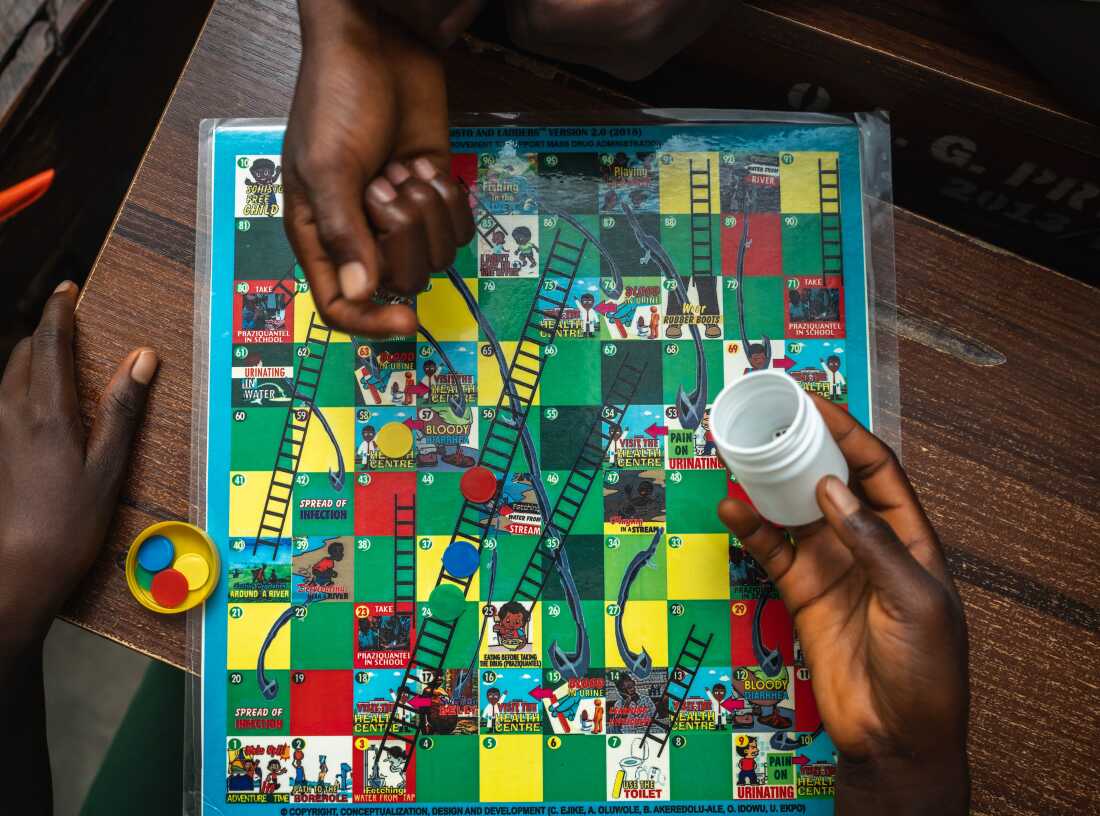
The educational board game “Schisto & Ladders” is being used in elementary schools in Nigeria to teach students about the tropical disease schistosomiasis. This disease, caused by parasitic worms, affects many residents. The game is an adaptation of the classic board game “Chutes & Ladders,” but with a focus on educating children about preventing and treating this disease.
Understanding Schistosomiasis
Schistosomiasis is a parasitic infection transmitted through skin contact with contaminated water. Infected water bodies contain larvae that can penetrate human skin, leading to infection. The disease is also known locally as “Atosi Aja” or Bloody Urine. It can cause symptoms like fever, rash, and blood in the urine. If left untreated, it can lead to severe health issues such as bladder cancer and major organ damage, particularly in young people.
The “Schisto & Ladders” Game
Developed by a team led by Professor Uwem Ekpo from Akwa Ibom State University, “Schisto & Ladders” was created in 2014. The game aims to raise awareness among children about the risks and prevention of schistosomiasis. Players roll dice to move along a path, with the goal of reaching the end while learning about good practices to avoid the disease.
Positive actions in the game, such as “eat before taking medicine,” help players climb ladders, while actions that increase infection risk, such as “playing in a river,” send their token down a slide. The game encourages behaviors like taking praziquantel at school and removing vegetation around rivers to reduce snail hosts carrying the parasite.
Game Implementation in Apojola Village
In July 2025, Cynthia Umunnakwe, a Nigerian researcher, introduced the game to children in Apojola village. This initiative was part of a Ministry of Health program offering urine testing and treatment for schistosomiasis. A significant proportion of residents in this area have active infections, especially children who play in freshwater bodies like the Oyan River.
In addition to the game, Umunnakwe used live snails to educate children about the parasite’s host. Collected by Dr. Olubukola Adelakun, the snails were identified to help children recognize those that carry the parasite.
Impact of the Educational Game
Research by Cynthia Umunnakwe demonstrated the game’s effectiveness in raising awareness and changing perceptions about praziquantel, a drug used to treat schistosomiasis. In a six-month study involving 275 students across six schools, knowledge about the drug significantly increased. By the end of the study, many students understood that the medication was safe.
Cynthia Umunnakwe expressed hope that playing “Schisto & Ladders” would lead to behavior change among schoolchildren, helping to reduce the prevalence of schistosomiasis. The educational approach not only enhances awareness but also brings joy to the children as they play.
“Children go up the ladder when they encounter a good behavior [in the game] that would prevent schistosomiasis,” Cynthia Umunnakwe explained.