
Egypt announced two major archaeological discoveries in the western desert on Saturday. These finds, at the Dakhla Oasis and the Marina el-Alamein site near Alexandria, aim to enhance the country’s tourism industry, known for its ancient attractions.
In the Dakhla Oasis, remnants from the Byzantine era have emerged. These include a fourth-century settlement showcasing urban and economic life. The area comprises intersecting streets forming public squares, with a basilica church presiding at the settlement’s head. Nearby, two watchtowers offered protection in ancient times.
The oasis in Egypt’s New Valley province is on the UNESCO Tentative List for World Heritage.
A fortified structure with thick walls and homes with reception halls were found. Among these is the house of Tisous, a church deacon, believed to have served as a house church.
Archaeologists also found bread ovens and kitchens, indicating food production. Numerous bronze coins with portraits of Byzantine emperors, alongside gold coins from Constantius II’s reign, add to the site’s historical value. About 200 pottery fragments used as writing material reveal details of daily life. These ostraca include records of purchases and private correspondence.
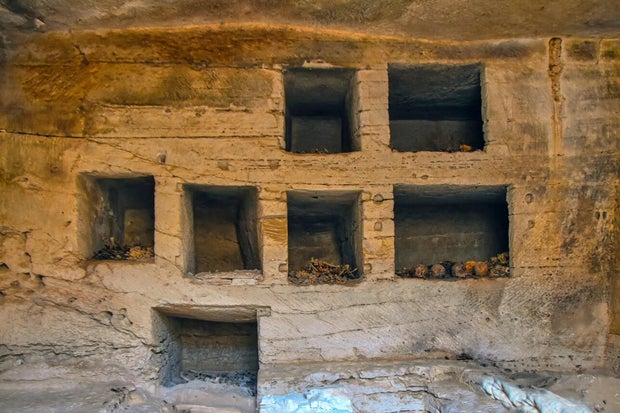
At the Marina el-Alamein site, around 62 miles from Alexandria, 18 tombs have been uncovered. These include 11 rock-cut tombs and seven limestone-built ones, increasing the site’s total discovered tombs to 48.
Artifacts found at Marina el-Alamein include pottery, amphorae, lamps, and an 8-foot granite sarcophagus with skeletal remains under study.
A plaster sphinx and a practice of placing gold pieces in the mouths of the dead, known as “the golden tongue,” were also unearthed.
The site was once the port city of Leukaspis, thriving due to wheat and olive trade before a fourth-century tsunami. Following political instability and the pandemic, Egypt’s tourism is rebounding. Last year saw a record 19 million visitors, with a continued rise this year.