
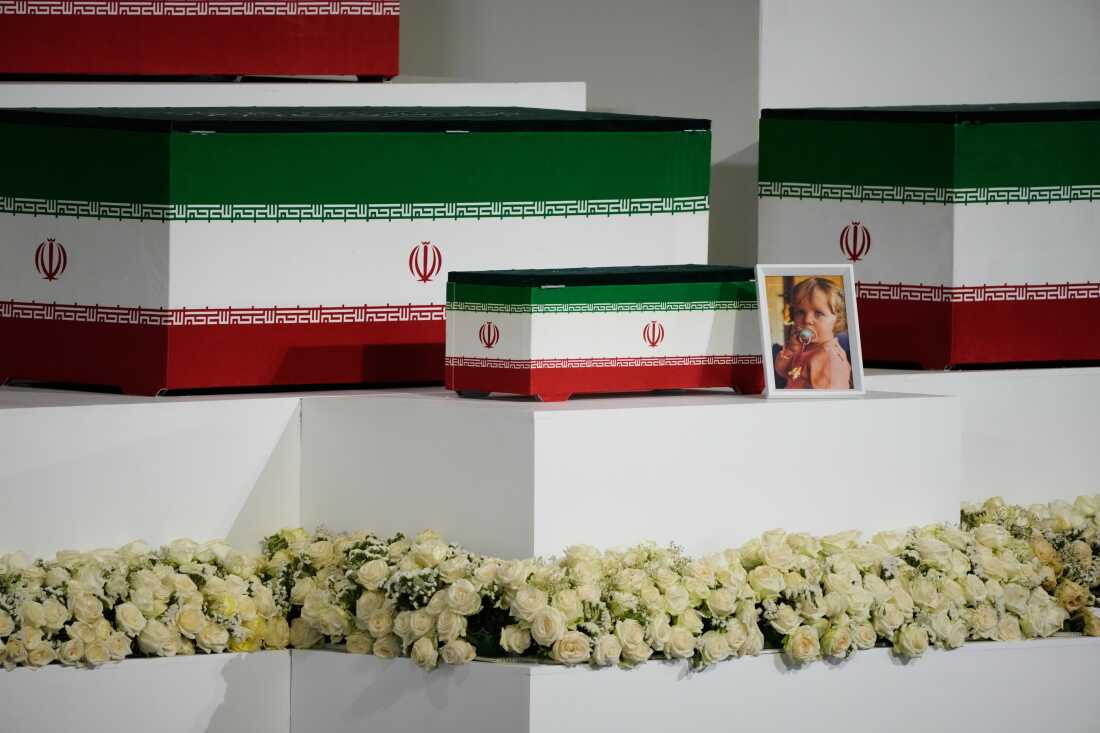
The funeral of Iran’s Supreme Leader Ayatollah Ali Khamenei will take place over several days, starting Saturday. His coffin was displayed in Tehran’s Imam Khomeini Mosalla Grand Mosque alongside family members killed in a past conflict. Banners around Tehran urge citizens to support the Islamic Republic in the aftermath of a war that claimed Khamenei’s life at 86.
The funeral is expected to draw millions, similar to the 1989 burial of Ayatollah Ruhollah Khomeini. Iran’s government views this as an opportunity to strengthen its position while negotiating peace and addressing threats from Israel.
A powerful general from the Revolutionary Guard appeared publicly for the first time in months at the ceremony, joined by government officials and foreign dignitaries. This presence signals Iran’s strength. Mohammad Hossein Rezaei, a volunteer, emphasized continuing the ‘no to humiliation’ policy and prioritizing national independence in decision-making.
“As long as these people, chosen by God, are on the field, we will continue our policy… decisions will be made inside the country,” said Rezaei.
Khamenei’s flag-draped coffin is displayed alongside family members lost in a February conflict. Among the honored are a son-in-law, eldest daughter, granddaughter, and the wife of Ayatollah Mojtaba Khamenei, the new Supreme Leader. Foreign and religious leaders paid their respects as prayers were sung and a military band played.
State media showed mourning ceremonies, depicting mourners from families affected by recent conflicts. Items were thrown onto the coffin as a traditional blessing practice. A red flag with Shiite calligraphy covered the coffin, symbolizing martyrdom and vengeance.
Gen. Ahmad Vahidi attended the meeting about Khamenei’s funeral. This was his first public appearance since early February. Vahidi, part of Mojtaba Khamenei’s close circle, emphasized that Khamenei’s death would be a turning point for Islam. He spoke against any foreign hopes of Iran’s surrender.
“They will take to their graves the wish to see this nation surrender,” said Vahidi, adding that the nation will rise through Khamenei’s sacrifice.
Iran plans to display Khamenei’s body in various cities, including in Iraq. Authorities will shut down areas of Tehran to accommodate mourners. Images of Khamenei with clenched fists are prominent throughout the city, a gesture echoing strength and resilience.
Mojtaba Khamenei addressed the nation, mentioning his father’s clenched fist as a symbol of unity among Muslims. Taxi driver Jafar Javadi echoed this sentiment, stating that the leader’s fist represents the collective strength against enemies.
“The leader’s fist is a sign all our fists are clenched,” said Javadi. “We will continue chanting death to America and death to Israel.”