
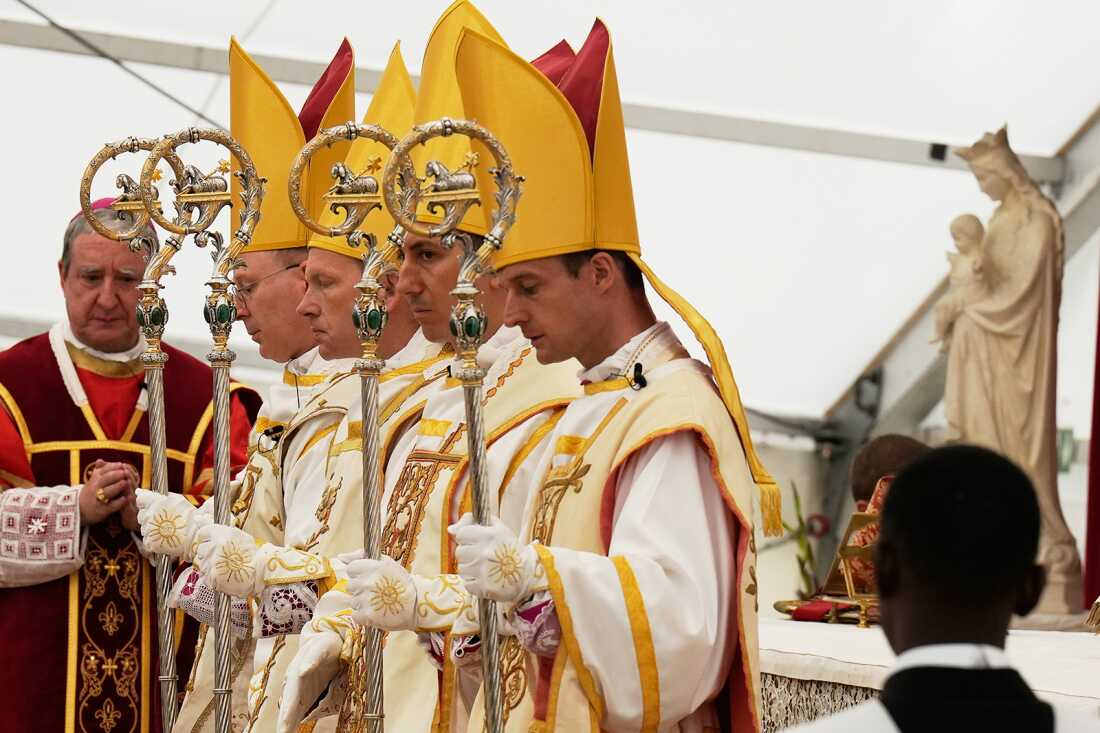
A group of traditionalists defied Pope Leo XIV by ordaining four bishops without his approval. The ceremony took place at the Society of St. Pius X (SSPX) seminary in Écône, Switzerland. The Vatican warned that such ordinations would lead to excommunication for those involved. On Thursday, the Vatican formally declared the excommunication of the four newly ordained bishops, the bishops who consecrated them, all SSPX priests, and lay Catholics who adhere to the society.
Excommunication, a rare and severe penalty, means the individual is no longer a Church member and cannot partake in the sacraments. This follows those refusing submission to the Pope or communion with members of the Church subject to him. The Vatican’s announcement did offer a path back into the Church for the excommunicated members.
Even prior to the ordinations, Pope Leo sent a letter to the SSPX’s superior general, Rev. Davide Pagliarani. In his June 29 message, the pontiff urged the society to reconsider, calling the actions a serious sin against Church unity.
On the day of the ceremony, over 1,000 clergy and 15,000 faithful gathered in a meadow near Écône, displaying white caps emblazoned with ‘Écône 2026.’ The SSPX responded to the Vatican’s actions by asserting that all punishments against them were invalid.
Background on the Society of St. Pius X
The SSPX was founded in 1970 by Archbishop Marcel Lefebvre, a critic of the Second Vatican Council’s reforms. This included encouraging lay participation, interfaith dialogue, and Mass in local languages instead of Latin. In 1988, Lefebvre consecrated bishops without Pope John Paul II’s consent, resulting in his and their excommunications.
Pope Benedict XVI lifted these excommunications in 2009 to mend relations, although doctrinal disagreements remained. Under Pope Francis, attempts continued to reconcile, allowing SSPX priests to hear confessions and officiate marriages. However, restrictions on the Latin Mass in 2021 angered traditionalists.
The recent consecration might prompt the Vatican to end extended talks with SSPX. The excommunication decree indicated SSPX can no longer lawfully administer sacraments.
SSPX’s Justification for the Ordinations
SSPX cited a need for new bishops due to the advanced age of those from 1988. The society has 800 churches in 77 countries, with over 1,480 members serving a large lay community.
Rev. Foucault le Roux, SSPX’s secretary-general, stated that the Vatican II reforms were contrary to faith and tradition. During the ceremony, Pagliarani noted the consecrations were acts of service, not rebellion, emphasizing they were necessary for Church service.
SSPX argues the Catholic Church is the true faith and views interfaith dialogue as harmful. They oppose reforms from the 1960s, maintaining traditional Mass language and practices.
Reactions at the Ceremony
Attendees from 70 countries joined the event, with some feeling apprehension over the lack of papal approval. The five-hour ceremony had Latin as the primary language, except for the introduction and sermon. Despite initial disruption by a storm, attendees continued their devotions in song and prayer.
Some expressed mixed feelings about the ordination. Alexander De Volleda, a 25-year-old baptized by SSPX, traveled from Spain, likening the event to a pilgrimage for traditionalists. Dennis Vu, a traditionalist from Pennsylvania, attended but had reservations about fully affiliating with SSPX.