
The German software giant SAP is focusing on transforming jobs through technology, particularly artificial intelligence (AI), rather than eliminating positions. Experts have mixed views on the feasibility of this approach.
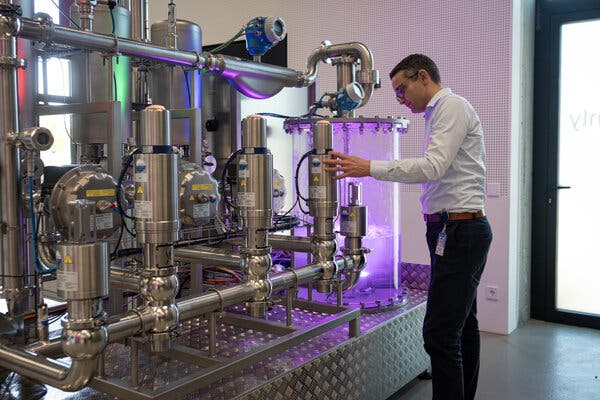
Matthias Deindl, a product management executive at SAP, works at an AI-enhanced production line in Walldorf, Germany. Reporting from SAP global headquarters and a nearby soccer training center, journalist Jim Tankersley shares insights on SAP’s strategy.
AI’s Impact on Software Engineering Jobs
AI has significantly changed Fabrizio Primerano’s role in software engineering. It collaborates with colleagues, researches competitors, writes code, and tests it. Despite this shift, Primerano remains employed by SAP, focusing less on routine tasks and more on managing AI agents, or bots that increasingly resemble personal assistants and employee roles.
Primerano notes, “It’s freeing me up to do more of this creative work.” This aligns with SAP’s objective, as the European software leader adapts to the technological advancements that could threaten traditional coding jobs and their business model.
Restructuring and Job Transformation
Acknowledging that AI reduces the need for many tasks previously performed by software engineers, SAP underwent restructuring two years ago, resulting in nearly 10,000 job cuts. While SAP did not specify how many were AI-related, the company has since added over 3,500 new jobs, including novel roles like “forward-deployed engineers,” who collaborate with clients to create AI-driven solutions.
Christian Klein, SAP’s chief executive, expressed uncertainty about future coding roles. He anticipates a workforce transformation, stating, “I’m not sure if here someone in two or three years will still code software,” but he expects a workforce that is “very, very different.”
SAP’s strategic use of AI aims to innovate job roles while retaining employees, reflecting its commitment to evolving alongside technological advancements.