
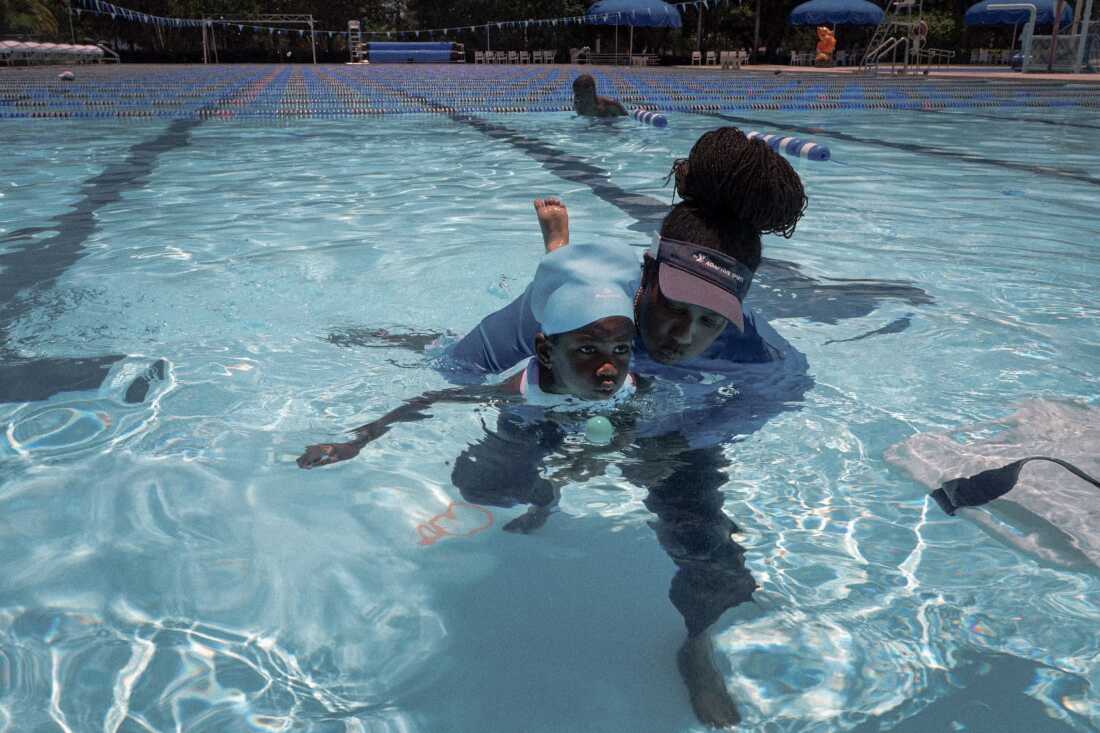
Recreational therapist Garland Jones, who is the senior program director of the YMCA of South Florida’s special needs program, uses ping pong balls to teach 5-year-old Mackenzie Wesley safe breathing techniques in water. Mackenzie, a young girl who loves water, participates eagerly in her weekly swim lessons. Her father’s comments highlight her enjoyment at both pools and beaches.
Children with autism often have a natural affinity for water due to its sensory appeal. The sensation on their skin and the pressure can be soothing. Florida, with its numerous bodies of water, is a fitting place for Mackenzie, yet it poses risks. The frequency of drowning incidents among autistic children is concerning. According to a Columbia University study from 2017, children with autism are 160 times more likely to drown compared to other children. In Florida, backyard pools are common sites for these incidents, as many autistic children tend to wander away from safe spaces.
Mackenzie’s parents enrolled her in Swim Buddies, a YMCA program tailored for children with disabilities. Florida aims to combat high rates of childhood drownings by prioritizing children with autism for swim lessons. Starting July 1, a voucher program will facilitate this. Representative Anna Eskamani, who helped sponsor the related bipartisan bill, emphasizes the importance of early access to drowning prevention measures. The vouchers offer up to eight lessons for approximately $200.
The YMCA of South Florida provides extensive adaptive recreation programs. With over 60% of participants having autism, these programs are tailored for children with various disabilities. Alison Bregman-Rodriguez, a vice president at the YMCA, explains the personalized focus. Garland Jones, along with trained volunteers, delivers patient, individualized instruction.
The use of colorful toys and positive reinforcement helps engage children during lessons. The program customizes its approach to each child, considering their comfort with water. Tania Santiago Perez, a professor from Florida International University, conducts research on effective swim training for children with autism. Her findings indicate significant improvements in swim skills after just a few lessons.
All lessons start with group introductions, fostering trust and social development among children. Safe practices, like waiting for permission before entering the water, are emphasized to prevent wandering—a common trait in autistic children.
The YMCA of South Florida, serving over 600 children with disabilities, faces overwhelming demand for its services. Although the swim voucher program provides opportunities, the availability of qualified instructors remains a challenge. Tania Santiago Perez expresses concern over facilities not having enough trained personnel to meet the demand.
A variety of programs and therapies often strain family budgets. Programs like Swim Buddies can be costly but crucial. Augusto Sandino, whose son participates, notes the financial relief these vouchers provide. Despite their efforts, the YMCA continues to seek additional funding sources to sustain their programs.
Mackenzie, with help from her instructors, recently achieved a milestone by attending a pool party, demonstrating how far she has come. These achievements mark progress and ensure she can enjoy water safely, reflecting Garland Jones’s rewarding work in nurturing water confidence among children.