
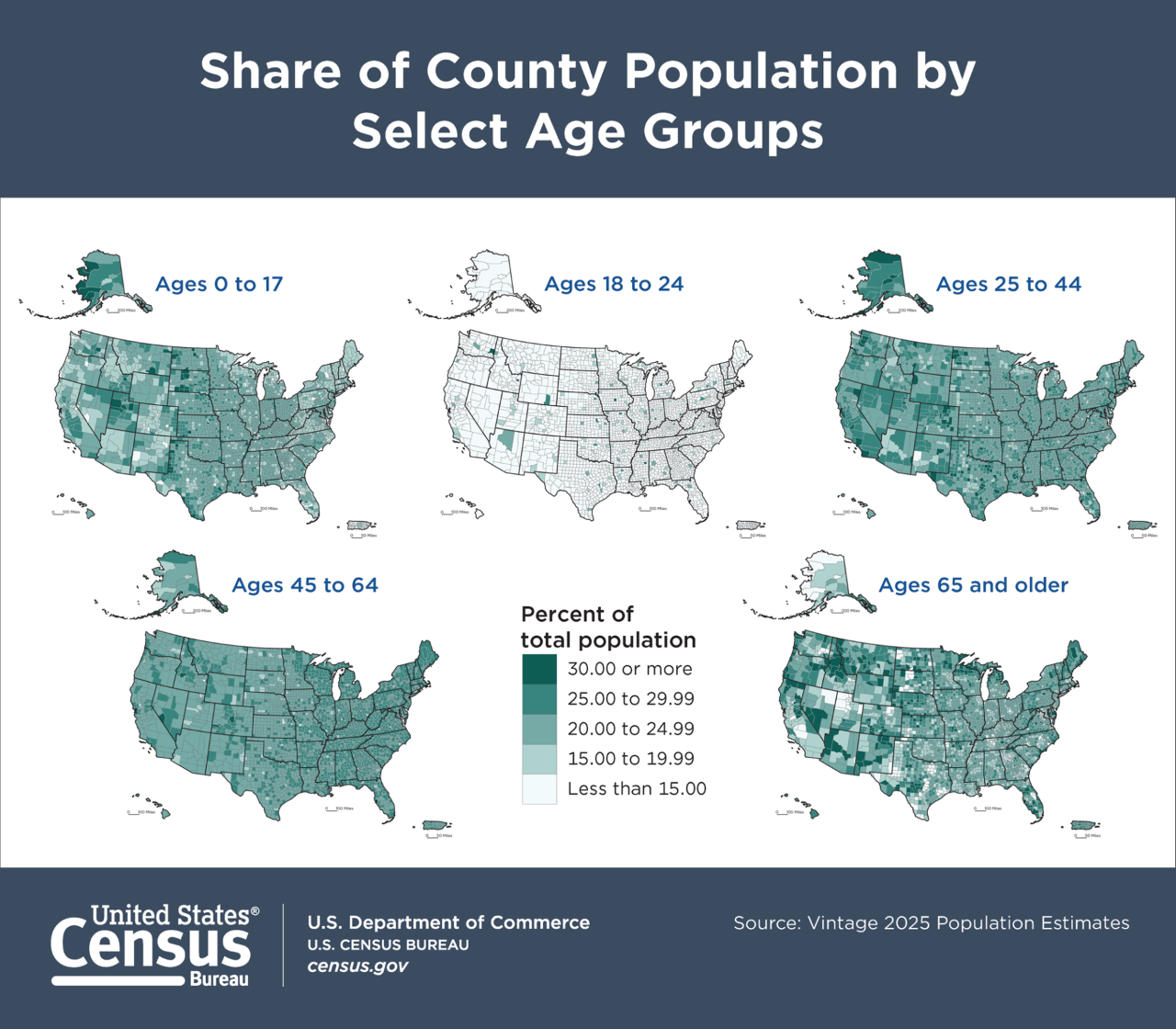
The South is the only region in the U.S. experiencing growth in its population under 18, according to the latest Census data. In contrast, the Northeast, Midwest, and West note a decrease in their young populations. This increase has implications for the cultural, political, and economic identity of the South in the future, with the Republican Party already expressing concern.
Nationwide Decline in Young Population
Nationally, the number of Americans under 18 decreased by 2.4% from 2020 to 2025, reflecting a decline in birth rates. Meanwhile, individuals aged 18-24 saw a modest increase of 2.1%. In the West, the number of young people under 18 dropped by 5.7%, with those aged 18-24 rising by only 0.8%. The Northeast faced a 4.1% reduction in individuals under 18 and a 2.1% decrease in those 18-24. The Midwest saw a decline of 3.9% in residents under 18, while residents aged 18-24 increased by 1.9%.
Growth Trends in the South
Contrasting other regions, the South experienced population growth in both young categories: under 18 rose by 1.1%, and 18-24 increased by 5%. Furthermore, all age groups in the South grew at a faster rate than in other regions.
Between April 1, 2020, and July 1, 2025, the South’s population grew by 6%, nearly double the nation’s 3.1% population growth.
Demographer William H. Frey highlights a continuous national decline in the under-18 population since 2010. This trend is driven by aging baby boomers, migration, and fertility patterns, shifting demographics across the country.
Reasons Behind Southern Growth
The South has seen consistent population growth due to factors such as housing affordability, lower cost of living, favorable tax conditions, job opportunities, and good weather. These aspects attracted many Americans during the pandemic, with notable migration from the Northeast and West to Sunbelt states such as Florida and Texas.
Lauren Bowers of the Census Bureau explains that the South’s positive migration patterns are pivotal in its population increase. While domestic migration slows post-pandemic, the South maintains higher growth rates than other U.S. regions.
Future Implications of a Younger Population
Projected demographic changes suggest potential economic advantages for the South. Younger individuals are key to expanding the labor force and driving consumer markets. They adapt quickly to new technologies, contributing to productivity and economic support.
A younger demographic also presents political implications. A Harvard poll shows younger voters lean Democratic, with states possibly transitioning from Republican to Democratic influence over time. Increased racial diversity among the youthful population adds complexity to political dynamics in the South.
The Role of Immigration
International immigration is viewed as crucial to addressing the nation’s aging population, according to Frey. Immigrants and their offspring are typically younger, thus contributing to slowing national aging. Despite political challenges, immigration remains vital for maintaining population growth and a younger demographic structure.
For over two decades, the decline in white children in the U.S. underscored the importance of immigration, with immigrants offsetting larger decreases among younger populations. Frey stresses the need for understanding the significance of immigrants in sustaining demographic growth and youthful composition.