
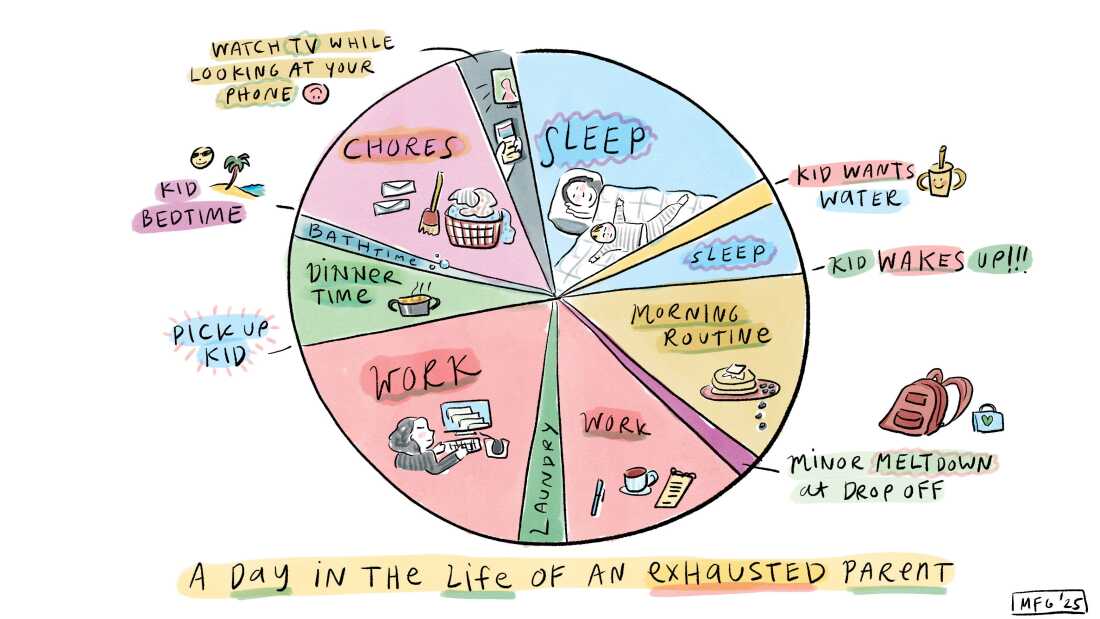
Parents today are dedicating more time to both child care and work compared to two decades ago, according to the U.S. Surgeon General’s 2024 advisory. This shift has resulted in less time for self-care, partners, and leisure activities.
Parenting has always been challenging, but the current environment brings extra stress. In addition to managing work and household duties, parents worry about social media, school shootings, and children’s mental health issues. The U.S. Surgeon General’s 2024 advisory highlights these concerns.
A survey conducted by the American Psychological Association in 2023, involving over 3,000 U.S. adults, revealed that 48% of parents feel overwhelmingly stressed most days. To prevent burnout, parents need to recognize warning signs and find coping strategies. Here are key indicators of stress and suggestions to manage it:
Red Flag No. 1: Overwhelmed During Family Time
The challenges of parenting, such as sleep issues and mood swings in children, can be exhausting. If daily stress prevents you from enjoying family time, burnout may be affecting you. Clinical psychologist Nekeshia Hammond emphasizes that symptoms vary among individuals. They can include irritability, social withdrawal, headaches, sleep disturbances, or appetite changes.
Long-term stress can lead to serious health problems like high blood pressure and clinical depression. Addressing these issues early is crucial.
How to Cope: During stressful moments, such as dealing with a sick child while feeling unwell yourself, take a minute to reset. Set a timer, take deep breaths, and focus on calming both mind and body. Regularly practice this to check in with yourself. Consult a doctor or mental health professional if you suspect burnout. Resources like Postpartum Support International and the National Alliance on Mental Illness offer assistance as well.
Red Flag No. 2: Bearing the Household’s Mental Load
If you handle most of the planning, decision-making, and problem-solving tasks at home, you’re likely managing the “mental load.” Research by gender division of labor expert Eve Rodsky indicates this burden disproportionately affects women. A study on 3,000 American parents found that women carry 71% of these tasks.
How to Cope: Collaborate with a partner or co-parent to redistribute responsibilities. Conduct a time audit and make three lists: your tasks, your partner’s, and shared duties. Identify tasks that can be reassigned or removed. Weekly check-ins can help adjust schedules and duties. Single parents should seek and accept help, as former U.S. Surgeon General Vivek Murthy advises.
Red Flag No. 3: Lack of ‘Me’ Time and Losing Self-Identity
Today’s parents work more and spend more time on child care than two decades ago, says Murthy. As a result, personal well-being often gets overlooked. Neglecting self-care harms family dynamics since parents’ and children’s mental health are closely linked.
How to Cope: Prioritize your health by ensuring proper rest, diet, and time with friends. Introduce “unicorn space,” or guilt-free time to explore personal interests. Rodsky’s “Fair Play” suggests three C’s: Curiosity (engage in a new activity monthly), Connection (share your passion with others), and Completion (choose hobbies with endpoints).
While self-care may seem challenging, it’s vital for emotional and physical well-being. As Hammond highlights, thriving and enjoying emotional health is your right.
We invite your feedback. Contact us by voicemail at 202-216-9823, or email [email protected]. Follow Life Kit on Apple Podcasts and Spotify, and sign up for our newsletter for more insights. Visit us on Instagram: @nprlifekit.