
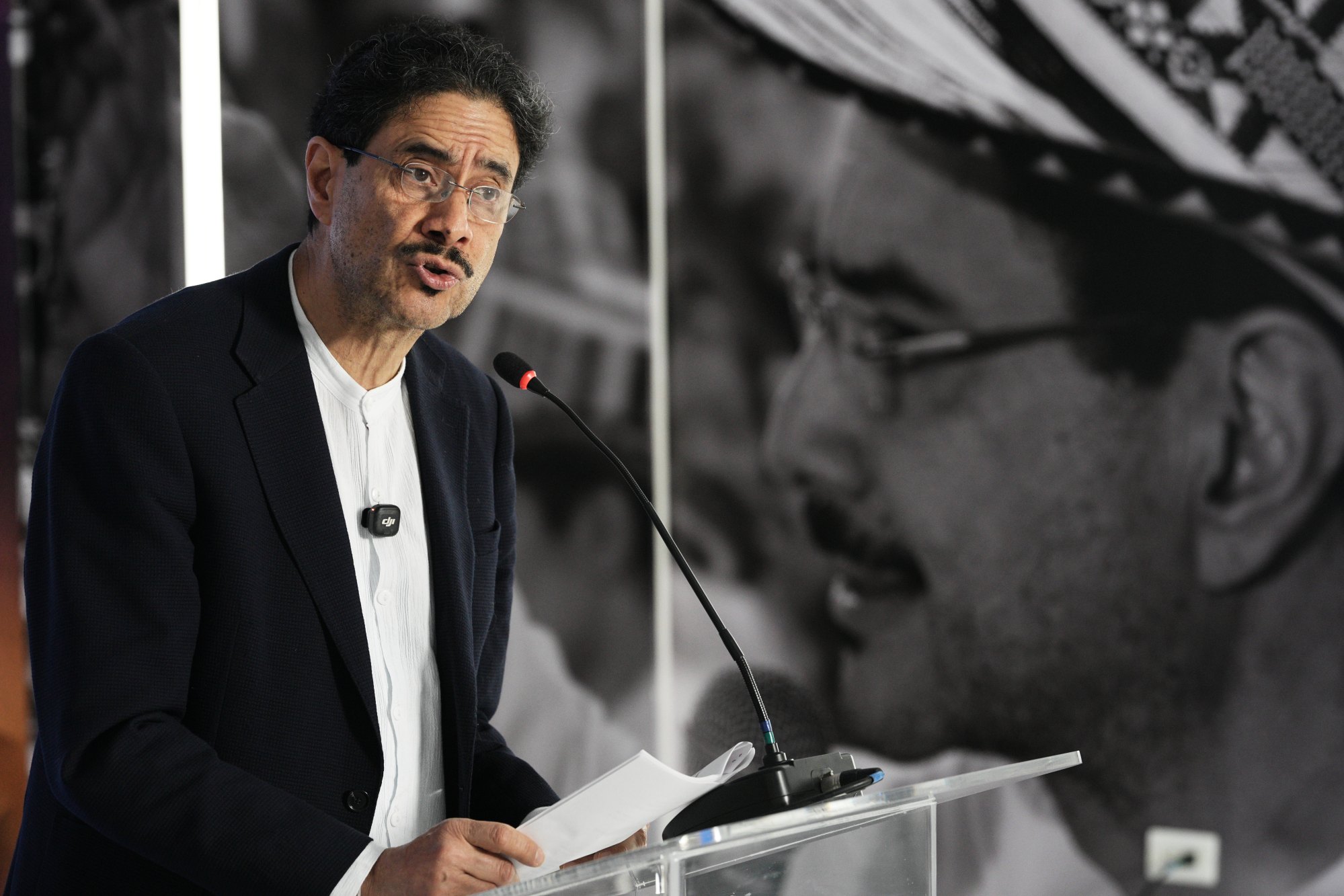
In a significant development, Iván Cepeda, a progressive candidate, admitted defeat in Colombia’s presidential election during a news conference in Bogota on June 24, 2026. Abelardo de la Espriella, a conservative candidate backed by U.S. President Donald Trump, secured victory.
De la Espriella, a businessman and lawyer with no prior political experience, won by a narrow margin of 1 percentage point, equivalent to nearly 251,000 votes over Cepeda, a seasoned lawmaker.
During his address, Cepeda stated, “We assume with serenity, responsibility, and absolute resolve the role that circumstances demand of us.” He committed to leading a “democratic, vigilant, and constructive opposition.”
“Let there be no doubt about it,” Cepeda emphasized the opposition’s role.
The election results reflect dissatisfaction with outgoing President Gustavo Petro’s administration, whose policies Cepeda pledged to uphold. These included a “total peace” initiative aimed at dialogue with various armed groups, which fell short of expectations.
The electoral authorities released nearly all vote counts shortly after polls closed. Petro and Cepeda initially withheld acknowledgment of the results, but Cepeda conceded while awaiting a recount.
De la Espriella, set to begin his four-year term on August 7, had declared himself the election winner and urged acceptance from Cepeda and Petro. His triumph underscores a global trend of electing political outsiders to address societal challenges. De la Espriella vowed a strict approach to violent crime, inspired by Salvadoran President Nayib Bukele’s methods. He plans to incorporate mega-prisons to curb crime, a strategy successful in reducing homicides in El Salvador but criticized for human rights concerns.
Nicknamed “The Tiger,” de la Espriella, holds dual citizenship in Colombia and the U.S. He announced plans to join the “Shield of the Americas,” a coalition to target Latin American criminal groups, aligned with Trump’s vision.
High voter turnout marked the runoff, with over 26 million participants, the highest in history. Among the votes, over 426,000 opted for a third option expressing disapproval of both candidates, while approximately 29,000 ballots were left blank.
During his national address, Cepeda committed to active opposition but did not clarify whether he would take a Senate seat reserved for the runner-up.
At 63, Cepeda is a philosopher and peace advocate, motivated by his father’s assassination by military officers in 1994. The political violence from that era shaped his commitment to peace negotiations in Colombia’s prolonged conflict.
“Today, we represent half of Colombia at the polls,” Cepeda remarked, affirming the opposition’s integral national role. “We are a political, social, and cultural force present in every corner of the country.”