
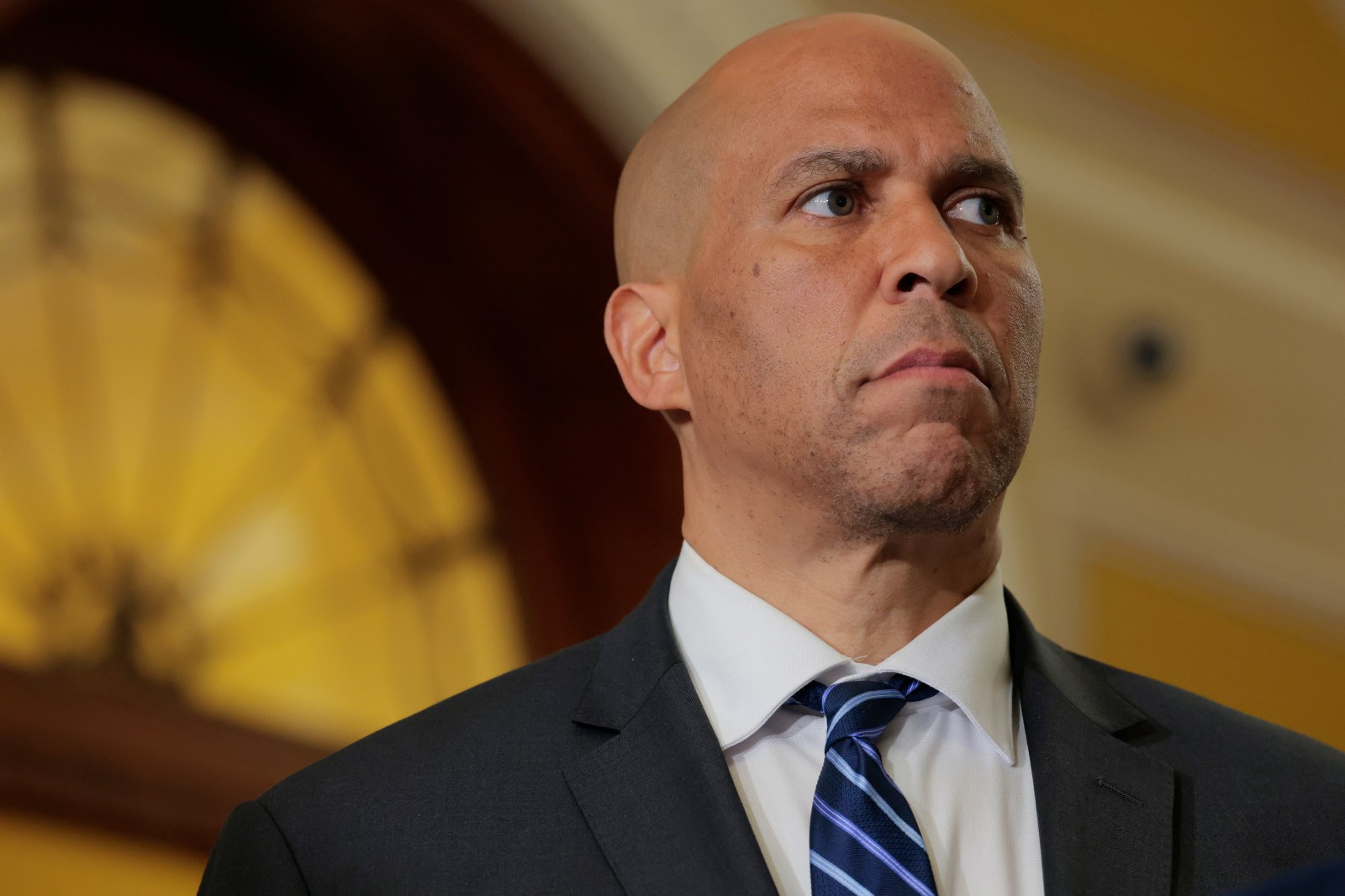
Senator Cory Booker expressed his opposition to the Trump administration’s 60-day interim agreement with Iran, stressing that while he supports ending the U.S. war with Iran, he disagrees with the current method being employed. Appearing on NBC News’ Meet the Press, Booker argued that the agreement provides Iran substantial economic relief without extracting lasting concessions. He warned that this approach diminishes American leverage at a crucial moment.
Booker’s position contrasts with the administration and some Democrats regarding the desired outcome of ending the war, aligning him with conservative critics who believe the deal disproportionately favors Iran.
Clash With Carville Over ‘Credit’
The disagreement was evident when Booker responded to comments by James Carville, a veteran Democratic strategist. Carville had stated on NewsNation’s Cuomo that President Donald Trump deserves some credit for concluding the conflict, even if it was a blunder from the start.
Carville, known for his role in Bill Clinton’s 1992 presidential victory, argued that while the Iran war was a mistake, exiting a failed conflict might still be the right choice. He suggested that Trump’s withdrawal was comparable to Lyndon Johnson’s approach in Vietnam.
Booker firmly rejected this perspective, asserting that Trump should not be praised for resolving a crisis he initiated. He compared it to an arsonist fleeing a burning building, indicating that Trump has led the nation into a disaster and surrender.
‘Abject Surrender’
Booker described the interim agreement as a one-sided arrangement. He criticized the deal, stating that it constitutes an ‘abject surrender,’ with Iran receiving substantial benefits worth billions of dollars.
The senator highlighted that Iranian leaders perceive Trump’s actions as defeat, noting that Trump is viewed negatively on the global stage due to the agreement. Booker mentioned his multiple votes favoring War Powers resolutions aimed at prompting a U.S. withdrawal from the conflict, maintaining his consistent critique of Trump’s Iran strategy, including the withdrawal from the 2015 nuclear deal.
The interim agreement, structured as a memorandum of understanding (MOU), intends to halt hostilities while pursuing a comprehensive settlement over a 60-day period. Its core components include:
- Iran reaffirming it won’t procure or develop nuclear weapons.
- Reopening the Strait of Hormuz to restore global oil transit.
- Rolling back U.S. naval blockade measures.
- Potential sanctions relief for Iran with access to significant financial resources.
- Suspension of major military activities across various fronts.
Critics argue that the agreement provides Iran early advantages without concrete guarantees, while supporters claim it’s a temporary measure to test compliance and avert escalation.
Conservative Opposition Builds
The Trump administration has defended the agreement as a pragmatic step following months of conflict. A White House spokeswoman described it as a performance-based MOU that forwards U.S. interests by ceasing hostilities and exerting pressure on Iran to abandon its nuclear goals.
Criticism has been voiced by conservative figures, including Republican lawmakers concerned with the deal’s structure. Republican Senator Bill Cassidy highlighted Iran’s nuclear ambitions and accused the agreement of rewarding Iran’s aggressive tactics while lifting sanctions.
Former Vice President Mike Pence likened the deal to appeasement, criticizing the lack of solid commitments regarding Iran’s nuclear activities, missile development, and regional proxy support.
Media outlets under Rupert Murdoch’s control, such as Fox News and the Wall Street Journal, have featured coverage critical of the interim deal. Booker pointed out the widespread bipartisan condemnation, underlining the severity of the perceived shortcomings in the agreement.