
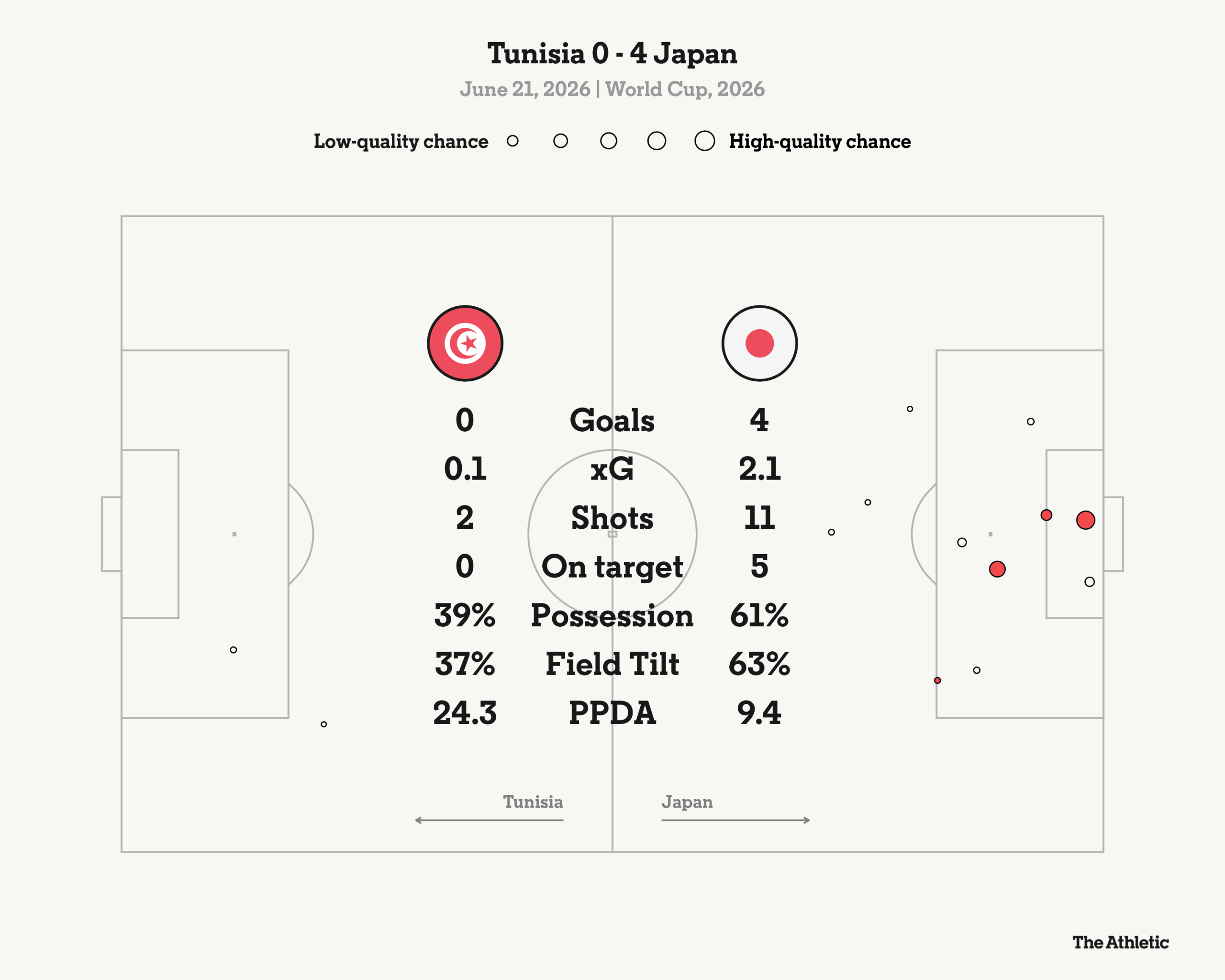
Japan is poised for the World Cup knockout stage after a decisive victory against Tunisia in Monterrey, which led to the elimination of the North African team. Prior to the match, attention was on new Tunisia coach Herve Renard and his attempts to enhance the team’s defense in just four days following the dismissal of Sabri Lamouchi.
Japan opened the scoring with Daichi Kamada after only four minutes and maintained dominance throughout the first half. Ayase Ueda added to Japan’s advantage with an impressive finish shortly after the half-hour mark. Junya Ito scored Japan’s third goal in the 69th minute, and Ueda netted a fourth with a looping header late in the game. These four goals represent the highest tally ever achieved by an Asian team in a World Cup match.
According to projections from The Athletic, Japan can prepare for a potential round of 32 match. Their likely opponents, including Brazil, Morocco, or France, indicate a challenging path ahead. Tomas Hill Lopez-Menchero analyzes the key aspects of the game.
Japan’s Knockout Prospects
Japan has produced talented teams over the years but has never surpassed the round of 16 in a World Cup. This current squad brings hope for breaking that pattern, especially after victories against giants like Brazil and England. However, injuries to key players Kaoru Mitoma, Takumi Minamino, and Wataru Endo posed challenges.
Despite losing Takefusa Kubo due to a knee injury, Japan found success with players like Keito Nakamura, who has been crucial in their campaign. He plays for Reims in France’s second division and took center stage, scoring against the Netherlands and setting up Kamada’s goal.
Japan is a well-coordinated team with varied attack options. Their movement during Ito’s goal was outstanding. With two wins, Japan has four points from two matches, sharing a +4 goal difference with the Netherlands. The outcome against Sweden will play a significant role, but the prospect of facing Brazil, Morocco, or France in the round of 32 remains daunting.
The Unsuccessful Herve Renard Experiment
When Herve Renard addressed the media before the game, he promised a “spirit of revenge” after Tunisia’s hefty defeat by Sweden. Yet, there was only submission on the field. Defensive gaps allowed Japan an easy opening goal, creating despair for Renard.
Ueda’s second goal showcased fine finishing, but Tunisia didn’t challenge him, facing elimination with just over 30 minutes played. The Tunisian Football Federation hoped for change under Renard after firing Lamouchi, expecting the inspiration Renard brought Saudi Arabia that enabled them to beat Argentina in Qatar.
Renard’s future remains uncertain beyond the summer, suggesting the federation might need to address broader issues rather than coaching alone.
Japan and the Margins of Technology
Japan’s quick start was highlighted by Kamada’s back-heeled goal. Through chaos following a corner soon after, Japan nearly doubled their lead. Tunisia’s goalkeeper Aymen Dahmen clawed a deflected shot off the line, leading to lengthy checks by referee Istvan Kovacs as he consulted with other officials.
Though some replays implied the ball had crossed the line, goal-line technology showed not all of the ball had crossed. Japan is familiar with such tight situations. In the previous World Cup, they advanced from the group stage due to a contested goal against Spain involving Kaoru Mitoma.
For this tournament, enhanced technology allows officials to verify if the ball has gone out along the touchline, helping reduce confusion.