
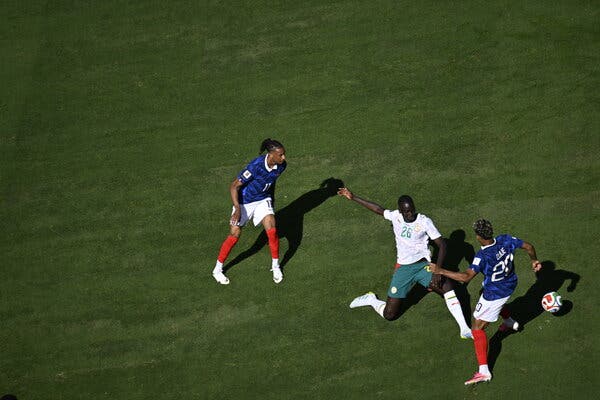
The match between France and Senegal at this year’s World Cup caught the attention of many across Africa. Soccer enthusiasts viewed the event as an opportunity for Senegal to settle historical tensions with its former colonial master, France. However, France’s team, composed of many players of African descent, demonstrated a dominating performance.
Senegal has made a name for itself in African soccer circles. The team has appeared in the finals of the Africa Cup of Nations four times consecutively, claiming victory once. Last year, a controversial match led to a loss against Morocco, caused by a protest forfeit by Senegal.
South African sports commentator Mark Gleeson remarked on the complex dynamics between France and Senegal. He noted the influence of colonial history despite Senegal’s preference to avoid such perceptions. The relationship remains intricate and deeply rooted.
In recent years, changes in FIFA rules and historical ties have altered the composition of national teams around the world. European teams exemplify this transformation, drawing talents from various cultures. Teams from Arab nations, such as Qatar, also mirror this trend with players from diverse origins, mainly Africa.
France stands out notably for this diversity. Back in 1998, the World Cup-winning French team had several first-generation African immigrants, highlighting an era of multicultural representation called the “Black-Blanc-Beur team,” meaning Black, white, and Arab.