
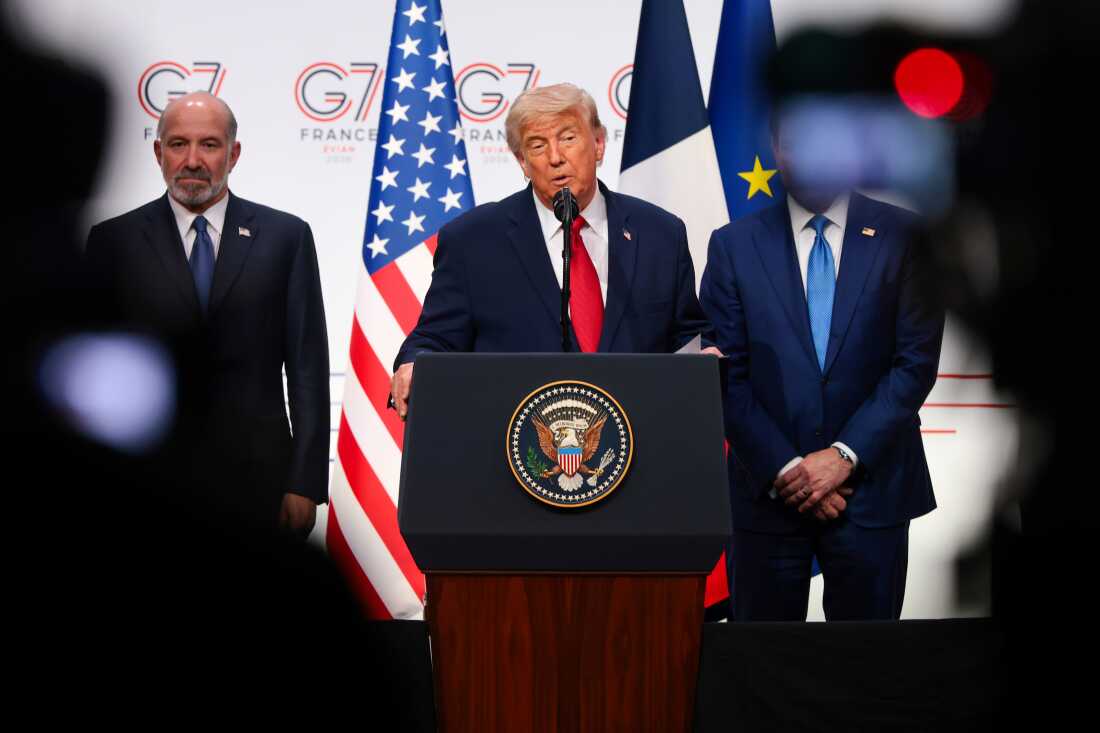
President Trump spoke to the press at the conclusion of the G7 summit held in Evian-les-Bains, France, shedding light on the preliminary agreement intended to end hostilities with Iran. This press briefing marked the first time the U.S. administration detailed the agreement’s contents, with previous announcements lacking specifics. Senior officials communicated the agreement’s terms on condition of anonymity, providing an overview through a complete reading of the document.
Previously, President Trump indicated an agreement had been reached, yet detailed elements remained undisclosed until this announcement, fueling assumptions and misconceptions about the agreement’s nature. As shared, the document is succinct and lacks extensive detail, leaving much to be negotiated in future talks.
Key Elements of the Agreement
A senior administration official conveyed key components of the agreement, which emphasized the cessation of military actions on all fronts, including Lebanon. Both the U.S. and Iran vowed not to initiate further conflicts or operations against each other. The agreement specifies a 60-day period to finalize a comprehensive deal, extendable upon mutual consent. Once signed, the U.S. will commence lifting its naval blockade, with a complete removal planned within 30 days if a final deal is reached.
Iran committed to ensuring safe passage for commercial vessels between the Persian Gulf and the Sea of Oman without incurring charges for 60 days. Additionally, the U.S. intends to collaborate with regional partners to establish a fund of up to $300 billion for Iran’s reconstruction and economic growth. President Trump clarified that the U.S. would not directly fund this, however, suggested other nations might participate.
Nuclear Commitments and Sanctions
The agreement specifies that Iran will refrain from acquiring or developing nuclear weapons. Both nations also aim to formulate a strategy for handling Iran’s enriched uranium stockpile. While sanctions remain officially active until a final agreement is achieved, waivers will be issued for exports including Iranian oil and pertinent derivatives, along with related banking and insurance transactions. Once a final deal is confirmed, the U.S. pledges to unlock frozen or restricted Iranian funds.
Other negotiating points include monitoring mechanisms and ensuring adherence to the agreement. During his briefing, Trump emphasized Iran’s cooperation with the U.S. on containing enriched material, asserting surveillance measures will prevent any misuse.
Economic Impact and Public Opinion
Addressing the economic implications, Trump warned that failing to reach this agreement could result in prolonged military conflict, potentially affecting crucial trade routes like the Strait of Hormuz. He suggested market stability hinged on the agreement’s implementation.
The U.S.-Israel-initiated conflict in late February adversely impacted global markets by escalating oil prices and associated costs. Public opinion polls reflected widespread disapproval of U.S. military actions in Iran, affecting Trump’s economic approval, even among his core supporters.