
Contractors operating Immigration and Customs Enforcement (ICE) facilities now have relaxed detention standards. They can use artificial intelligence (AI) tools for detainee communication and still pay $1 per day for ‘voluntary work’. The revised rules, aimed at easing the burden on detention operators, apply to for-profit contractors and jails.
These changes help contractors limit legal liability, cut costs, and gain operational flexibility. However, the conditions for approximately 60,000 detainees are likely unchanged or worsened. Michelle Brane, a former Department of Homeland Security official, remarks that the focus seems to divert away from detainee rights and safety.
The revised standards follow reports of increasing deaths and accusations of medical neglect and inadequate food in ICE facilities. Despite these issues, ICE received about half of the $70 billion immigration enforcement allocation last week.
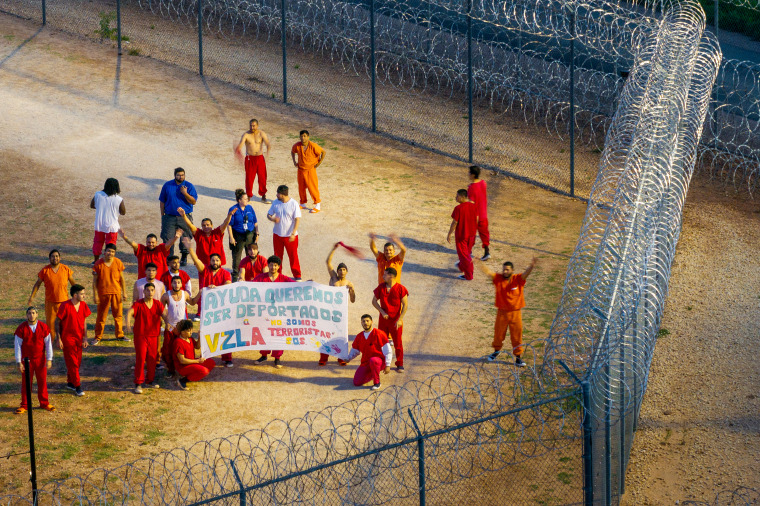
Detainees at the Bluebonnet Detention Center held a banner reading, “Help, we want to be deported. We are not terrorists, S.O.S.”
Dr. Sanjay Basu, a public health expert, notes some improvements, like enhanced suicide prevention and mental health care. Nonetheless, he indicates a trend toward weaker standards for an expanding detainee population.
ICE states that the adjustment aims to align more with U.S. Marshals Service standards, considering operational and legal needs. Dr. Homer Venters, a health care specialist, cautions that these changes might reduce access to language assistance by removing necessary in-person or telephone interpretation services.
AI Tools Usage
The new standard permits AI-powered tools for noncritical communication and informal interactions with detainees. This can cover information exchange during intake, casual conversations, and responding to grievances. However, Venters warns this is risky, given that timely grievances may include urgent health information. There’s ambiguity on whether health assessments can rely on AI.
ICE assures that interpretation and translation services remain free for detainees.
Critics worry about a revision that forbids facility operators from not admitting detainees ICE sends. It might limit referrals of severely ill detainees to hospitals, shifting liability away from facilities. However, required requests for ICE to transfer unfit detainees elsewhere might delay.
Voluntary Work and Legal Ramifications
Changes clarify that detainees in voluntary work programs aren’t employees, allowing for-profit contractors a legal advantage. This has implications for lawsuits alleging that $1-per-day stipends constitute forced labor, reducing the likelihood of successful claims against contractors like GeoGroup and CoreCivic. The revised standard also caps the stipend at $1 per day, previously a contention point in court cases.
Claire Trickler-McNulty, an ex-DHS and ICE official, notes ICE could improve detainee conditions with its increased budget rather than lowering standards. She mentions efforts in previous administrations to enhance recreational and visitation facilities, emphasizing detainee care over operator convenience.