
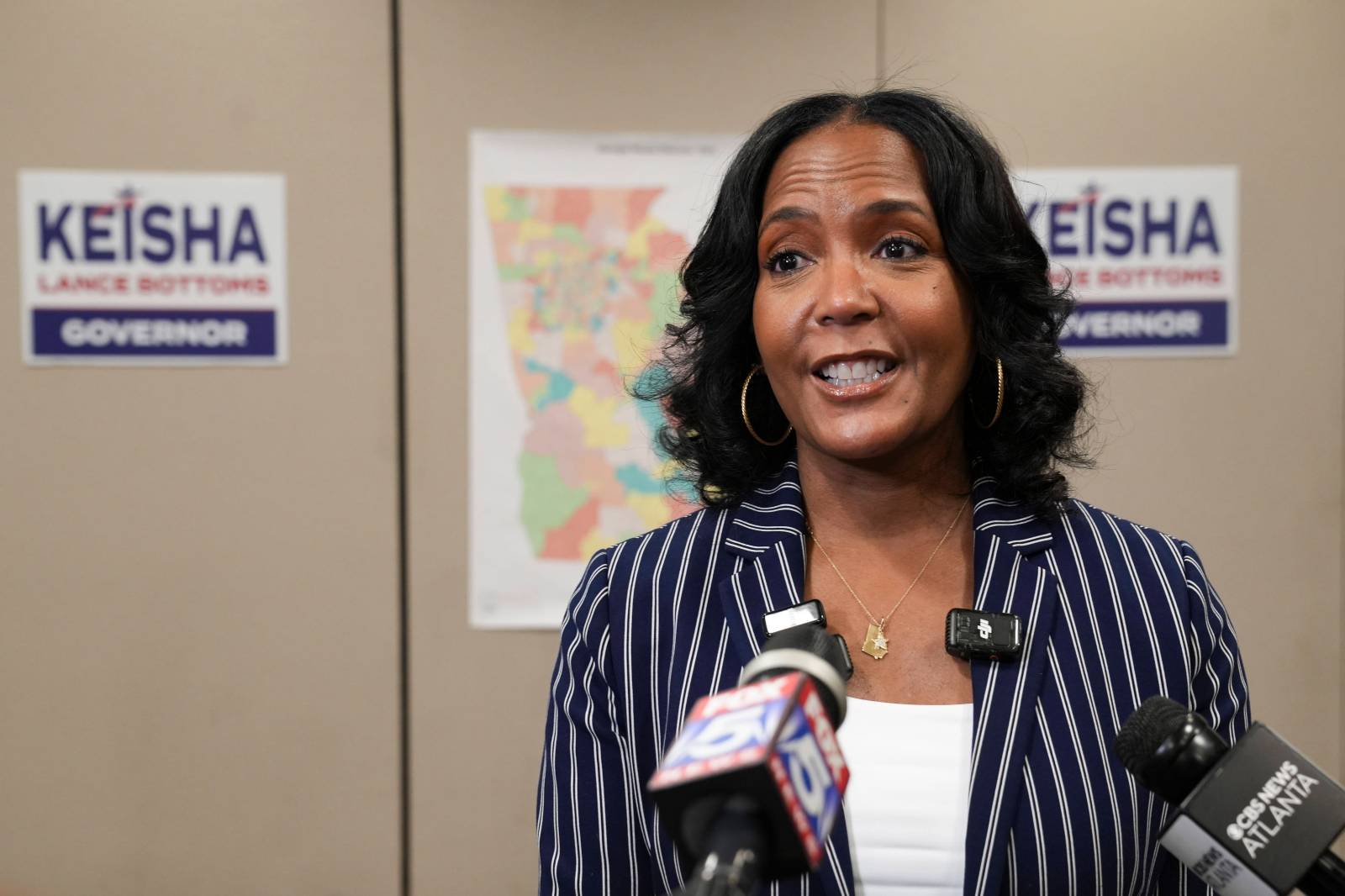
Keisha Lance Bottoms’ Gubernatorial Bid in Georgia
Keisha Lance Bottoms, former Atlanta Mayor, is running for governor in Georgia’s 2026 race. This presents a rare opportunity for Democrats, as Georgia has not elected a Democrat as governor for decades. Current Republican Governor Brian Kemp is term-limited, providing an open contest for the governor’s office. Bottoms is polling ahead of her Republican opponents, performing better than Stacey Abrams at this point in the 2020 race against Kemp.
With the Republican runoff concluded, the party is rallying support around one candidate, making the race challenging for Bottoms. However, she has cleared a significant hurdle by winning the Democratic primary in May. This victory helped her unify the Democratic Party while Republicans were engaged in a costly runoff between Lieutenant Governor Burt Jones and businessman Rick Jackson. Early polls suggest Bottoms is competitive, often leading slightly against her Republican counterparts.
The Republican Contender: Rick Jackson
Rick Jackson emerged victorious in the Republican runoff with 52.7% of the vote, as reported by the Associated Press. The contest against Jackson presents an unpredictable challenge for Bottoms. Jackson is a wealthy healthcare executive, investing heavily in his campaign. This self-funding gives him an advertising and messaging edge, reducing his reliance on traditional party donors.
Jackson positions himself as an outsider challenging the Republican establishment. This appeals to voters disillusioned with both parties or skeptical of career politicians. His outsider stance helps him remain separate from potential intraparty conflicts post-runoff.
However, Jackson lacks the political experience and network that Jones could have offered. His campaign focuses on business credentials and tax cut promises, not a detailed legislative history. This lack of experience might expose him to scrutiny from Bottoms, who can emphasize her time as mayor and federal public service.
Concord Public Opinion Partners released a poll, sponsored by Democrat-leaning Education Reform Now Advocacy, showing Bottoms with a 15-point lead over Jackson. Prediction markets vary, with Kalshi giving Bottoms a 53% probability of winning, while Polymarket offers a 56% chance. Despite this, Jackson’s financial resources could diminish Bottoms’ lead as he continues extensive campaign spending.
Georgia’s Gubernatorial History and Democratic Challenges
The historical context is significant for Bottoms. The last Democratic governor was Roy Barnes, serving from 1999 to 2003. Since then, Republicans have dominated, even as Democrats gained federal offices. This gap of over two decades highlights the difficulty for Democrats in state gubernatorial elections.
Although Georgia has become more competitive, with recent Democratic successes in the Senate and presidential races, Republicans have maintained a grip on statewide executive positions. Kemp’s reelection in 2022 underscored this, winning by more than seven points.
For Bottoms, breaking the Republican streak requires strong Democratic turnout and crossover support from independents and moderate Republicans—traditionally challenging for Democrats in governor races. However, the open-seat dynamic in 2026 offers a unique opportunity without an incumbent. This lets Democrats capitalize on favorable conditions not present in incumbent-led contests.
The Impact of Trump’s Approval Rating
The national political environment, particularly Trump’s standing, could influence the race. Trump’s approval rating is low in Georgia, with a net approval rating of -20%, according to Civiqs, reporting 41% approval. His ratings suffered due to economic issues and public disapproval of his handling of the Iran conflict.
Lower approval ratings could hinder Republican efforts to win over independents and suburban voters, crucial in Georgia’s close elections. Bottoms could use Trump’s unfavorability to her advantage, framing Republicans as closely aligned with him to energize opposition-based voter turnout.
Yet, Democrats cannot depend solely on anti-Trump sentiment to win. Georgia remains polarized, and presidential approval ratings are insufficient without a compelling candidate appeal.
Bottoms starts the 2026 governor’s race stronger than any recent Democratic candidate—but the path to victory is tight. She benefits from favorable early polls, a unified party, and potentially advantageous political conditions. Nonetheless, her challenges include an entrenched Republican presence and a well-financed Republican opponent.
The outcome will likely depend on voter turnout, independent voter sway, and the national political atmosphere. As Georgia continues to be a battleground state, even minor shifts in voter opinion could decide the result.