
A 6.7-magnitude earthquake struck central Indonesia’s Sulawesi Island on Tuesday, resulting in the death of at least one resident, injuries to dozens, and significant damage to homes and infrastructure, authorities reported. This event has deeply unsettled the city of Palu, which suffered a catastrophic quake and tsunami eight years prior.
The earthquake’s epicenter was located inland, approximately 27 miles east-southeast of Palu, with a depth of about 6 miles, as reported by the U.S. Geological Survey. The tremors prompted residents to flee to open areas in Palu, a city with a population of around 400,000 and the capital of Central Sulawesi province. Hospitals took precautionary measures by evacuating patients, some still attached to IV drips, to outdoor locations.
In four regencies near the epicenter, which collectively house 1.3 million people, damage assessments are ongoing. Current reports indicate that the earthquake displaced at least 312 individuals, caused the death of one person, and injured 38 others, with 13 sustaining serious injuries in the hardest-hit Sigi regency, according to Abdul Muhari, spokesperson for the National Disaster Management Agency.
The quake inflicted damage on various structures and infrastructure, including 67 homes, six religious sites, four public facilities, two bridges, two government office buildings, and three commercial locations. Additionally, a provincial road connecting Palu to neighboring regencies Sigi and Poso was severed.
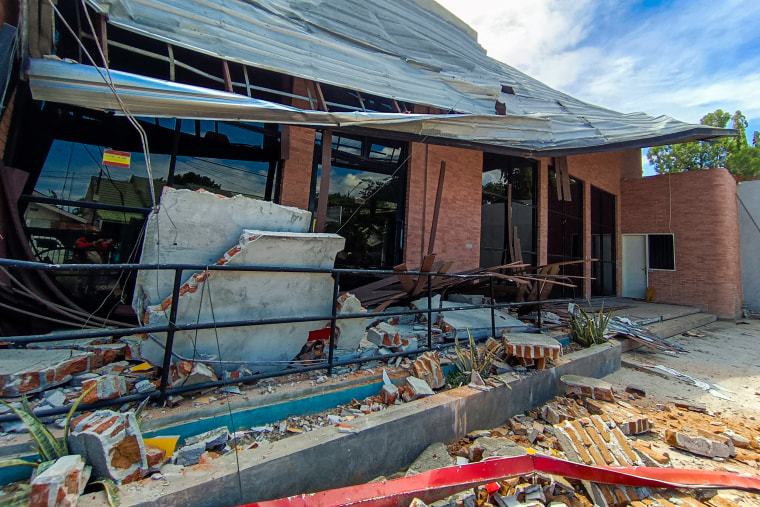
An image captures a damaged building following the earthquake in Palu.
Indonesia’s Meteorology, Climatology, and Geophysical Agency reported at least 71 aftershocks throughout the day, instilling fear in residents who recalled the region’s devastating earthquake and tsunami in 2018. The aftershocks compelled many to leave buildings and gather in open spaces.
People also vacated coastal areas to prevent the risk of a tsunami, despite the agency confirming no such threat existed while warning of possible continuing aftershocks.
“The earthquake shaking was extremely strong,” said Muhtar Ahmad, a resident of Palu. “We are still traumatized by the previous earthquake, so we chose to remain outside because we are afraid that aftershocks may continue.”
Images have surfaced showing severely damaged buildings with collapsed roofs, crumbled walls, and debris strewn across streets.
Effendi Natali, a general manager of a four-star hotel in Palu, stated, “We have evacuated all guests from the hotel, including several guests who remained in their rooms. They all panicked, which is a natural reaction during an earthquake, but everyone is safe.” The hotel experienced only minor damages.
The memory of a magnitude-7.5 earthquake in 2018, which devastated Palu with a 10-foot-high tsunami and triggered soil liquefaction swallowing entire neighborhoods, looms large for many Sulawesi residents. In excess of 4,000 lives were claimed during that disaster.
In January 2021, another significant earthquake near Mamuju on Sulawesi Island resulted in at least 100 fatalities, prompting thousands to sleep outdoors for fear of further aftershocks.
Situated on the Pacific Basin’s “Ring of Fire,” a volatile zone of volcanoes and fault lines, Indonesia regularly experiences earthquakes and volcanic eruptions due to its geographic positioning within the vast archipelago spanning over 17,000 islands.