
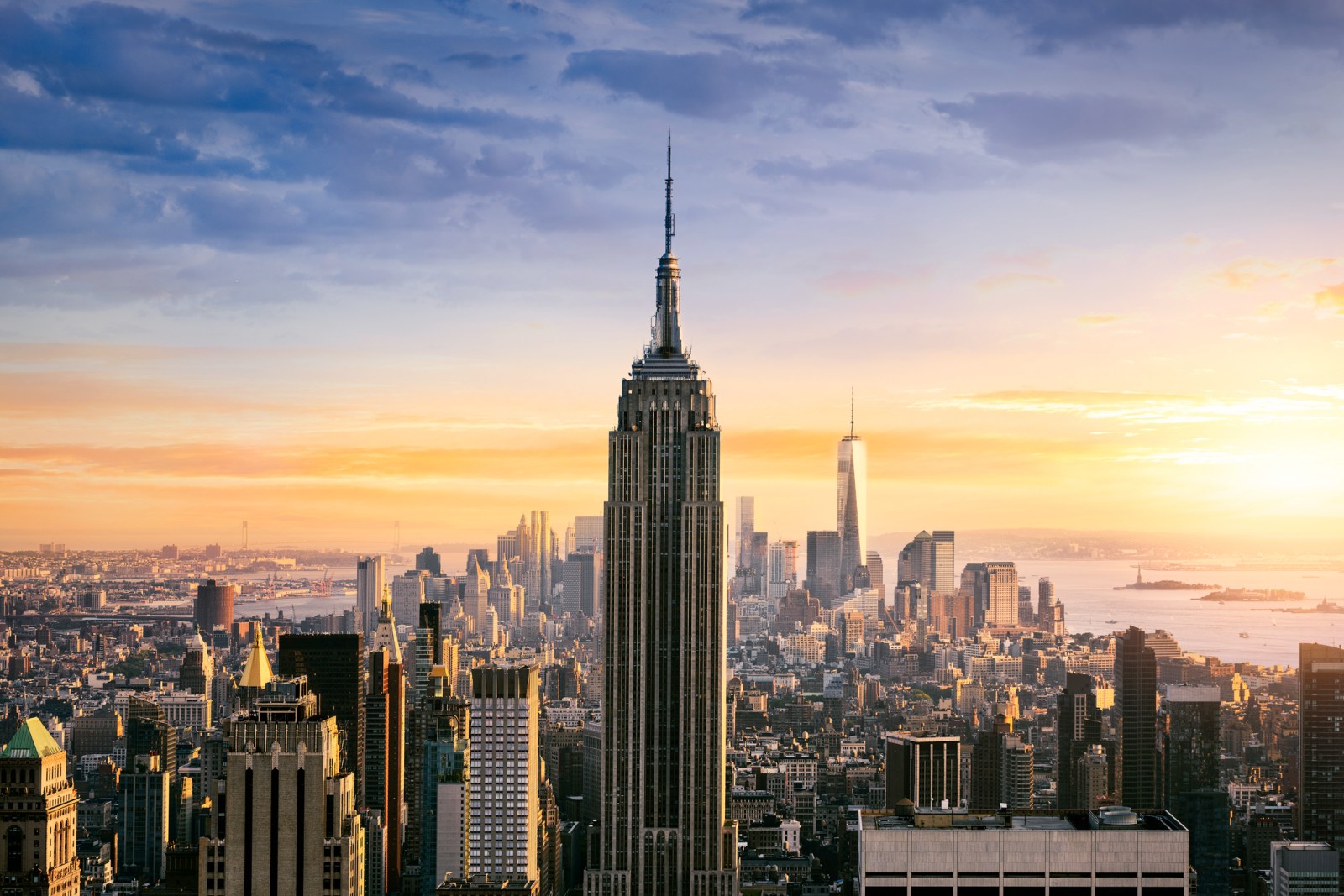
The Empire State Building is one of New York City’s most iconic structures. When it was first designed nearly a hundred years ago, its distinctive spire was intended for a surprising purpose: docking airships. Initially, the spire was conceived as a mooring mast. It was meant for dirigibles to dock high above Manhattan, allowing passengers to disembark directly into the building.
This plan emerged during the late 1920s and early 1930s. At the time, some engineers and planners believed airships would dominate long-distance travel. The concept, while never realized, remains a captivating ‘what if’ in American architectural history.
Contrasting this past ambition, there is now a renewed interest in New York City’s historic landmarks. Structures like the Flatiron Building are being transformed into private residences. Penn Station is undergoing significant renovations. These buildings are adapting to modern needs, drawing fresh interest.
Airships and the Empire State Building
The Empire State Building’s spire was designed by the firm Shreve, Lamb and Harmon. The idea was bold: a streamlined tower allowing airship passengers to enter the building from sky to ground. According to The Skyscraper Museum, the spire was a ‘200-foot tall, modernistic metal tower.’ It included stylized wings and an embarkation room for trans-Atlantic airship passengers.
The concept imagined airships arriving hundreds of feet above Midtown Manhattan. Travelers would land and step directly into the bustling city below.
Challenges in Execution
The practical challenges of docking airships at such heights soon became apparent. Strong winds around the skyscraper’s top made it nearly impossible to safely dock. Notably, in 1931, a privately owned dirigible reportedly attached to the mast for only a few minutes, battling winds at about 40 miles per hour. Afterward, no airship used the structure for passenger transfers. The experiment ended almost as soon as it started.
The Spire’s Lasting Impact
While the airship vision never came to fruition, the spire significantly impacted the Empire State Building’s legacy. By increasing the building’s height, it outdistanced the Chrysler Building by roughly 200 feet. This secured its status as the world’s tallest skyscraper in 1931, a title it held until the World Trade Center emerged.
Eventually, the spire found a new role as an observation platform. It now offers expansive views of New York City. As noted by The Skyscraper Museum, the views from the observation deck and the 102nd-floor room remain unmatched.
The summit is not only a vantage point but also a symbol—towering above the city, yet at its very heart.