
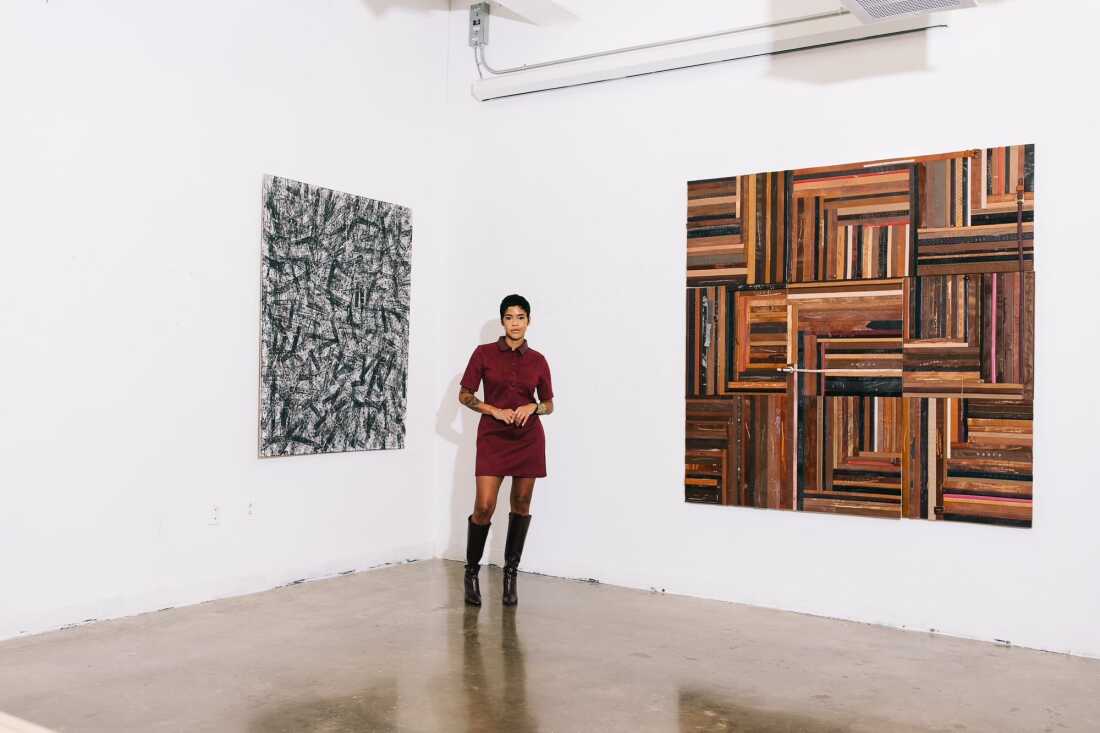
Lex Marie, a multidisciplinary artist, has gained widespread attention for addressing discipline in Black families through her art on social media platforms like TikTok and Instagram. At the American University’s Katzen Arts Center in Washington, D.C., Marie’s art studio serves as a unique space where belts transcend their traditional role. They are meticulously organized in rows and columns across canvases or transformed into painting tools, leaving bold marks on white surfaces.
Marie’s work delves into childhood experiences, discipline, survival, and the intricate ways love can manifest. Her art collection confronts the often unspoken issue of corporal punishment within Black households. At 33, Marie is a mother to an eight-year-old, and her experiences as a parent inspire her creative process.
“Through motherhood, I reflect on my own childhood, comparing and contrasting experiences,” Marie said. Her pieces speak from personal encounters with physical discipline, exploring her feelings and reflections.
One prominent work in her series, titled “Watch Your Tone,” measures six-by-six feet and features an array of belts in different colors to symbolize diverse skin tones. The title refers to a common warning children hear, “Watch your tone when talking to me.” Marie elaborates on the deeper meanings embedded within the piece, including the historical ties to American slavery.
Historians, like Yohuru Williams from the University of St. Thomas, discuss the connection between corporal punishment in Black families and American slavery’s violent legacy. “The concept of excessive punishment for Black bodies extends beyond slavery, rooted in the experience of enslavement and its adoption into family discipline practices,” Williams explained.
Marie’s piece “Because I Love You” illustrates punishment’s physical enactment, featuring a wooden panel marked by paint-soaked belts. The brutal creation process left her sore, echoing the sentiment many parents express: “Doing this because I love you.” Community reactions to Marie’s art have ranged from personal pain to appreciation for bringing awareness to the conversation.
Williams emphasizes the need for Black families to rethink discipline strategies with a focus on human dignity and communal affirmation. An open dialogue about corporal punishment’s historical roots and impacts offers potential for growth and justice.
Marie sees her art as a catalyst for challenging conversations about childhood trauma. Her series, consisting of nearly 20 pieces, will continue expanding into a fall exhibition at The Bishop Gallery in Brooklyn, New York. With sales to filmmaker Spike Lee, Marie aims for awareness and acknowledgment, not necessarily agreement, as the ultimate impact of her work.