
A new poll by AAPI Data and the Associated Press-NORC Center for Public Affairs Research reveals that many Asian American and Pacific Islander (AAPI) adults have faced disruptions due to the Trump administration’s immigration policies. The survey indicates that about half of AAPI adults report that they or someone they know have faced detention, deportation, or significant life changes due to immigration status in the past year.
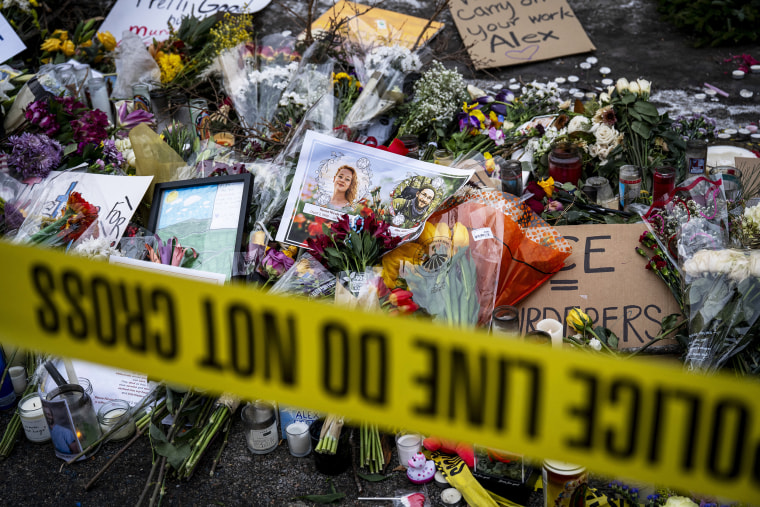
These results come after significant immigration crackdowns over more than a year. The aggressive policies under the Trump administration have led to confrontations between protesters and law enforcement, and the tragic shooting deaths of two U.S. citizens in Minneapolis earlier this year have impacted perceptions in immigrant communities.
AAPI adults, a rapidly growing demographic in the U.S., predominantly consist of individuals born outside the country. The survey found that about 6 in 10 AAPI adults believe that the U.S. was once a welcoming place for immigrants but no longer holds that distinction. Only approximately 3 in 10 view America as great for immigrants today, while a small percentage, 5%, never saw it as such.
AAPI adults also value cultural diversity, seeing the blend of cultures and values as integral to the country’s identity. Karthick Ramakrishnan, founder and executive director of AAPI Data, commented on the historical contribution of Asian Americans and immigrants to the U.S., noting concern as established residents question if the U.S. is still the best country.
Nicole Good and Alex Pretti were shot by federal immigration agents in Minneapolis in January.
Impact on Legal Immigrants
Even immigrants with legal status have been influenced by these policies. Legal battles have recently struck down attempts to increase certain visa fees and block immigrants from 39 countries from finalizing asylum and citizenship applications.
Khoa Tran, 27, came from Vietnam and gained U.S. citizenship four years after his arrival in 2015. Recently, his concern grew over the necessity of legal immigrants carrying identification due to social media posts. He realized his wife should always have her green card alongside other IDs.
International students, fearing for their visa status, often delay trips to visit family abroad. Tran noted that unfamiliarity with laws drives their concerns, leading to a ‘better safe than sorry’ mentality.
Identity and Ancestry
AAPI adults place significant importance on family ancestry and country of origin, often more than their American identity. Over half consider their heritage ‘extremely’ or ‘very’ important, while 44% feel the same about being American. This sentiment extends even to U.S.-born AAPI adults.
In contrast, a separate AP-NORC survey from April showed 55% of U.S. adults see being American as a key identity factor, while 37% valued ancestry similarly.
Abigail Jeyaraj, a South Hadley resident born in Texas to Indian parents, acknowledges the opportunities available to her, absent for her mother and grandmother. Similarly, Soonho Kwon from La Mirada, California, a naturalized citizen originally from Korea, sees his identity rooted in his heritage despite his commitment to American life.
Ambivalence Around America’s Milestone
As America approaches its 250th anniversary, 73% of AAPI adults believe cultural diversity is key to national identity, a view more common among them compared to the general U.S. population.
Jeyaraj, exposed to diverse cultures in Dallas and Houston, appreciates this mix. However, she has mixed feelings about celebrating the anniversary amid restrictive immigration and diversity policies.
To some, like Tran, the anniversary highlights evolving national identity. For others, it prompts reflection on overlooked histories, such as those of Native Americans who lived here far beyond 250 years.
The poll surveyed 1,075 AAPI U.S. adults between April 20-28, drawn from the NORC’s Amplify AAPI Panel, ensuring representation of this demographic. The sampling error margin is plus or minus 4.4 percentage points. This is part of a broader effort to focus on the often-underrepresented views of Asian Americans, Native Hawaiians, and Pacific Islanders.