
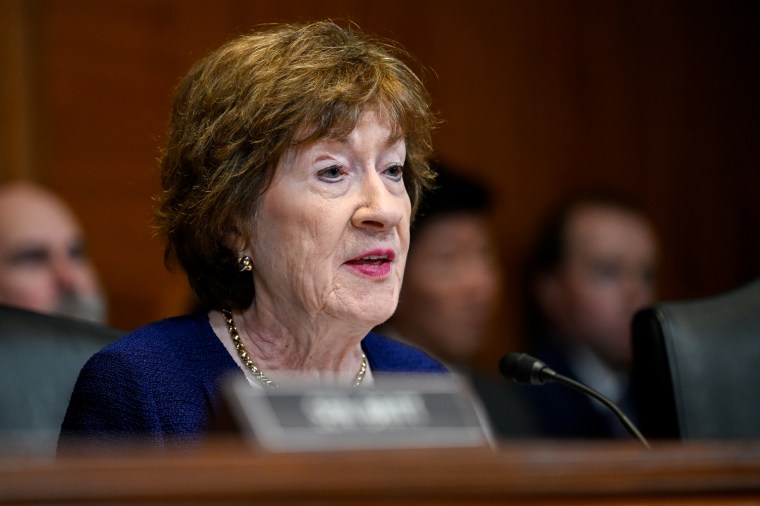
Amidst war, rising costs, and Medicaid cuts, Democrats in Maine find Brett Kavanaugh’s Supreme Court confirmation as a motivating factor in this fall’s Senate race. Eight years ago, Republican Sen. Susan Collins of Maine cast a pivotal vote that secured Kavanaugh’s appointment in 2018. Collins cited Kavanaugh’s assurance of Roe v. Wade as ‘settled law,’ a statement proven false with the overturning of the landmark case in 2022. This pivotal moment paved the way for numerous state-imposed abortion bans.
Arie Mobley expressed, ‘After she voted for Kavanaugh, that was the last straw,’ at a rally supporting Graham Platner, Collins’ presumed Democratic challenger. Attendee Janice Low recalled Collins’ misleading stance during her radio interviews regarding Kavanaugh’s confirmation.
Now, with Senate control at stake, Kavanaugh’s influence in Maine is significant. In the 2018 hearings, amid sexual assault allegations, Collins defended Kavanaugh, who denied any misconduct. Today, her Democratic opponent Platner faces accusations of threatening behavior, complicating the campaign dynamics.
Platner and his allies are leveraging Collins’ Kavanaugh vote and the 2022 abortion ruling as fresh ammunition previously unavailable in her last election. Should Republicans regain the Senate, Collins might again become decisive in appointing Supreme Court justices, especially as two conservative justices approach retirement.
Revival of Abortion Rights as a Key Issue
The impact of Collins’ Kavanaugh vote was evident during Platner’s primary victory speech. He criticized her for supporting Kavanaugh, accusing her of betraying her promise to protect Roe v. Wade. Platner scrutinized her for ‘defunding healthcare and hospitals’ as well.
Platner has consistently argued that Collins’ support for Kavanaugh disqualifies her as a senator. Despite her disappointment in Kavanaugh’s ruling, Collins does not regret her 2018 vote, citing extensive evaluations leading to her decision.
In Maine, a state known for electing Republican senators while maintaining strong reproductive rights support, Democrats plan to highlight Collins’ ‘anti-choice record’ in campaign strategies. A key Democratic super PAC intends to focus on abortion-related advertising in Maine during the general election.
In March, polling by the Senate Majority PAC identified targeting Collins on abortion as a potent issue for registered Democrats, second only to healthcare and Medicaid concerns.
A Collins spokesperson dismissed these challenges, emphasizing the current issues at hand over ‘6-year-old leftovers,’ suggesting Mainers have pressing concerns this election cycle.
Platner’s Allegations
Platner faces scrutiny due to allegations from previous relationships, including physical threats described by Lyndsey Fifield, his ex-girlfriend. Fifield, a Kavanaugh supporter, had previously sought to discredit Kavanaugh’s accusers.
During Kavanaugh’s 2018 confirmation hearings, Fifield supported his confirmation amid accusations by Christine Blasey Ford and others of sexual misconduct during his school years.
Platner’s allies have retaliated against Fifield on social media, accusing her of orchestrating false allegations, labeling her actions as a ‘right-wing smear campaign.’
Emma Vigeland, a commentator, condemned Fifield’s accusations on social media, gathering significant attention from Platner supporters.
The Pivotal Vote
A Democratic strategist stated that Platner would likely emphasize Kavanaugh’s actions on the Supreme Court throughout the campaign. Collins’ previous votes, including Kavanaugh’s, will be critical in this race.
Two years post-Kavanaugh confirmation, Collins achieved re-election, viewed by allies as vindication of her vote. However, after Kavanaugh’s role in the Roe v. Wade overturn, Collins acknowledged Kavanaugh misled her before her confirmatory vote.
During her tenure, Collins voted for seven of the eight Supreme Court justices considered by the Senate, backing both conservative and liberal nominees. Her exception was Amy Coney Barrett, opposed for procedural reasons during the 2020 electoral backdrop.
In her 2018 confirmation vote announcement, Collins doubted the veracity of Ford’s allegations against Kavanaugh, stressing the necessity of presuming innocence amidst fervent public sentiment.
Recently, Collins described Platner’s allegations as ‘extremely troubling,’ urging him to address these concerns with detailed explanations to Maine voters.