
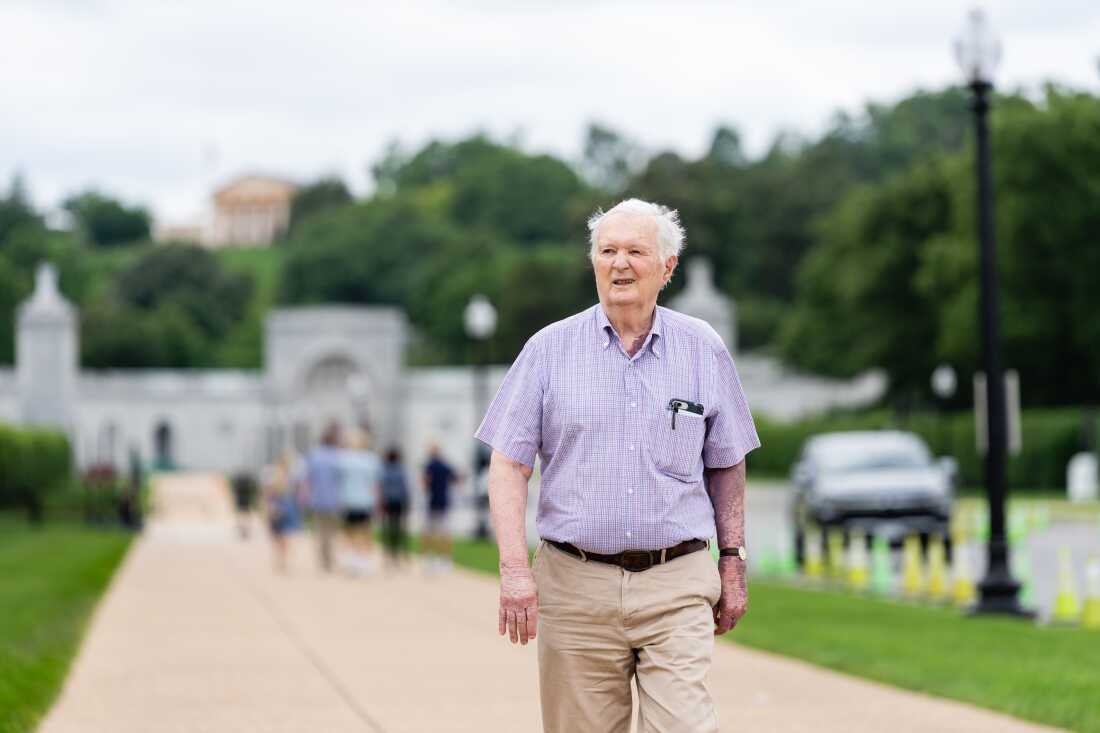
Shaun Byrnes, 83, a U.S. Navy veteran who served in Vietnam, appeared near Arlington National Cemetery in Arlington, Virginia, on June 8, 2026, discussing a lawsuit against the proposed construction of the Triumphal Arch. Public Citizen represents Byrnes and other veterans in suing the Trump administration to prevent the arch’s construction in Memorial Circle.
Veterans and their representatives are voicing strong opposition to President Trump’s proposed triumphal arch. The 250-foot structure is planned for a roundabout near Arlington National Cemetery’s main entrance. The cemetery is the final resting place for over 400,000 service members, veterans, and families.
The Trump administration’s proposal claims the arch will celebrate American triumphs, inspire patriotism, and beautify the capital. Critics argue it is a presidential vanity project, complicating traffic, disrupting the view between the cemetery and Lincoln Memorial, and disrespecting those buried nearby. Detractors, including Democratic lawmakers, state that congressional authorization is required to proceed, which Trump has bypassed.
Two Vietnam War veterans with an architectural historian are suing the administration over construction authorization. Shaun Byrnes, aged 83, met NPR outside the cemetery entrance, expressing concerns about the arch’s impact. Byrnes believes monuments to great presidents were built posthumously by citizens, not initiated by those individuals. Byrnes voiced concern for friends lost in Vietnam and not recovered, while recalling his service and injuries during the war.
The lawsuit filed in February, supported by progressive advocacy nonprofit Public Citizen, challenges the project’s authorization. Led by Nicolas Sansone, the legal team argues the Commemorative Works Act and a section of the U.S. Code require congressional approval for new federal memorials.
The Trump administration claims congressional approval occurred in 1925 when proposed columns for Arlington Memorial Bridge were authorized, though never built. Sansone contends this rationale could lead to unchecked monument construction, altering national sites.
Construction awaits judicial rulings, but proceeded through federal agency feedback stages. The Commission for Fine Arts, filled with Trump appointees, approved the design last month, despite public protest, and unresolved questions about engravings. The National Capital Planning Commission gave preliminary approval, requesting more detailed plans.
The National Park Service is accepting public comments until June 15. Materials indicate construction may span two to three years, changing the landscape significantly. Sansone challenges unilateral presidential monument projects, noting concerns over democratic processes.
Evan Cash opposed the arch at a National Capital Planning Commission meeting citing lack of congressional and public support. The meeting saw nearly two dozen public objections, many from those with military ties.
Comments challenge the arch’s purpose. Trump characterized it as a commemoration of the U.S.’s 250th birthday but indicated personal significance. Veterans like Jimi Shaughnessy argue the arch serves no benefit to service members, advocating for restored funding to agencies assisting veterans instead.
Major veterans’ groups remain publicly neutral; the American Legion lacks a position on the issue. Arlington National Cemetery acknowledges the ongoing process but directs inquiries to relevant federal agencies.
A spokesperson from the Department of the Interior states the arch is intended to enhance visitor experience at Arlington, reminding Americans of the sacrifices made by heroes for today’s freedoms.