
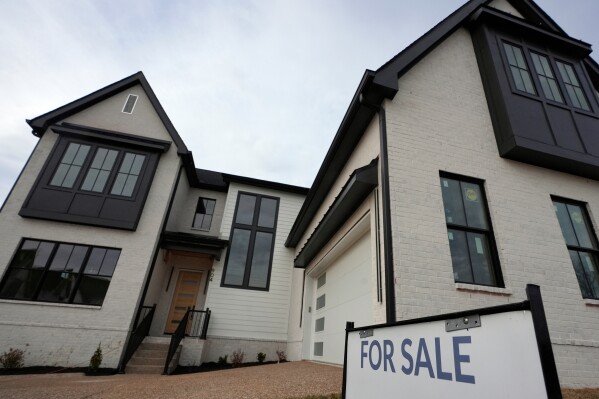
Sales of previously owned homes in the United States surged last month, marking the fastest pace since December. This uptick comes after a slow start to the spring homebuying season. According to the National Association of Realtors (NAR), existing home sales rose by 3.2% in May compared to the previous month. This brought the seasonally adjusted annual rate to 4.17 million units.
Year-on-year, sales also climbed 3.2%. The increase was observed in the Midwest, South, and West, while sales in the Northeast declined. Notably, the most recent figures surpassed economists’ expectations of about 4.07 million units, according to FactSet.
Since 2023, home sales remained near a 4-million annual pace, which falls short of the historical average of around 5.2 million. Despite rising mortgage rates this spring, sales experienced an upward trend. Although mortgage rates have generally increased, they remain lower than last year.
Nationwide, home prices continued to rise in May. The median sales price reached $429,300, which is a record high for May based on data from 1999. Home prices have increased annually for 35 consecutive months.
Though home price growth trails income growth in many areas, it, along with mortgage rates below last year’s levels, contributes to improved affordability. This has provided momentum to the housing market, according to Lawrence Yun, NAR’s chief economist. He noted, “I cannot definitively say if home sales are truly coming out of the slump, as there is uncertainty related to oil prices and mortgage rate movements.” Yun believes a drop in the 30-year mortgage rate towards 6% could see sales exit their prolonged slump.
The U.S. housing market has faced challenges since 2022, when mortgage rates rose from pandemic lows. Last year, home sales were stagnant, reaching a 30-year low. This trend continued this year, with sales remaining sluggish and being flat in April after earlier declines.
Rapid home price increases earlier in the decade, combined with low mortgage rates, had left many potential buyers on the sidelines. A national shortage of homes, due to years of low new construction, has maintained high prices amid a prolonged sales slump.
Homes purchased in May were probably contracted in March and April, with mortgage rates between 6% and 6.46%, as reported by Freddie Mac. The average rate was 6.48% last week, down from 6.85% a year ago.
The war with Iran has caused sharp increases in oil prices, impacting long-term bond yields and consequently pushing mortgage rates higher. Ted Rossman, Bankrate’s principal analyst, noted, “Without the war-related inflation spike, the average 30-year fixed mortgage rate could be in the mid-to-upper 5’s.”
Despite uncertainty regarding mortgage rates, first-time buyers made up 35% of home purchases last month, a peak not seen since June 2020. Typically, they account for about 40% of sales.
Buyers who afford current rates benefit from favorable market trends. In May, median list prices fell by 2.4% compared to the previous year, the largest drop seen since 2017, as per Realtor.com. Although inventory levels remain below historical norms, there are more options for buyers now.
At the end of May, there were 1.55 million unsold homes, a rise of 3.3% from April and 0.6% from the previous year. This figure is still below the pre-COVID-19 average of around 2 million. May’s inventory represents a 4.5-month supply at the current sales pace, while a balanced market typically has a 5- to 6-month supply.