
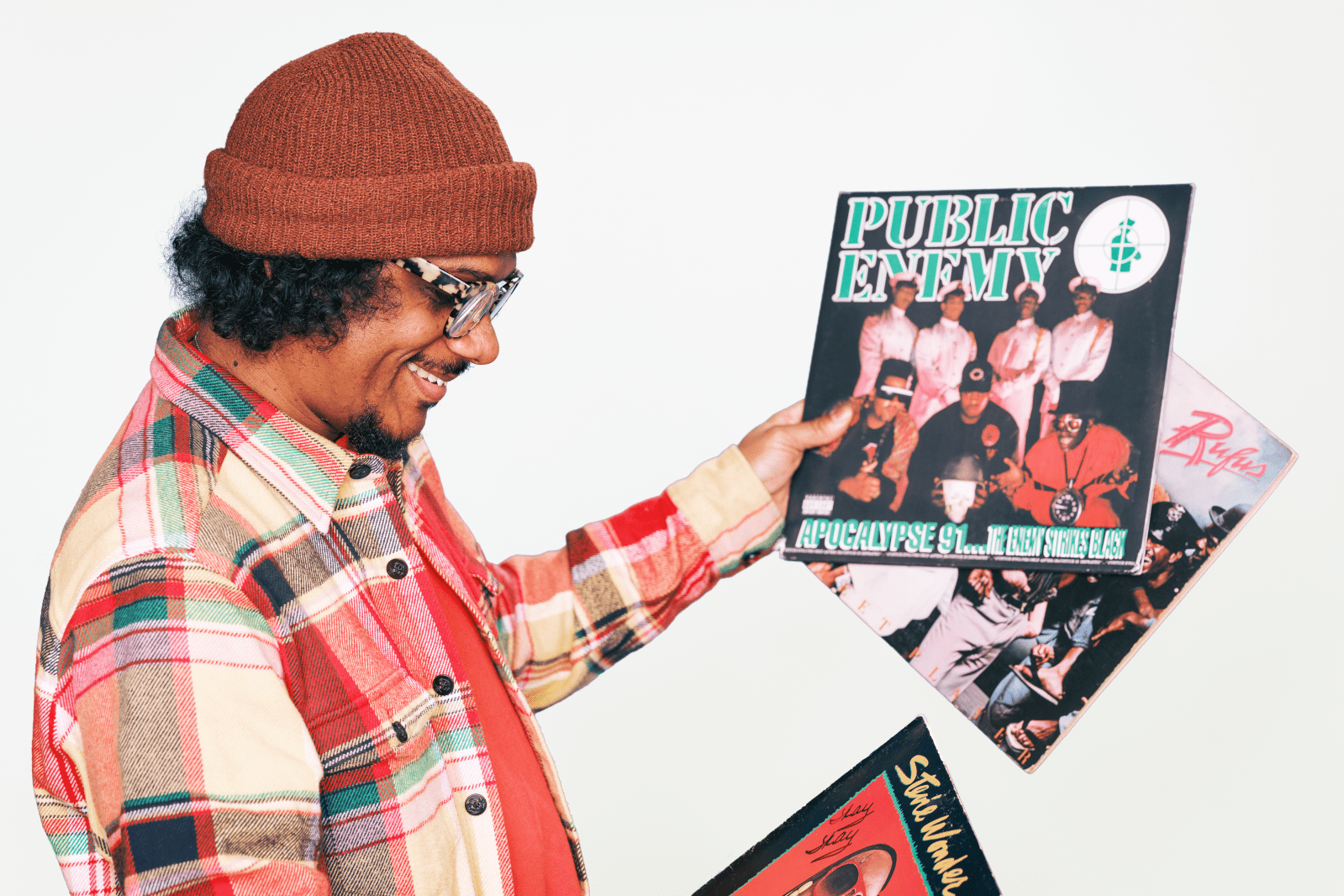
Many listeners who grew up immersed in the world of message boards, liner notes, and online rabbit holes appreciate the depth that can be found when exploring stories beyond surface-level interpretation. Donwill, a rapper with Tanya Morgan, intuitively understands this urge, transforming it into the podcast The Almanac of Rap, presented by Okayplayer. This podcast has achieved recognition, earning two Webby Awards, and approaches hip-hop history as a dynamic, layered entity worthy of revisiting from multiple perspectives.
In conversation, Donwill emerges as a dedicated archivist working to restore context often lost in digital culture. He emphasizes the importance of uncovering the story behind the story, a sentiment that encapsulates the podcast’s broader mission. Hip-hop, to Donwill, was always an integral part of life. From jotting down lyrics from the radio to gathering magazines and analyzing release dates, he was drawn to the music and its surrounding lore. With the advent of platforms like Okayplayer and its message boards, his curiosity intensified.
“You could really go down a rabbit hole,” he reflects. “You’d read one thing, and that would lead you to something else.” For Donwill, this era helped shape what online rap discourse could at its best: expansive, communal, and detail-obsessed.
Building Blocks from the Blog Era
A prominent thread throughout Donwill’s interview is the contrast between the past web era and the current state. He describes the early web as a space that rewarded curiosity. “The headline wasn’t the whole story,” he notes. “You’d click the article, then you’d find the writer, then you’d find three more things.” Despite the chaos and gatekeeping of the blog era, it still encouraged deep exploration. Now, he argues, the headline often suffices, leading some to stop at the surface. This erosion gives The Almanac of Rap its purpose.
Podcasting acts as a natural extension of Donwill’s cultural engagement. Since the late 2000s, he has experimented with audio, long before podcasting became widespread. Initially creating mixes and informal recordings, he gradually transitioned to interviews and essays. He appreciates conversation as an art form and values audio for its ability to accompany daily activities. “You can listen while you’re doing anything,” he says. Whether walking, driving, or working, audio uniquely allows individuals to engage continuously. This priority remains steadfast even as shows increasingly prioritize visual presentation.
Keeper of the Lore
On The Almanac of Rap, Donwill approaches preparation with care, yet he finds equal interest in details that lie beyond the primary narrative. “I want to know what was happening around it,” he mentions. “What shirt did you have on? What was the room like? What else was going on?” The aim is to understand the genuine feel of careers, scenes, and movements during their unfolding moments. “That stuff matters,” he asserts. This responsibility is especially momentous amidst disappearing archives, broken links, and precarious music journalism. In this environment, preserving rich conversations stands as an act of cultural guardianship.
Donwill’s perspective shines particularly when discussing newer artists. As a figure who experienced the blog era with Tanya Morgan, he recalls a time when independent artists endeavored to draw listeners online, towards music, videos, or favorable reviews. Presently, he notes, artists aim to transform online attention into tangible outcomes like ticket sales and community engagement. “Back then, we were trying to get people online,” he shares. “Now people are trying to get them off the phone and into a room.” This shift reshapes the questions worth exploring and influences his understanding of success for current artists. “That’s a completely different challenge,” he observes.
The Almanac and the Archive
This underlying philosophy informs the podcast’s structure. The Almanac of Rap tackles broad questions about the genre, pairs them with interviews, and uses segments like “The Ballistics” and “The Big Playback” to reexamine overlooked songs, ideas, and arguments. Through collaboration with Okayplayer, the podcast has extended its outreach while maintaining its depth, receiving accolades such as the Webby for Best Music Podcast in 2023 and another for Experimental Innovation in 2025. Donwill consistently emphasizes one premise: “Rap is too deep for us to keep talking about it on the surface.”
If the blog era trained rap enthusiasts to seek comprehensive context, Donwill has effectively preserved that habit through a medium designed for careful listening. He continues posing the inquiries that reward attentive engagement, tracing threads beyond apparent answers, and treating hip-hop as a living archive with depth and complexity. “I still believe people want the deeper story,” he affirms. Within an economy prioritizing speed, The Almanac of Rap champions depth, upholding an old internet ideal where curiosity was valued, memories held texture, and the best narratives began beyond the headline.