
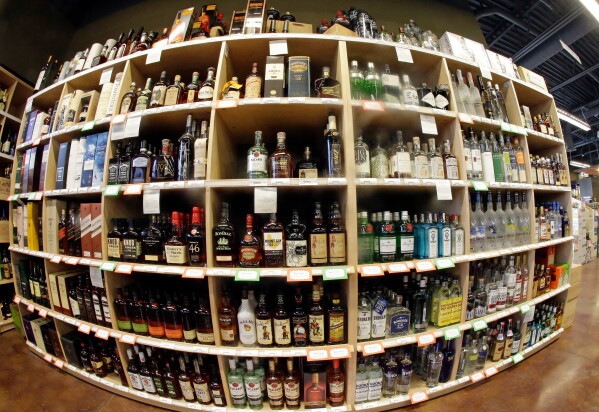
A recent study, initially commissioned by President Joe Biden’s administration to explore alcohol-related health risks, was released independently after facing obstacles during President Donald Trump’s tenure. The Trump administration chose not to integrate the researchers’ findings into new dietary guidelines, and the study faced opposition from both the alcohol industry and congressional committees.
Published in the Journal of Studies on Alcohol and Drugs, the study aligns with existing research, asserting that even one daily drink raises health risks. It claims no alcohol consumption level offers a protective mortality benefit, with moderate drinking increasing the risk of premature death and over 200 diseases, such as heart disease and cancer.
This study was among two government reviews intended to guide new dietary guidelines. While the guidelines released earlier this year suggest “less alcohol for better overall health,” the study authors say more practical advice on the risks was necessary.
“The challenges confronting alcohol policy today are not rooted in scientific uncertainty,” wrote Robert Vincent, a former Substance Abuse and Mental Health Services Administration official who led the study. “What remains contested is whether evidence will meaningfully inform policy when it conflicts with commercial interests.”
The Biden administration’s commissioned study was accused by Vincent of being sidelined by the previous administration, which the Trump administration denies. Vincent, who was laid off as part of a government workforce reduction, voiced these allegations in an editorial published with the study.
The tension highlights the growing disconnect between the scientific community and the Trump administration, which has been known for challenging established scientific principles, dismissing veteran federal scientists, and reducing scientific grants vital for maintaining the U.S. leadership in medical innovation.
The study faced significant pushback from the alcohol industry and congressional Republicans. When a draft report emerged last year, industry campaigns discredited its findings, while the House oversight committee criticized it as biased and accused the researchers of having preconceived conclusions.
Emily Hilliard, representing the U.S. Department of Health and Human Services, denied claims of the study’s dismissal. She emphasized the 2025-2030 Dietary Guidelines for Americans were developed after reviewing the full scientific body of evidence available, not any single report.
Despite accusations against the Trump administration, Vincent insisted that researchers were thoroughly vetted, and findings were scientifically robust. He noted being asked to discard the study during the Trump administration but refused. HHS did not immediately address this claim.
Researchers advocate for more explicit recommendations on alcohol intake. Dr. Timothy Naimi, director at the University of Victoria’s Canadian Institute for Substance Use Research, highlighted that existing guidelines recognize less alcohol is beneficial but lack detailed consumption advice. The study suggests adults should limit intake to one drink or less daily.
This study diverges from other government-commissioned research informing dietary guidelines. While some studies link moderate alcohol use to reduced overall mortality risk, they also acknowledge increased disease risk. Priscilla Martinez-Matyszczyk, another study author from the Public Health Institute, explained their focus on alcohol-specific mortality, avoiding other factors.
Responding to Centers for Medicare and Medicaid Services Administrator Dr. Mehmet Oz’s comments about the social benefits of alcohol, Martinez-Matyszczyk remarked on the difficulty of separating social from health effects in research.
The study’s conclusions align with recent research indicating less alcohol is better for health. For example, a 2019 Lancet study found moderate drinking slightly heightens stroke and high blood pressure risks without health benefits. Past studies underestimated risks due to comparing drinkers by volume instead of assigning groups random drinking levels.
Alcohol remains America’s most common addictive substance, with about half of Americans aged 12 or older consuming alcohol monthly. A drink equates to a 12-ounce beer, 5-ounce wine, or a shot of liquor.
Note: The Associated Press Health and Science Department receives support from Howard Hughes Medical Institute’s Department of Science Education and the Robert Wood Johnson Foundation. The AP remains solely responsible for all content.