
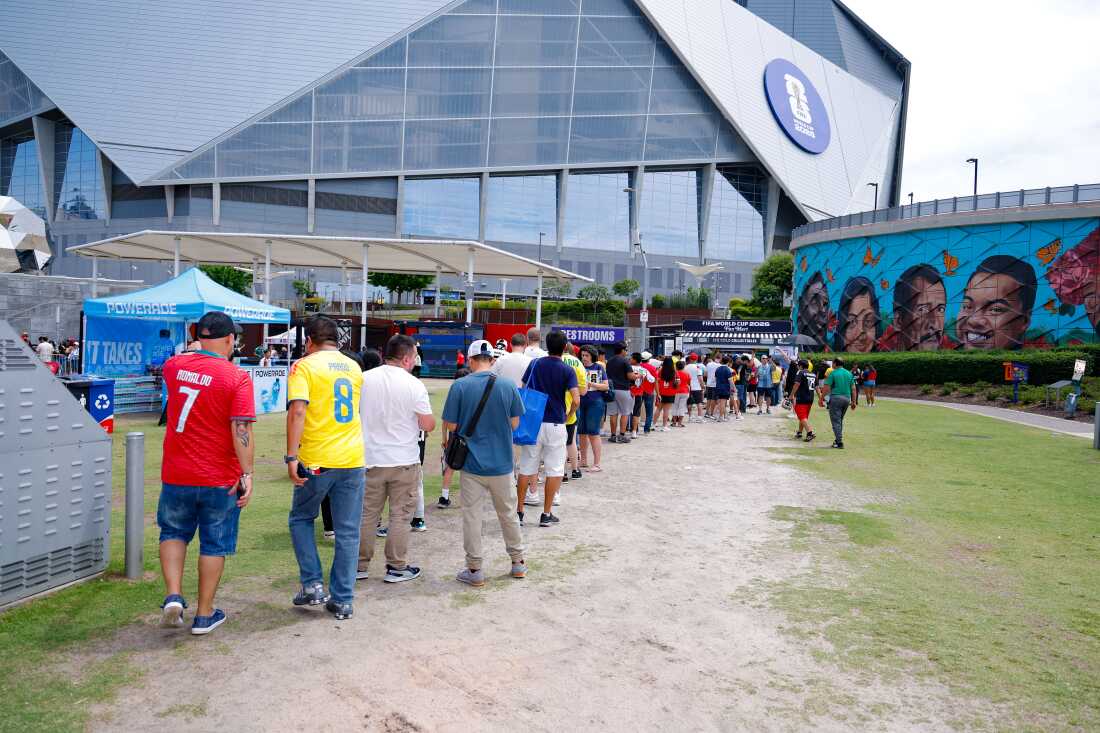
Millions are set to attend World Cup matches across the U.S., Canada, and Mexico starting June 11. Public health officials are gearing up to ensure the safety of fans at 104 matches in 16 cities, despite reduced federal health presence and funding in the U.S. This has increased the responsibilities for host city health departments, who say they are ready for the challenge.
Health Challenges and Strategies
Health officials focus on predictable issues like weather, health, and behavior. Dr. Marcus Plescia, health director for Fulton County, Georgia, mentions, “We’ve been focusing on expecting the expected.” Atlanta, hosting eight matches, prepares for heat-related issues with cooling stations and hydration facilities.
Food Safety and Health Concerns
With large gatherings, ensuring food safety becomes crucial. Environmental health workers will inspect numerous food vendors daily to prevent food poisoning. Another concern is the spread of germs. Dr. Plescia highlights worries about sexually transmitted infections and measles outbreaks, the latter having seen 30 U.S. outbreaks this year.
Strategies in Other Host Cities
In Dallas, hosting the most matches, officials are expanding disease surveillance in wastewater and monitoring mosquito-borne diseases. Dr. Philip Huang, Dallas County’s health director, emphasizes the enhanced vigilance against threats like dengue and Zika due to international travel.
Preparations include public health tips in various languages, advising on heat protection and avoiding mosquito bites. Dallas health officials stress the importance of these messages as the city expects a large influx of visitors during the hot summer period.
Federal Presence and Local Efforts
The federal presence, especially the CDC’s role, is reduced, affecting coordination. Dr. Debra Houry notes the current administration’s impact on the CDC’s operations. Despite these challenges, local authorities remain proactive.
For example, Georgetown University’s Health Security Operations Center has been tracking infectious diseases to fill the gap left by limited federal guidance.
Experience and Future Preparedness
Host cities are using past experiences to enhance current preparations. L.A. health director Barbara Ferrer highlights their readiness, saying events like the 2022 Super Bowl have prepared them for the World Cup. Simultaneously, ongoing federal limitations spur local improvements and partnerships.
L.A.’s efforts aim to ensure a safe environment, with successes expected to inform preparations for future events such as the 2027 Super Bowl and 2028 Olympics.
Overall, the collaborative efforts and adaptations at the local level are critical for managing the upcoming World Cup safely.