
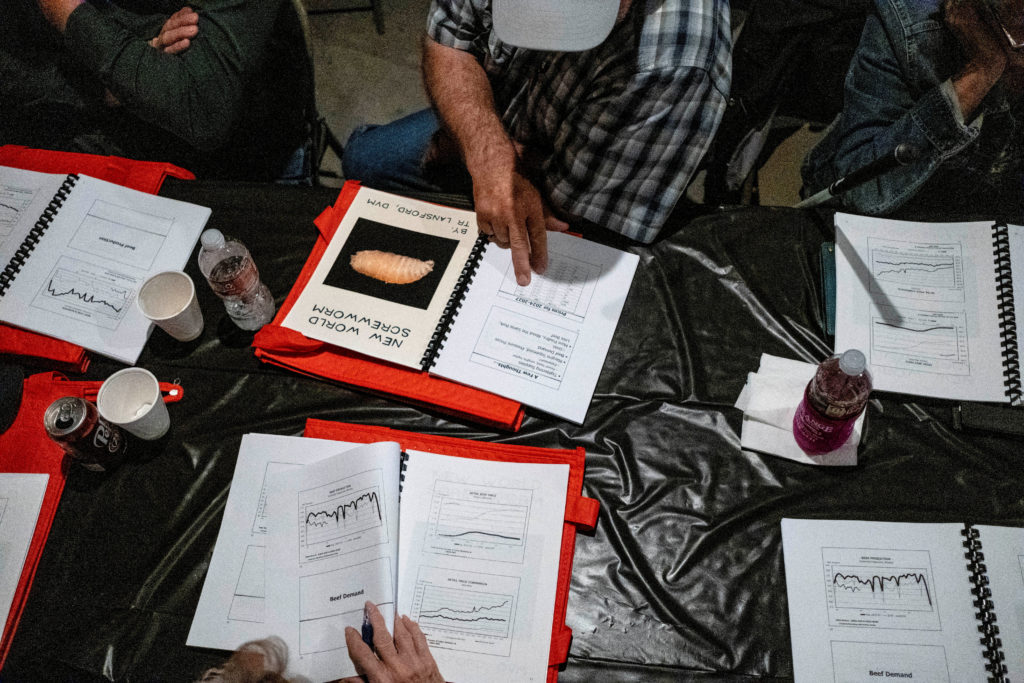
For the first time in decades, the New World screwworm fly has been detected in south Texas. The U.S. Department of Agriculture confirmed this development on Wednesday. This parasite, known for its flesh-eating larvae, poses a threat to the nation’s cattle industry. This is only the third occurrence of such nature in the U.S. over recent decades.
Initial Detection
Agriculture Secretary Brooke Rollins reported the detection in a three-week-old calf in La Pryor, Texas, located about 50 miles from the Mexico border. Texas State Veterinarian Bud Dinges has implemented a quarantine zone extending 12 miles, prohibiting the movement of warm-blooded animals, including pets, from this area without inspection.
Rollins emphasized that no other instances of the fly have been found in the U.S., and reassured that while the larvae threaten livestock, they do not affect food. Proper treatment can facilitate recovery for even the infested calf.
Concerns and Precautions
The fly’s presence has raised concerns among U.S. and Texas agriculture officials, drawing attention to the parasite’s movement across Mexico. This concern is rooted in historical losses of tens of millions of dollars, a figure that translates to potentially billions in present-day value prior to the fly’s eradication in the 1970s. Rollins highlighted that no case had been confirmed in Texas since 1966.
In an effort to counteract the fly’s spread, millions of sterile screwworm flies were released in the area, a method previously used to eliminate the fly. Rollins expressed confidence that current precautions will prevent a mass infestation.
There is no reason to believe this incursion will result in establishment of the pest in our country,Rollins stated.
USDA Actions and Future Plans
Efforts to combat this threat have been underway, with Rollins highlighting cases confirmed in Mexico, some as close as 25 miles from the U.S. border. The New World Screwworm fly, classified as a tropical species, infests cattle by laying eggs in open wounds or mucous membranes, creating larvae that consume flesh. This can result in death if untreated.
Federal health officials confirmed a previous case in a Maryland resident returning from El Salvador in 2025. The person recovered, and no further transmission was reported. The last known outbreak was in the Florida Keys in 2016, mostly affecting wild deer, and was contained without further spread.
Eradication Efforts and Resource Allocation
Historically, successful eradication of the screwworm fly led to closure of sterile fly breeding facilities in the U.S., leaving only one in Panama. The USDA has allocated $21 million to convert a fruit fly breeding facility in Mexico for screwworm flies, and has opened a new dispersion center for sterile flies in Texas. A $750 million screwworm fly factory is under construction there. The modified facility in Mexico is set to commence operations next month.
Addition of 8,000 fly traps along the U.S.-Mexico border, and testing of over 58,000 fly samples and 19,000 wild animals are among the USDA’s preventive measures. Last year, Rollins enacted a closure of the U.S.-Mexico border to livestock imports from Mexico.
Despite the fly’s limited travel capability, Dinges urged ranchers and pet owners to respect the quarantine norms. Please help us prevent any further movement of this pest by staying put,
he advised.
A free press strengthens democracy by fostering civil dialogue and informed communities. Supporting trusted journalism is essential.