
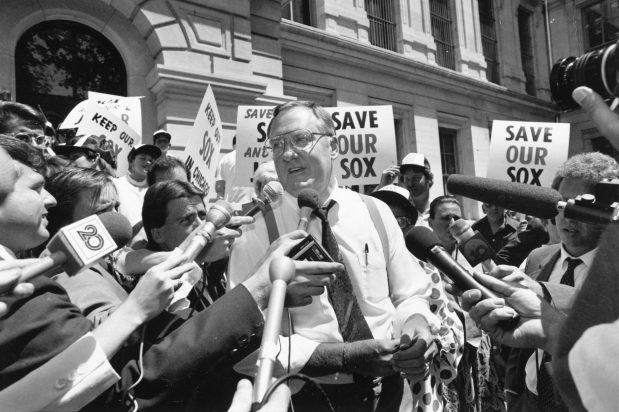
In the final hours of the Illinois 1988 spring legislative session, a tense atmosphere filled the statehouse. Governor James R. Thompson and House Speaker Michael Madigan worked the House chamber floor, offering project deals and political backing for votes on a taxpayer-funded stadium. This aimed to prevent the Chicago White Sox from moving to St. Petersburg, Florida. Though a TV reporter claimed the team was gone, the vote happened at 12:03 a.m., just after the deadline. Yet, the bill passed, with the roll call listing it at 11:59 p.m.
Nearly four decades later, Illinois legislators found themselves in a similar situation, this time concerning a stadium plan for the Chicago Bears. The session ended without resolution on keeping the Bears from moving to Hammond, Indiana.
Originally, the White Sox considered relocating to Addison, Illinois, before weighing a Florida move. Eventually, they received a new taxpayer-backed stadium across from old Comiskey Park. The Bears, having bought the former Arlington International Racecourse site for a stadium complex, sought property tax assurance to proceed. Lawmakers adjourned without deciding on a tax relief plan for the team, leaving their future uncertain.
A governor, legislative leaders, and the Chicago mayor united with urgency to save the Sox. In contrast, the Bears seemed a political afterthought, with divergent plans in the House and Senate.
The stark difference highlights changes in politics, sports, and stadium financing. While urgency drove the Sox vote, the Bears faced no such concerted effort. Governor JB Pritzker pointed out environmental concerns at the Hammond site. Financial demands also played a role; the Bears sought an $855 million public infrastructure promise, on top of their $2.5 billion private stadium investment.
Public sentiment shifted since the Sox deal, with voters opposing public financing of sports venues. High property taxes and election year pressures make politicians wary of aiding a wealthy franchise.
The legislative inaction on the Bears reflects political and financial dynamics. Scott Hagel, a Bears executive, frequented legislative chambers, yet uncertainties persisted. House Speaker Emanuel ‘Chris’ Welch noted political realities. “People still love the Bears but oppose taxpayer stadium funding.”
Factors beyond Springfield, such as Bears’ leadership missteps and late-stage negotiations, contributed. The Bears’ leadership structure reportedly hindered progress. Chicago Mayor Brandon Johnson’s involvement further complicated talks, proposing a previously rejected city stadium plan.
In a late-stage press conference, Governor Pritzker stated, “The mayor announced a $2.5 billion stadium without funding.” In 2024 discussions, talks of lakefront legal challenges and costs loomed.
The Bears’ discussions in Springfield met opposition and limited legislative support. Senate Democratic divisions reflected resistance to extensive public subsidy for the team. A Senate alternative sought stadium options for cities like Arlington Heights and Chicago.
In closing, Governor Pritzker emphasized not burdening Illinois taxpayers. “We’re not going to put this on the taxpayers of Illinois,” he asserted.
Despite the session’s conclusion, legislative leaders remain open to further dialogue. With the decision ultimately residing with the Bears, the team maintains its timeline. “We will evaluate Arlington Heights and Hammond,” their statement read.