
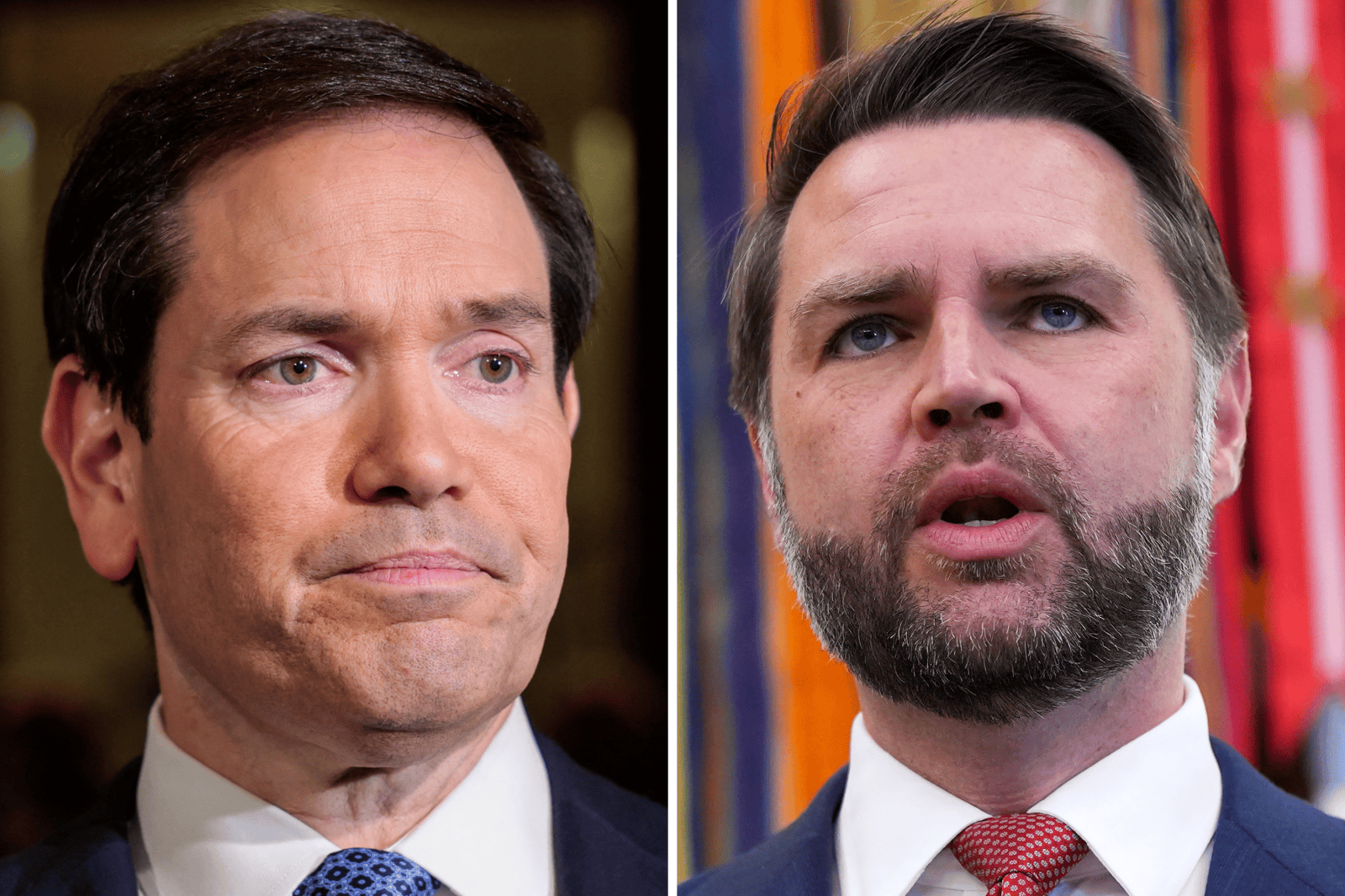
Vice President JD Vance and Secretary of State Marco Rubio have experienced a noticeable decrease in their standings within the 2028 Republican presidential nomination prediction markets. A Newsweek analysis of Polymarket and Kalshi data reveals this trend. Nearly $714 million in cumulative trading volume has transpired on Polymarket’s Republican presidential nominee market. Here, Vance’s odds dropped from about 53% on September 3 to 43.8% on a recent Tuesday. Rubio’s odds have fallen from 27.8% on August 3 to 15.1%.
Kalshi, a U.S.-regulated prediction market, presents a similar though less drastic narrative. Vance’s odds dipped from 45.8% on September 3 to 43%, and Rubio’s from 29.5% on August 3 to a mere 18%, with almost $70,000 in trades. This shift follows Vance acknowledging the possibility he might not pursue the presidency, influenced by his young family and his wife’s aversion to politics.
The movement raises questions about growing uncertainty among Republicans regarding the party’s succession after President Trump’s term. Koleman Strumpf, an economics professor at Wake Forest University, advises against overstating these changes. He noted that not all of Vance’s recent 4-point decline stemmed from his remarks.
Future Republican Prospects
Speculation continues about viable alternatives like Florida Governor Ron DeSantis and commentator Tucker Carlson, who currently hover in the low single-digit percentages. Strumpf suggests that the lack of a pronounced beneficiary from the latest shifts indicates traders do not view Vance’s comments as highly significant.
Costas Panagopoulos, a prominent political science professor at Northeastern University, remarked on the potential impact of upcoming midterms on the 2028 race. Should Republicans experience setbacks during the midterms, it could spell challenges for prospective successors, especially those linked closely to Trump.
Thad Kousser, a professor of political science at the University of California, San Diego, observed that both Vance and Rubio have risen due to their association with Trump, a crucial force in GOP primaries over the past decade. Changes in senate control in 2026 could affect this dynamic heading into 2028.
2026 Midterms and Their Impact
Kousser highlights how disastrous election results for Republicans could shift the narrative, turning Trump association from a strength to a potential hindrance. Panagopoulos suggests that if the midterm results cause Republicans to question their electoral strategy, it might shift their path post-Trump.
Daniel Schatz, a political scientist, pointed out the concurrent decline of both favorites bucks traditional two-person race logic. Confidence seems to be widening across various contenders. Possible moderate gains for multiple candidates might reflect this atmosphere.
Underestimating Market Prices
Despite predictions, it is essential to recognize that market prices differ from public opinion polls. Keith Gaddie, from Texas Christian University, cautions against equating prediction markets as reflections of voter sentiment. Traders may hedge their bets while public focus remains on immediate elections.
Strumpf, however, contends that despite imperfections, prediction markets provide continually updated forecasts. He emphasizes the significant trading volume on platforms like Polymarket.
While prediction markets highlight the growing uncertainty around leading contenders, true insights would require observable shifts among voters, donors, endorsements, and potential candidates.