
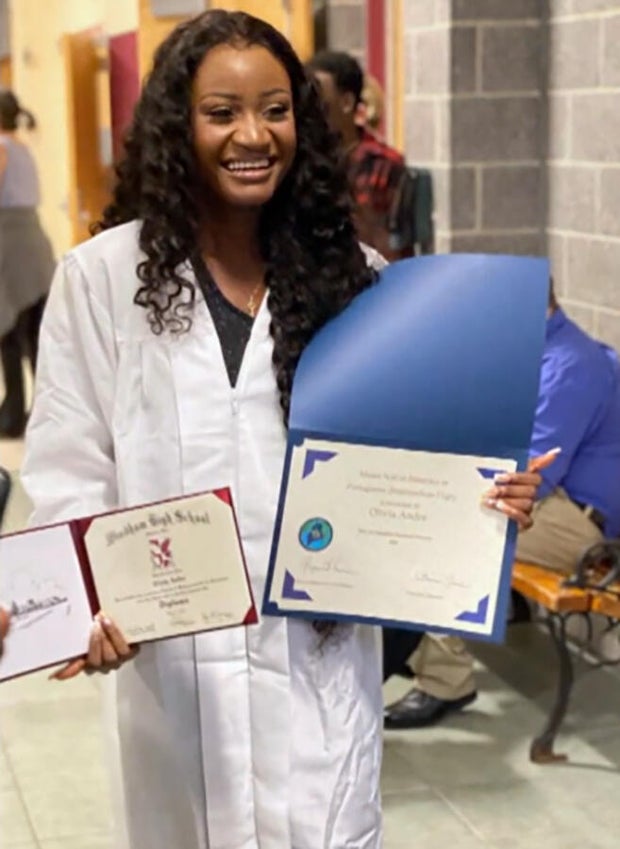
Joel Andre, a 17-year-old immigrant from the Democratic Republic of Congo, now resides near Portland, Maine. He and his younger sister, Estafania, have found distraction in the summer’s World Cup amid personal challenges. Their focus, however, often returns to their sister Olivia, who remains detained in Texas.
Last November, Joel, Estafania, Olivia, and their mother, Carine, were detained at the South Texas Family Residential Center in Dilley, Texas. While Joel, Estafania, and Carine were released in March, Olivia, an asylum seeker, stayed detained. “We all went like, why? Why?” Joel said about the separation.
The family fled Congo after Carine, an activist, faced persecution for opposing the government. They sought asylum in the U.S. Elora Mukherjee, the family’s lawyer, noted their compliance with all requirements once they arrived. Nevertheless, they faced a deportation order in February 2025, prompting an attempt to seek refuge in Canada. Denied entry, they were sent back to Dilley, Texas.
Dilley’s reported conditions have raised concerns. Elora referenced issues like insufficient clean water and inadequate food quality, corroborated by others detained there. “The lights are on 24/7, making it really difficult for everyone detained there to sleep,” Mukherjee said.
Over 6,300 children under 18 have been detained at the location. Criticizing the detention, Congressman Joaquin Castro stated, “Instead of treating them like asylum seekers… they’re treating them like criminals.” Castro pushes for Dilley’s closure, viewing its conditions as a deliberate deterrent against asylum seekers.
“To really understand what’s going on with Dilley, we gotta be able to see what’s going on behind those walls.” – Congressman Joaquin Castro
President Trump’s administration re-opened Dilley in 2025, granting a management contract to CoreCivic worth $180 million annually. CoreCivic denies allegations of substandard conditions, maintaining compliance with federal standards.
An ongoing legal battle surrounds the Flores Settlement, a ruling aimed at limiting children’s detention duration to 20 days. Despite promises to comply, Joel reported, “Yes. But they broke all those laws.”
Rep. Castro’s recent visit to Dilley highlighted ongoing issues like lack of healthcare and education facilities. Despite strict access restrictions, the absence of photographic evidence leaves questions about living conditions unanswered.
The Department of Homeland Security rebuffed allegations about Dilley, describing such claims as false and politically motivated.
Despite their hardships, Joel’s family recently received hopeful news: Olivia’s imminent release after five months. Yet, many families remain in uncertain situations.
Castro maintains, “The government knows they’re not criminals, and yet they’re being held like criminals.” He stresses the importance of understanding the unseen conditions within facilities like Dilley.