
To call Washington a “swamp” serves as both a metaphor and a literal truth. When planning the Lincoln Memorial in the early 1910s, builders confronted a significant challenge with sinking ground. Their solution led to one of Washington’s best-kept secrets, hidden for over a century until now.
Revealing the Undercroft
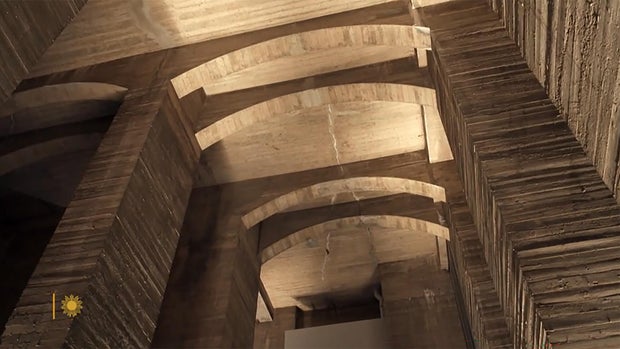
Underneath the Lincoln Memorial lies the Undercroft, a term typically used for the vaulted basement of a medieval castle or cathedral. This area hosts 120 massive concrete pillars that extend 50 feet into the ground, reaching the bedrock to support the marble structure above. The Undercroft spans 50,000 square feet, almost twice the memorial’s size above, according to Secretary of the Interior Doug Burgum.
Burgum noted the presence of stalactites: “They’re still dripping. Rainwater seeps through granite cracks and collects calcium as it descends.” Starting this June, visitors can explore this space in a new museum located directly beneath the memorial.
Educational Purpose and Historical Significance
Philanthropist David Rubenstein, who contributed a significant donation toward the transformation, believes the museum will enhance the educational role of the Lincoln Memorial. “Great countries honor and understand their history,” Rubenstein said. He feels that the Undercroft provides insight into Abraham Lincoln’s life, reflecting complexities often overshadowed by the grandeur above.
Lincoln experienced a life replete with tragedies; several of his children died young, and he had a complicated marriage. Despite these challenges, he rose to prominence as one of America’s greatest presidents.
Memorial’s Role in Freedom and Civil Rights
Historian Edna Greene Medford from Howard University views the memorial as a stage for evolving ideas of freedom. The Undercroft and its exhibits reflect this history. Medford explains, “It’s about freedom, hope, and inclusion.” In 1939, Marian Anderson, refused by Whites-only venues, sang here, igniting a civil rights movement.
In 1963, Martin Luther King Jr. famously spoke on the steps, advocating for racial justice. Medford notes, “The memorial symbolizes freedom not only for Black people but also for various groups. Each interprets freedom personally.”
Debate Over Historical Narratives
The museum’s opening coincides with national parks revisiting exhibitions on slavery and racism. Secretary Burgum emphasizes balancing current cultural debates with celebrating national history. “We’re not without flaws, but we’re a nation based on continuous improvement,” Burgum says.
Graffiti from original construction workers remains on Undercroft columns, illustrating the memorial’s history. Visitors can experience the memorial’s entirety—not just its marble ideals but also the underlying labor and imperfections.
For more information:
Lincoln Memorial Undercroft tour info (National Park Service)
Lincoln Memorial (National Park Service)
Philanthropist David Rubenstein
Secretary of the Interior Doug Burgum
Howard University professor emerita Greene Medford
Produced by Dustin Stephens. Edited by George Pozderec.